

 Tiếng Việt
 中文 (中国)
Note on the figures in this article (read first): This is a technical article. Every specific threshold and condition below is an industry reference or documentation from another paint manufacturer, not a Kadier specification or commitment. Kadier’s own specifications for each RollCoat, LevelFlow, StatGuard and AquaBase system do not yet have technical data sheets (TDS), so this article only gives a general framework together with this statement; the final thresholds follow the technical documentation of the paint manufacturer Kadier uses and the findings of an actual survey. This is the article’s main HOLD, stated clearly so that QA and readers do not mistake a reference for a commitment.
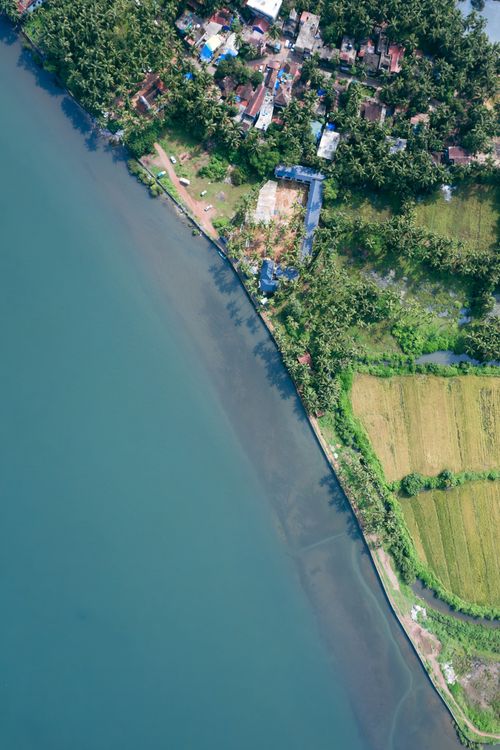
A coastal factory differs from an inland factory in one respect: three enemies attack at the same time — chloride ions in salt mist, high humidity and UV radiation. Misunderstanding any one of the three is enough to ruin a floor that looked excellent at handover.
1. Damage mechanisms: chloride, moisture and UV attacking together
According to technical reference sources, chloride ions in the marine environment penetrate concrete, causing reinforcement corrosion and structural damage; carbonation, water and chemicals attack together; salt-bearing moisture permeates the coating film, causing reinforcement rust and destroying concrete from within. At the same time, ordinary aromatic Bisphenol-A-based epoxy chalks and yellows under UV. A coastal floor can therefore fail in three different ways: peeling from salt and moisture rising from below, cracking as rusting reinforcement expands in volume, and surface chalking from UV above. Correctly diagnosing the mechanism is the first step before choosing a system.
2. Zoning by area: enclosed indoor, semi-outdoor and directly wet zones
Do not use one system for an entire coastal plant. An enclosed indoor area is mainly exposed to salt through moisture and the substrate; a semi-outdoor area is additionally exposed to salt, rain and UV; a directly wet area is exposed to salt water and frequent cleaning. Each area calls for a different system choice: the indoor area prioritises a salt-resistant primer and substrate moisture control; the semi-outdoor area requires an aliphatic PU topcoat to protect against UV chalking, following the industry-reference principle; the directly wet area prioritises seamless, slip-resistant, mildly chemical-resistant performance per the manufacturer’s table. See the published articles: Epoxy coating on damp floors and Concrete floor preparation before epoxy coating.
3. The layered solution: substrate treatment, salt-resistant primer, chemical-resistant system and PU topcoat
The general layered framework, illustrated with principles from another manufacturer’s technical documentation and not Kadier products, is as follows: first, substrate treatment — cleaning, removing surface salt, measuring moisture, repairing cracks, and absolutely never coating over an untreated salt-contaminated substrate; second, an anti-corrosion, anti-permeation epoxy primer — both penetrating and film-forming, improving adhesion and blocking chloride, illustrated by the principle of the CADIN A217 product from CADIN’s documentation; third, a high chemical-resistance system such as novolac or vinyl ester for areas exposed to heavy salt and chemicals — high cross-link density, a dense film that blocks chloride ions according to industry-reference principles, but very costly according to sources, so not every coastal plant needs it; fourth, a PU topcoat for outdoor areas against UV and chalking. Specific CADIN figures — for example dry film thickness, coverage rates or mixing ratios — are deliberately not recorded as Kadier specifications in this article.
4. Coastal application conditions: air humidity, dew point and temperature (another manufacturer’s reference)
According to CADIN’s documentation, the reference application conditions are air humidity of no more than 85%, a surface temperature at least 3 °C above the dew point, and an ambient temperature of 10–40 °C. This article states clearly that these are the reference conditions of another manufacturer’s document; the final conditions follow the technical documentation of the paint manufacturer Kadier uses and the findings of an actual survey. In addition, the ASTM B117 salt spray test is sometimes mentioned in secondary sources — for example, undercut corrosion of less than 0.2 mm after 1,000 hours for one epoxy-siloxane system — and is mentioned here only as an industry-reference example with its source, not as Kadier performance.
5. Acceptance and maintenance: checking peeling and chalking, and regular salt cleaning
Acceptance of a coastal floor needs to check adhesion, early signs of peeling, chalking in outdoor areas and the state of surface salt cleaning. Regular maintenance includes cleaning surface salt, re-checking semi-outdoor areas after the rainy season, and treating cracks early before chloride penetrates deep into the concrete. When blistering is found, moisture should be re-measured rather than coating over the damaged area; see Epoxy floor blistering caused by substrate moisture and Epoxy flooring for basements and car parks for similar damp-substrate and basement cases.
Frequently asked questions
Do all coastal plants need a novolac or vinyl ester system? No. According to reference sources, these systems are very costly, so they are only considered for areas exposed to heavy salt and chemicals, after zoning by exposure level and an actual survey.
Why does epoxy that performs well indoors chalk outdoors? Because ordinary aromatic epoxy is not UV-stable; outdoor and semi-outdoor areas need a protective aliphatic PU topcoat under the industry-reference principle. This is the most common system-selection mistake in coastal plants.
Does this article state which Kadier system withstands what chloride concentration? No, because Kadier’s technical documentation does not yet exist for this threshold (HOLD). The article only gives a general framework and principles; the final thresholds follow the paint manufacturer’s technical documentation and the findings of an actual survey.
How should a substrate already showing salt marks be treated before coating? Clean and remove surface salt, measure moisture, repair cracks, then use a suitable primer and topcoat. Never coat directly over an untreated salt-contaminated substrate — that is this article’s mandatory technical warning.
Contact for advice and quotations
How far is your plant or warehouse from the sea, is it indoors or outdoors, and does the substrate show signs of salt or rust? Send that information and photos of the substrate to receive advice on a suitable salt-resistant system and a survey appointment. Get a quotation at the quotation page or contact us via the contact page — hotline and Zalo 0899355489, WeChat wxid_95o54joujyrr12.
