

 Tiếng Việt
 中文 (中国)
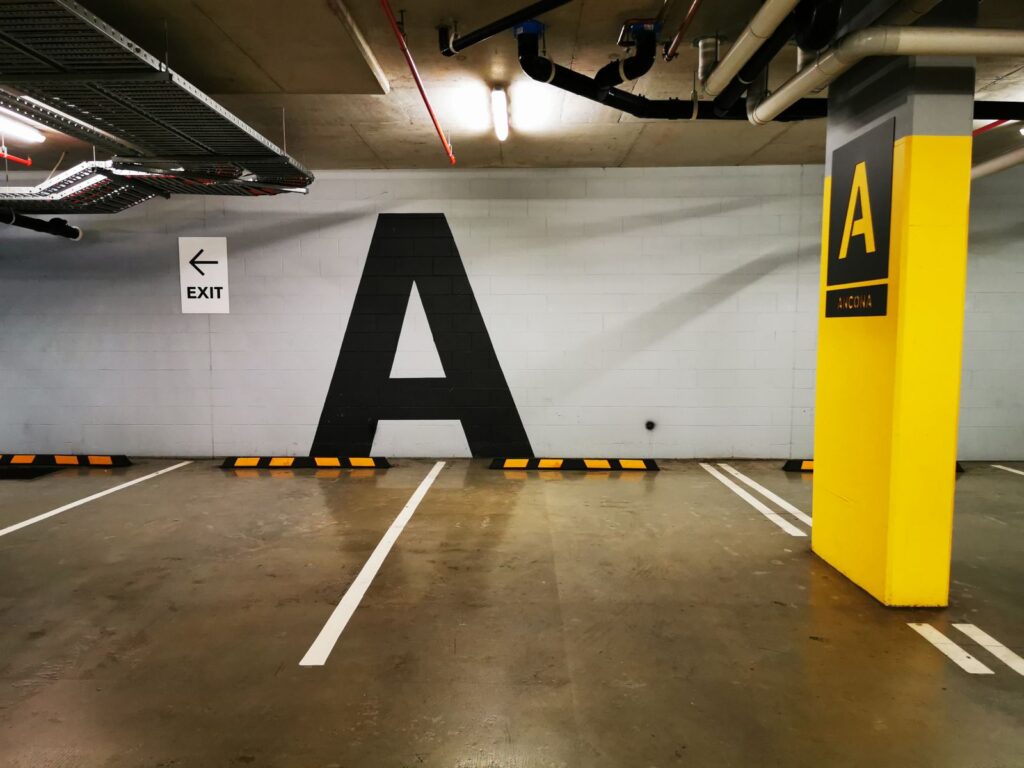
Basements and parking areas are a much harsher environment than their flat appearance suggests: vehicles coming and going continuously, wheels rubbing and turning on the spot, rainwater and car-wash water pooling, moisture from the ground seeping back up through the substrate, and weak light making it hard for drivers to tell aisles apart if line marking is unclear. Epoxy flooring for basements therefore has to solve three requirements at the same time: load-bearing, waterproofing and line marking.
This article presents those three requirements based on the general properties of epoxy floor coating material, referring to the standard frameworks TCVN 9014:2011 and TCVN 12574-2018. The specific parameters of each Kadier system are not published in this article; when official technical data sheets (TDS) become available, the content will be updated accordingly.
1. Load-bearing: cars, light trucks and turning points
The load in a parking area is not just the weight of a stationary vehicle. When a vehicle brakes, accelerates or turns on the spot, its wheels create twisting and shear forces on the floor surface, concentrated at entrances and exits, bends, up and down ramps and turning points. These are also the spots where the coating is most likely to peel and wear if adhesion to the substrate is not yet good.
Therefore, when choosing a coating system for a parking area, three factors need to be considered together: the adhesion of the coating to the concrete substrate, a thickness suited to vehicle density, and the abrasion resistance of the topcoat. Ramps and bends should be given priority for reinforcement, instead of applying the same coating evenly across the whole parking area as in parking bays with little movement.
The concrete substrate of a basement also needs to be checked carefully before coating, especially its moisture content and cracks. The article concrete floor preparation before epoxy coating presents why moisture testing and substrate preparation are mandatory steps, and this is even more true for basements, where moisture from the ground can persist all year round.
2. Waterproofing and protection against rising damp
Unlike a factory floor above ground, a basement floor is subject to moisture pressure from below the substrate. If an epoxy coating is applied to a substrate that is still highly damp or without a suitable damp-proofing measure, moisture accumulating under the coating can cause bubbling and peeling after a period of use.
The correct treatment starts with a survey: measuring substrate moisture at many points, checking the drainage system and the falls of the floor towards drains, and identifying spots that have leaked or pooled water before. Depending on the survey results, the installer will advise on substrate treatment and a suitable coating system, for example a dedicated moisture-barrier layer before the epoxy coating where substrate moisture is high. This needs to be decided based on the actual survey data of the project; it cannot be concluded from looking at the surface alone.
Besides rising damp, parking floors are also regularly exposed to rainwater carried in on wheels, car-wash water and leaking oil and grease. The seamless, joint-free coating of epoxy paint helps prevent water and oil from soaking down into the concrete substrate, while also making cleaning faster than for bare concrete floors or tiled floors with grout joints.
3. Line marking and zoning: safety matters no less than durability
In a basement with no natural light, the line marking system is the language that guides drivers. A well-organised parking area usually has:
- Parking-bay lines: clear, straight, and with enough contrast against the floor colour for drivers to recognise quickly.
- Arrows and one-way aisles: guiding vehicle flow and avoiding conflicts at bends and entrances and exits.
- Pedestrian walkway lines and no-parking areas: separating pedestrians from vehicle flow, and marking areas in front of emergency exits, fire hydrants and escape routes.
- Colour by area: different floor colours and line colours between parking areas, aisles and technical areas help drivers orient quickly, especially in multi-storey parking areas.
Line marking on an epoxy floor needs to withstand rubbing wheels and be easy to maintain: when marking wears, it should be touched up early rather than left to fade gradually before the whole layout is reorganised. Choosing a lighter floor colour also helps the parking area look brighter under lamp light, supporting visibility and a feeling of safety.
4. Anti-slip on ramps and bends
Up and down basement ramps are the highest slip-risk areas, especially when the floor is wet from rain. The floor surface on ramps should be rougher than in flat parking areas, and should be checked in wet conditions, not only when dry. Surface-texturing solutions need to be considered together with cleaning requirements, because an excessively rough surface will be hard to clean of oil, grease and dirt.
Which system for a basement?
For apartment-building and shopping-centre parking areas, a multi-layer roller-applied system such as RollCoat is often considered thanks to its flexible zoning by storey and by area. For enclosed basements with little ventilation during installation, a low-VOC water-based system such as AquaBase is an option worth considering thanks to its lighter odour during installation; the final choice still depends on the measured substrate moisture and the actual vehicle density.
Whichever system is chosen, three questions should be answered before installation: how much substrate moisture was measured, which areas bear the greatest wheel-twisting forces, and whether the traffic diagram and line marking system have been approved. Only when these three questions are fully answered will a basement floor be durable, dry and safe in operation.
Get advice on surveying substrate moisture and designing zoning and line marking for your basement or parking area.
Illustration: Pexels — Karen Laårk Boshoff. Image source: pexels.com.
