

 Tiếng Việt
 中文 (中国)
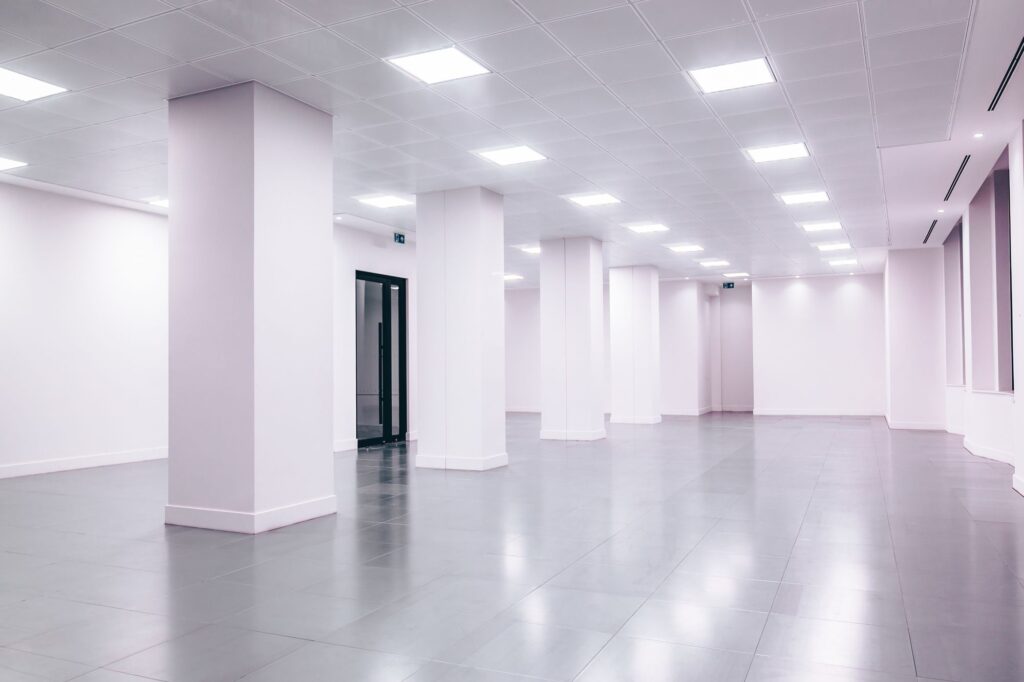
A commercial unit trading inside Vincom Plaza Tay Ninh needs its floor recoated, but it cannot close the whole unit for the work: customers keep coming in, counters keep selling, and each zone can only be handed back once it is fully finished. This article answers that question for Tan Ninh Ward, Tay Ninh province — how to work with a single epoxy flooring supplier on a phased refurbishment, and what to prepare so the quote reflects the real job.
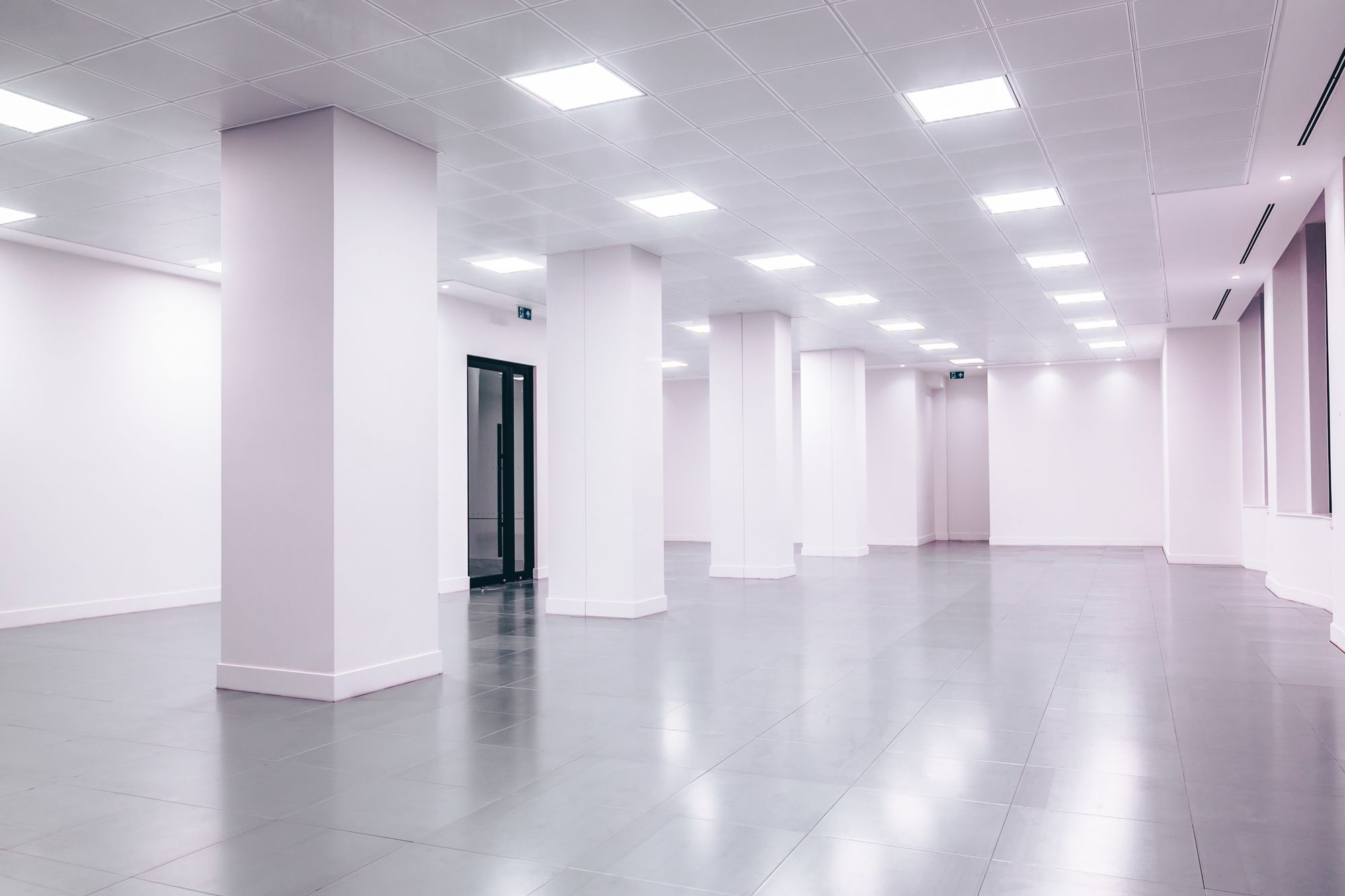
The ward, stated plainly: the new Tan Ninh Ward, Tay Ninh province, was formed under Resolution 1682/NQ-UBTVQH15 dated 16 June 2025, Clause 87 of Article 1: the whole of former Wards 1, 2 and 3 (of the former Tay Ninh City), former Ward IV and former Hiep Ninh Ward, plus the remainder of former Thai Binh Commune (after arrangement under Clause 78), were merged into the new ward named Tan Ninh Ward, and the new commune-level administration began operating on 1 July 2025. The complex in this article is Vincom Plaza Tay Ninh, located in former Ward 3 and now inside Tan Ninh Ward. One distinction matters from the start: the new Tan Ninh Ward is not former Ward 3 renamed — former Ward 3 is only one of the components that form the new ward. Tan Ninh Ward is also different from neighbouring Long An Ward in the same Tay Ninh province, which is the centre of the former Tan An City under Clause 84 and is not the location of the complex in this article.
Tan Ninh Ward and its operating commercial complex
Vincom Plaza Tay Ninh is an operating shopping centre in the complex at former Ward 3, with retail, food, service and entertainment units trading side by side in one complex. A shophouse row and a hotel stand in the same complex; they are mentioned here only as background of the complex, not as the subject of this article and not as a basis for inferring any scope or volume of work. This article gives no street number for the shopping centre, because published addresses differ on the house number while all of them record former Ward 3; the ward location stands on former Ward 3 having merged wholly into Tan Ninh Ward, while an unconfirmed house number is left out of the article.
Floors in a trading complex live a different life from factory floors: continuous foot traffic, goods trolleys, wash water, long opening hours and the need to keep the unit looking clean throughout trading. The buying question here is therefore not how to coat an empty floor in a single pass, but how to refurbish zone by zone while the remaining zones keep trading. That angle differs from the industrial-park articles linked in this article: the overview Epoxy Flooring for Industrial Parks in Ho Chi Minh City and Nearby Areas: Demand and Service Scope covers factory-floor demand across a wide area, while Epoxy Flooring for the Binh Duong Industrial Park Cluster (VSIP, Song Than): Industry Specifics follows the industry specifics of an industrial cluster. The three remaining articles — Epoxy Floor Coating for Song Than Industrial Park: Common Industries and Floor Types, Epoxy Flooring for Tan Tao Industrial Park (Ho Chi Minh City): Industries and Common Floor Types and Epoxy Floor Coating for VSIP Industrial Park, Binh Duong: Common Industries and Floor Types — are background on choosing a system by industry and floor type, not evidence about commercial units in Tan Ninh Ward.
Choosing a system by commercial unit type in the complex
Retail units in the shopping centre. A retail floor needs to be flat, continuous and low in joints so that dust and small debris do not collect, and easy to clean after each trading day. Where goods trolleys run regularly, the surface must wear evenly and must not peel in patches, because one peeled patch spreads quickly under wheels and spoils exactly the area customers see first. A roller system often suits a retail unit that needs a tidy surface renewal on a compact programme, while a self-levelling system gives a flatter and more uniform surface across wide areas with few fixed fittings. The final choice still has to rest on a survey of the existing substrate in each zone, not on the unit type label alone.
Food and service units. Floors in food and service areas face water, grease, wash water and far more frequent cleaning than a dry retail floor. The leading requirements here are slip resistance when the floor is wet, resistance to cleaning chemicals and no water penetration into the substrate, because water that soaks in over time weakens the substrate and breaks the coating bond. Preparation areas, washing areas and service corridors should be treated as separate zones with their slip-resistance and chemical-resistance requirements written down zone by zone, rather than covered by one general requirement for the whole unit. Customer service areas, by contrast, need a surface that stays presentable and easy to clean through peak hours.
Entertainment and service units in the complex. Floors in entertainment and service areas take foot traffic concentrated into peak hours, together with light impact, dragged furniture and a high visual standard, since customers look directly at the floor for the whole time they use the service. The surface here needs good wear resistance, stable colour and easy stain removal, without becoming noisy underfoot as customers move around. For areas with fixed equipment or areas whose layout changes with the season, the zone plan must fix equipment positions and walkways in advance, so that when each zone is handed back it can return to use at once without moving equipment back and forth repeatedly.
Phased refurbishment of a trading unit, zone by zone
Dividing the unit into work zones. The first step is not choosing a colour, but drawing the boundary of each zone on the real floor plan: the sales area, walkways, food areas, service areas and the small store at the back. Each zone is worked on and handed back separately, so that one zone finishes and returns to use before the next one starts. This division keeps part of the unit always trading, while dust, odour and noise stay confined to the zone under work. Boundaries between zones need screening and a marked temporary route for customers, so that customers do not walk into the work zone and goods can still move during trading hours.
Surveying the existing substrate zone by zone. Each zone has its own existing substrate, so the survey must be done zone by zone: the current floor type, whether concrete, tile or an old coating; visible cracks, peeling, settlement or water ingress; and moisture measured on site. Concrete substrate preparation — grinding, crack repair and moisture measurement — decides how well the new coating bonds, and this part cannot be shortened just because the unit keeps trading. A weak zone needs more thorough preparation even if that makes its programme longer than the other zones; forcing one common programme onto every zone damages the weakest zone first.
Matching the programme to trading hours. The work programme for each zone must match the trading hours of that zone itself, not the opening hours of the whole unit. Dusty, odorous or noisy operations belong in the hours when the unit is closed or footfall is lowest, while drying and curing can run overnight so that the zone is ready for handover the next morning. The programme should therefore be written zone by zone: which zone goes first, which follows, the workable hours of each zone and the handover time of each zone. If one zone hands back late, later zones must move with it rather than being compressed to recover the full reopening date, because compressed work is the fastest way to damage a coating that has not yet cured.
Handover and acceptance zone by zone. Each zone is accepted separately as soon as its work finishes: a flat and continuous surface, no peeling, no air bubbles, slip resistance matching that zone’s requirement, and finished joints and wall bases. Accepting zone by zone catches defects while they are still confined to one small zone, instead of finding them after the whole unit is finished and having to rework neighbouring zones. After acceptance, the zone returns to use and moves into maintenance: correct cleaning, no dragging of heavy objects in the early period, and periodic checks of the hardest-wearing spots, such as the main walkway and the area in front of the counter.
The general Kadier supply process
The general supply process runs through these steps: contact, survey, system advice, quotation, zone-by-zone work, acceptance and maintenance. The process is described at a general level, attached to no particular location, and any commitment on scope or timing is fixed only after a real survey. The unit manager sends unit information first, the survey team measures and assesses the existing substrate zone by zone, then advises a system suited to each unit type and to each zone’s hygiene, slip-resistance or chemical-resistance requirement. The quotation is prepared after the survey, on the basis of each zone’s area, substrate condition and individual requirements, and the work then proceeds on the agreed zone-by-zone schedule.
What to prepare for a quotation
For a quotation that stays close to the real job, the unit manager should prepare six groups of information in advance. First, the unit type and the position of each zone inside the unit, with a short description of how each zone is used. Second, the area of each zone, measured separately rather than added into one figure for the whole unit. Third, the existing floor type and visible damage in each zone, such as cracks, peeling, water ingress or a deteriorated old coating, with photographs where available. Fourth, the hygiene, slip-resistance and chemical-resistance requirements zone by zone, since a food area and a dry retail area cannot share one requirement. Fifth, the workable hours of each zone, including closing hours, low-footfall hours and days when no work is possible. Sixth, the desired handover time for each zone, so that the zone-by-zone schedule follows the unit manager’s own order of priority. The clearer these six groups are, the fewer adjustments the quotation needs after the survey and the less the zone schedule is disturbed once work begins.
Contact and quotation
For advice and a quotation after survey, contact Hotline 0899355489, Zalo 0899355489 or WeChat wxid_95o54joujyrr12. When contacting, send the six groups of information above so that the survey team brings the right measuring tools and arranges a zone-by-zone survey that fits the unit’s trading hours.
