

 Tiếng Việt
 中文 (中国)
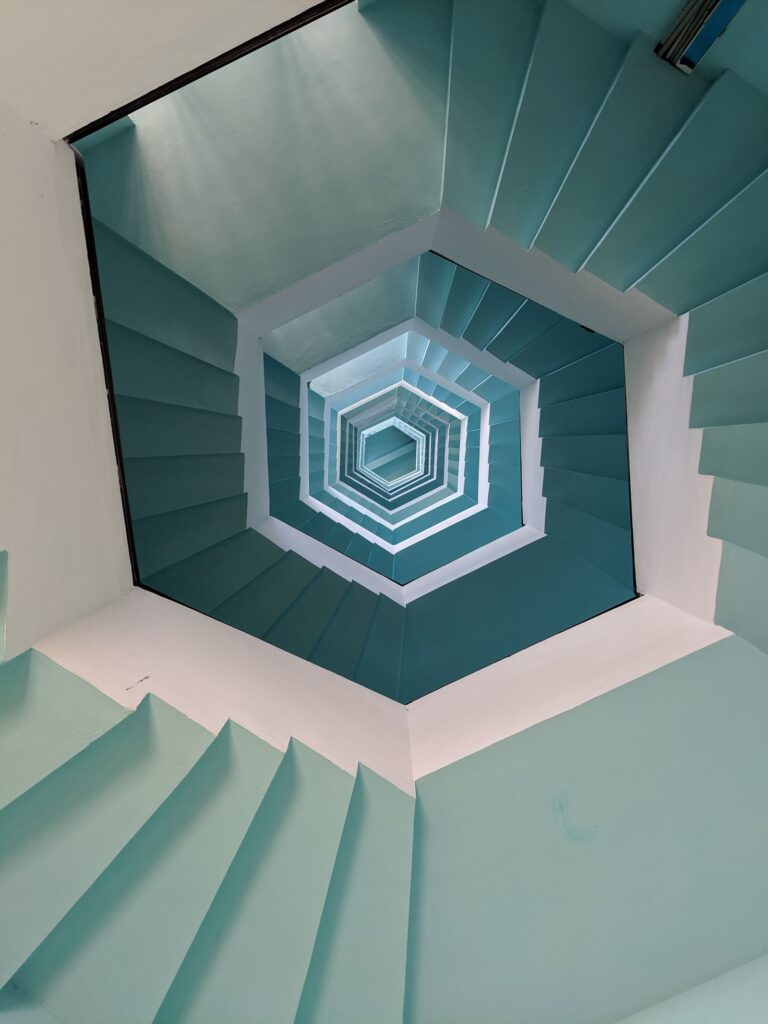
Staircases and pedestrian walkways see the heaviest foot traffic in a factory, warehouse or building, yet they are often coated last, with exactly the same coating and the same method as a flat floor. That approach ignores the most important difference: on a staircase, the foot does not land evenly on a flat surface but […]
Author Archives: admin
25
Oct
Oct
Mezzanine floors and technical floors are easily lumped together as “factory floors” and coated out of habit, even though how they carry loads and how people walk and work on them differ markedly from the main production floor. This article is about exactly those two areas: the floor surface of a mezzanine used for walking, […]

25
Oct
Oct
When a project owner asks “how long does an epoxy floor last”, the correct answer is rarely a single number. The same coating system, placed in two different factories — one with only foot traffic and light trolleys, another with continuous forklift traffic and frequent contact with cleaning chemicals — will deteriorate at very different […]

25
Oct
Oct
When receiving a quotation that says “1mm self-leveling epoxy, full package”, the most important question is not the final figure, but: which items does that figure already include, and under what substrate conditions does it apply. Two quotations both saying “full package” can still differ greatly if one has already counted substrate treatment, primer and […]
25
Oct
Oct
When an applicator offers a “3mm self-leveling epoxy full package”, the first thing a project owner needs to clarify is not the total figure, but which items that package includes, how far it goes, and whether any item is not yet inside the package. Two packages both named 3mm self-leveling can still differ greatly in […]

25
Oct
Oct
When receiving an anti-static epoxy floor quotation, many project owners look only at the final total and skip the more important question: which items does that total include, and which items, if missing, will have to be paid for later. This article only analyses the composition of a full-package anti-static package and the conditions that […]

25
Oct
Oct
Epoxy floor blistering caused by subfloor moisture is a common failure on ground floors, in basements, and in areas where the concrete slab has previously suffered water ingress. Unlike blisters caused by air trapped during application, this type of blistering occurs because moisture moving up from within the concrete slab pushes the coating away from […]

25
Oct
Oct
Fine, shallow cracks that interlace into a network across the surface of an epoxy coating are called crow’s-foot cracking (crazing) in this article. The most important point when encountering this phenomenon is to establish where the cracks sit: only in the epoxy coating, or already penetrating down into the concrete substrate beneath. Those two cases […]

25
Oct
Oct
Scratched epoxy floors are a common occurrence in factories, warehouses, and car parks: forklifts turning, pallets dragged along, sand and gravel trapped under wheels, tools dropped. The difficult question is not “can it be repaired”, but “how far should the repair go”. Patching a few marks is cheap and quick, but patching the wrong spots […]

25
Oct
Oct
A glossy, seamless epoxy floor is chosen precisely because it is easy to wipe clean, yet quite a few factories encounter the opposite: the floor always carries a hazy layer of dust, gets dirty again quickly after cleaning, or has stubborn marks that ordinary cleaning does not remove. This phenomenon rarely comes from a single […]