

 Tiếng Việt
 中文 (中国)
Preventive Maintenance Is Different from Defect Repair
This article is about preventive maintenance: the regular work that keeps an epoxy floor in good condition and reduces the occurrence of damage. When a floor already shows peeling, bubbling, or discoloration, that falls within the scope of the defect-handling article (KAD-018) — this article does not replace that one, and the measures below are not meant to “cure” a floor that is already badly damaged.
The general principle of epoxy floor maintenance is: keep the floor clean, avoid mechanical and chemical impacts beyond the capability of the coating system, and detect early small signs of deterioration before they spread. Good maintenance does not require complex techniques, but it must be regular and done correctly.
Daily and Periodic Cleaning
- Daily sweeping: dust, sand, and debris are the agents that scratch the floor surface the most, especially in forklift lanes and loading areas. Sweeping or vacuuming daily, especially before forklifts operate, is simple but the most effective work.
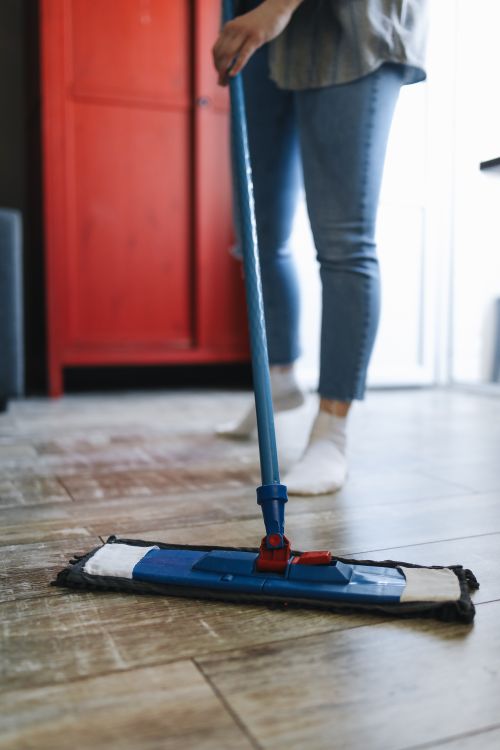
- Periodic wet mopping: mop the floor with clean water and a soft mop on a schedule suited to the level of use — areas with heavy foot and vehicle traffic need mopping more often than little-used areas.
- Using a floor scrubber when needed: for large areas such as factories or logistics warehouses, a floor scrubber with a soft brush or pad cleans more evenly than mopping by hand. Choose a pad that does not cause scratches, and avoid scrubbing too hard on one spot.
- Handling stains as soon as they occur: oil, spilled chemicals, or tire marks left for a long time become harder to clean and more likely to leave stains. Clean them as soon as they are found, rather than waiting for the general cleaning schedule.
- Keeping walkways and loading areas clear: goods, pallets, or materials spilling into walkways not only create safety risks but also scratch the floor surface when dragged.
Cleaning Agents: What to Use and What to Avoid, in General Terms
In general terms, epoxy floors suit neutral cleaning agents, diluted according to the cleaning agent manufacturer’s instructions, and rinsed clean after use so that no chemical residue remains on the floor surface. Before using a new cleaning agent over a large area, test it on a small, hidden area and observe before applying it everywhere.
Conversely, strongly corrosive cleaning agents, strong solvents, or abrasive powders should be avoided, because they can dull, stain, or destroy the topcoat over time. Concentrated chemicals should also not be left pooling on the floor surface for a long time, even when the chemical is used in production — if there is a spill, clean it immediately and refer to the official technical data sheet (TDS) of the coating system to know the specific chemical resistance limits. Note: resistance to each type of chemical is a specification specific to each coating system, and has not been confirmed generally for all Kadier systems.
Handling Minor Scratches
Light surface scratches that have not penetrated through the coating usually affect only appearance and can be monitored further rather than repaired immediately. Sensible handling includes: cleaning the scratched area, marking it and photographing it for monitoring, and checking again after a period to see whether the scratch has spread or shows signs of edge peeling. If a scratch is deep, exposes the concrete substrate, has peeling edges, or appears over a wide area, it is no longer everyday maintenance — contact the installer or the coating system supplier for proper assessment and repair, rather than coating a new layer on top before the cause has been determined.
One important note: do not apply another coating layer over a floor that has a problem before knowing which coating system the old coating is and whether it still adheres well. An incorrectly overcoated layer can peel entirely and make subsequent repair much more costly.
Suggested Periodic Inspection Schedule
- Daily: sweeping, quick checks of areas with spills, obstacles on walkways, and line markings faded by dirt.
- Weekly: wet mopping of the whole floor or by area, checking heavy-load locations and locations where forklifts frequently turn.
- Monthly: overall floor inspection: cracks, deep scratches, peeling edges, faded line markings, discolored areas, and areas of standing water (if any).
- Quarterly or half-yearly: a full review together with the operations team, recording locations needing minor repairs, and cross-checking against warranty conditions so the warranty remains valid.
Simple record-keeping — inspection date, location found, photographs — helps the project owner track how the floor changes over time and provides clear evidence when a warranty claim is needed.
Habits That Help Floors Last Longer
- Avoid dragging heavy objects, pallets, or equipment with sharp edges directly on the floor surface; use trolleys, suitable wheels, and protective sheets when moving heavy objects.
- Protect rack feet and machine feet from repeated impacts at the same point.
- Do not leave water standing on the floor surface for long; check and fix sources of seepage and leaks from roofs, pipes, or washing areas.
- Train operations staff in cleaning procedures and spill handling, because the people who use the floor every day are the ones who detect abnormal signs earliest.
Note on specifications: The individual specifications of each Kadier coating system (thickness, material consumption, chemical resistance) will be updated when the official technical data sheet (TDS) becomes available.
Contact for Consultation
If you need advice on a maintenance schedule suited to your project’s coating system and level of use, you can view the Kadier coating systems on the homepage — RollCoat, LevelFlow, StatGuard, AquaBase — and send your request through the contact form or use the coating system finder to identify the system in use.
