

 Tiếng Việt
 中文 (中国)
When choosing a floor for a factory, warehouse, or basement, project owners often face four common options: epoxy coating, polished concrete, tile, and PU flooring. Each type has a different composition and works in a different way, so no type is best for every project. This article compares the four floor types against the same set of criteria, so you can match them against the actual conditions of use of your own project rather than choosing by feel or by a single advantage.
This article presents the general characteristics of each material type. The technical specifications specific to each Kadier system apply only in accordance with the official technical documentation of the manufacturer when available; this article does not state any unconfirmed system-specific specifications. Standards such as TCVN 9014:2011 and TCVN 12574-2018 are used as general reference bases when assessing materials, and do not replace a site survey of each individual project.
1. Epoxy coating: a seamless film over a concrete substrate
Epoxy coating is a system made from epoxy resin and a hardener, applied in several coats over a prepared concrete substrate: primer, intermediate coat, and topcoat. The finished surface is seamless, with no joints, easy to clean, and line markings can be painted directly onto the floor to divide zones.
The main advantage of epoxy is a sealed surface with good chemical and oil resistance under the normal conditions of use of factories and warehouses, while colors and gloss levels can be chosen according to the function of each area. A limitation to note is that epoxy in general tends to yellow when exposed to sun for a long time, and durability depends heavily on substrate preparation: a damp, weak, or contaminated substrate will make the coating peel even if the material is good. Among the Kadier systems, the roller-applied RollCoat system suits ordinary areas, the self-leveling LevelFlow system suits floors that need high flatness and thickness, the water-based AquaBase system suits areas that need low VOC, and the anti-static StatGuard system suits cleanrooms and electronics plants.
2. Polished concrete: using the concrete substrate itself as the floor surface
Polished concrete means grinding and polishing the existing concrete substrate directly, optionally combined with a densifier and a sealer coat. The finished floor surface is the concrete itself, not a separate coating film.
The advantage of polished concrete is high mechanical durability, good abrasion and load resistance, and surface maintenance costs that are usually simple because there is no coating to peel. Its limitations are that the surface still has the cut joints and natural pores of concrete, its waterproofing and chemical resistance are lower than a sealed coating film unless a suitable densifier and protective coat have been applied, and stains from oil or grease can soak into the substrate if not cleaned promptly. Polished concrete suits warehouses, factories, and commercial spaces that need a hard floor surface, are not demanding about colors, and can accept joints.
3. Tile: individual pieces laid together, easy to replace piece by piece
Tile flooring uses ceramic, granite, or specialist tiles laid on the substrate, bonded with adhesive and grout joints. It is the most familiar floor type in residential and commercial buildings.
The advantages of tile are a wide variety of colors and patterns, individual damaged tiles that can be replaced without redoing the whole floor, and glazed tile surfaces that are little affected by staining from mild chemicals. The biggest limitation lies in the grout joints: grout is the weak line, easily stained, cracked, and permeable to water over time, so a tile floor struggles to achieve the sealed, seamless quality of epoxy. In addition, tiles can crack under concentrated loads from forklifts or heavy pallets if the substrate and adhesive are not strong enough, and tile surfaces can be slippery when wet unless a suitable anti-slip type is chosen.
4. PU flooring: a flexible film that resists impact and temperature change
PU flooring is a polyurethane-based coating system, applied similarly to epoxy in several coats over a concrete substrate. The core difference is that a PU film is usually more flexible and elastic than an epoxy film, so it withstands impact and substrate movement better under some conditions.
The advantages often mentioned for PU flooring are impact resistance, tolerance of temperature change, and better outdoor color retention than epoxy, depending on the specific product formulation. Its limitations are that PU application demands similar workmanship and substrate conditions to epoxy, and not every PU system offers the same level of chemical resistance or surface hardness. PU is often considered for outdoor areas, areas subject to vibration or temperature change, and areas that need a more flexible film. A dedicated comparison between PU and epoxy would need analysis by specific product system, because actual characteristics depend heavily on the formulation of each manufacturer.
5. Quick comparison table
| Criterion | Epoxy coating | Polished concrete | Tile | PU flooring |
|---|---|---|---|---|
| Surface | Seamless, no joints | Still has concrete cut joints | Many grout joints | Seamless, no joints |
| Chemical and oil resistance | Good under normal factory conditions | Average without a protective coat | Good on the tile surface, weak at grout joints | Good, depending on product formulation |
| Load and abrasion resistance | Good when the substrate and thickness are suitable | Very good | Easily cracked under heavy concentrated loads | Good, better impact resistance thanks to the flexible film |
| Anti-slip when wet | Anti-slip aggregate needs to be added if required | Depends on the level of polishing | Depends on the anti-slip tile type | Anti-slip aggregate can be added similarly |
| Cleaning | Easy to wipe thanks to the sealed surface | Easy, but stains can soak into the substrate | Grout joints are hard to clean over the long term | Easy to wipe thanks to the sealed surface |
| Repair | Local patching or recoating the topcoat | Re-grinding the surface | Replacing individual tiles | Local patching or recoating the topcoat |
| Outdoor use, sun exposure | Tends to yellow under prolonged sun | Stable, little color change | Stable depending on tile type | Usually keeps color better than epoxy |
| Appearance, colors | Color and gloss chosen by function | Natural color of concrete | Wide variety of patterns | Color and gloss chosen by function |
6. Choosing by intended use
- Factories and logistics warehouses carrying forklifts: epoxy and polished concrete are both strong candidates. Epoxy is better for a sealed surface, easy cleaning, and line marking; polished concrete is better for surface hardness and for having no coating to peel.
- Cleanrooms, pharmaceutical and electronics plants: epoxy has the advantage thanks to its seamless surface and dedicated anti-static systems such as StatGuard. Tile struggles to meet sealed and clean requirements because of grout joints.
- Damp, outdoor, or sun-exposed areas: epoxy needs careful consideration because of the yellowing risk; PU, polished concrete, or tile may suit better depending on load levels and cleaning requirements.
- Showrooms and commercial spaces: both tile and epoxy give good appearance. Tile is better for patterns, epoxy is better for a seamless surface and for creating color accents by zone.
7. Three common mistakes when choosing a floor
First, comparing only the initial cost while ignoring the costs of cleaning, repair, and recoating over the whole life of the floor. Second, choosing a floor type by a single advantage, for example only because it is anti-slip or only because the color is attractive, without checking the remaining criteria such as actual loads and chemicals. Third, ignoring substrate conditions: a weak, damp, or cracked substrate will shorten the life of every coated floor type, not only epoxy.
To choose correctly, start from four questions: what loads will the floor carry, what contact with chemicals and water will it face, will it be exposed to sun, and what level of cleaning is required. Only once those four questions are answered can the comparison table above be put to full use.
If you are undecided between epoxy and another floor type for your factory or warehouse, describe the function of the area and the current substrate conditions so that a suitable coating system can be advised. Get consultation
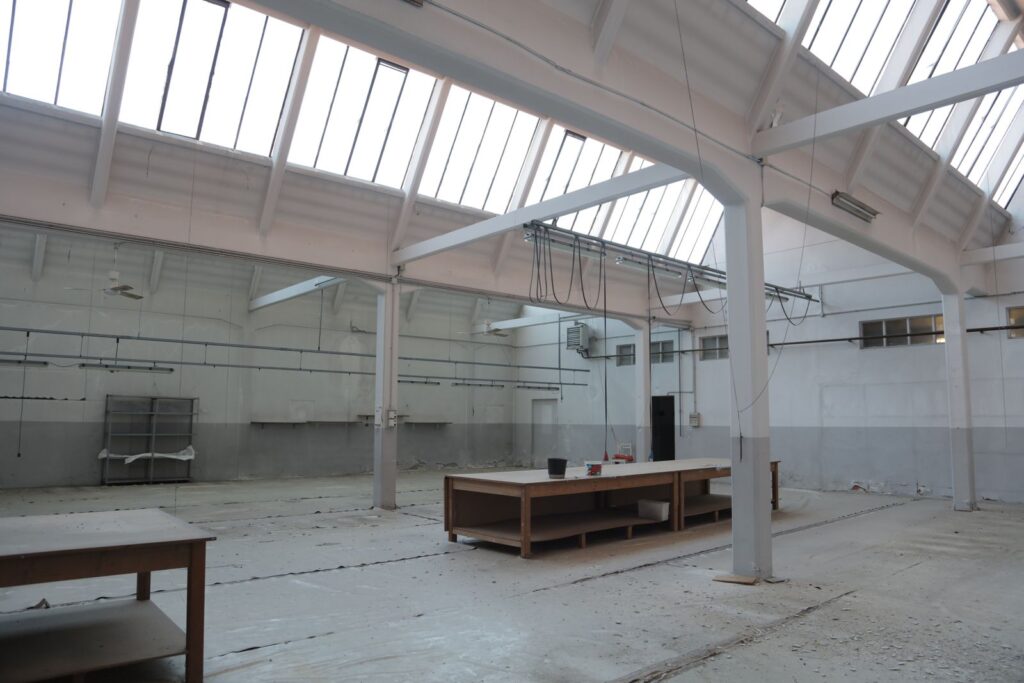
Illustration: Andrea Piacquadio / Pexels. This is a general illustration of a warehouse interior, not a photo of an actual project.
