

 Tiếng Việt
 中文 (中国)
When a contractor offers a “1.5–2mm self-leveling epoxy full package”, what the customer really needs to know is not just the package name, but: which items are in that package, which items are charged separately, and how that package applies to the factory floor substrate. This article analyses the composition and conditions of application of the 1.5–2mm self-leveling full package. It does not publish Kadier’s price list and does not replace a quotation for a specific project.
The general article on how to read a full-package quotation has analysed the general framework of a full-package quotation; the article on how to choose coating thickness helps determine the suitable thickness range by level of use. This article goes deep into one specific package — the 1.5–2mm self-leveling package — so readers can check each item when they receive a quotation.
Which package is the 1.5–2mm self-leveling package?
Self-leveling epoxy coating is a coating poured and self-levelled on the substrate surface, forming a seamless coating with few joints. Kadier’s self-leveling system is named LevelFlow. In the name “1.5–2mm self-leveling package”, the range 1.5–2mm is the package’s identifying parameter, used to distinguish this package from self-leveling packages with other thickness ranges.
This range does not mean a commitment that every project applying this package achieves exactly one specific thickness within that range. The actual thickness of a project must follow its own design, the technical data sheet (TDS) of the specific product used, and must be verified by measurement at acceptance after application. The “A note on specifications” section at the end of this article explains this point clearly.
Which items does a full package usually include?
A full package, properly understood, must cover materials, substrate treatment, application labour and acceptance handover together. Below are the groups of items that usually make up the 1.5–2mm self-leveling package. The order and names may differ between contractors, but readers should check that all these groups appear in the quotation received.
1. Survey and substrate assessment before application
Before application, the contractor needs to survey the current condition: the concrete substrate type, flatness, cracks, weak spots, moisture condition, areas previously repaired, and on-site application conditions such as access, power supply, ventilation and permitted application times. The survey is the basis for determining whether the substrate is fit for the self-leveling package or needs further treatment before coating. A quotation prepared without a substrate survey can only be a preliminary estimate, not a final quotation for that project.
2. Concrete substrate treatment
Substrate treatment is the step that decides adhesion and coating life. This group usually includes grinding the substrate to create roughness and cleaning, vacuuming, filling cracks and treating local weak points, and treating oil, grease or contaminants on the surface where present. For damp substrates or substrates at risk of reverse moisture, a separate moisture barrier solution may be needed — this item is not always inside the basic package and needs to be asked about clearly (see the “Items usually charged separately” section).
3. Materials for each coat of the system
A self-leveling system usually comprises primer, self-leveling coat and topcoat. The primer helps bond the concrete substrate to the coats above. The self-leveling coat is the coat that levels and creates the system’s main thickness. The topcoat protects the surface and decides colour, sheen and cleanability. A transparent quotation needs to state the product name of each coat, rather than just writing “epoxy coating” in general, so readers can check against the TDS of exactly that product.
4. Application labour and work organisation
This group includes the application workforce, supervision, and application tools and equipment. Self-leveling application demands skill at the mixing, pouring and levelling stages, because the material has a limited working time after mixing. Work organisation also needs to consider phasing the application so that a factory, if still partly operating, is not disrupted beyond plan.
5. Cleaning, post-application protection and user guidance
After the topcoat is complete, the contractor needs to clean the application area, remove temporary protection and hand over the site. User and maintenance guidance — including the waiting time before return to service, cleaning methods and impacts to avoid in the early stage — is also part of a full-package handover, not optional information.
6. Acceptance inspection and handover
Acceptance is the closing step of a full package. Acceptance should include a visual inspection of the whole surface, checking coating thickness at agreed measurement points, checking adhesion, and comparing against the design and the product TDS. The acceptance report is the basis for both parties to confirm that the work has been completed to the agreed scope.
Conditions of application of the 1.5–2mm self-leveling package
Not every substrate suits the same package. The 1.5–2mm self-leveling package usually suits when the concrete substrate is relatively stable, substrate moisture lies within the product’s permitted limits, the substrate surface can be treated to the required flatness and roughness, and the project has no special requirements beyond the scope of an ordinary self-leveling system, such as heavy chemical resistance or specialist anti-static performance. Those special requirements belong to other coating systems and need separate advice.
In terms of use level, the 1.5–2mm range sits at a middle level within the self-leveling range: thicker than a thin roller coat, giving a better flat and seamless surface, but not a solution for every heavy load or every difficult substrate condition. Choosing this thickness range or another must be based on actual loads, the type of vehicles and equipment moving on the floor, traffic frequency and substrate condition — that is, based on a survey, not on the package name.
Items usually charged separately — ask clearly before signing
Many quotation disputes arise from items outside the basic package that the customer assumed were included. When receiving a 1.5–2mm self-leveling package quotation, ask in writing whether the following items are inside the package or charged separately:
- Wide-area weak substrate treatment, reverse-moisture treatment and deep moisture barrier solutions.
- Line marking, zone painting, wall-base painting and corner and upstand details.
- Additional anti-slip coats or other special surface requirements.
- Out-of-hours application, or rushed application to the project owner’s special schedule.
- Transport of materials to distant projects and arising costs due to site conditions.
- Warranty and post-handover maintenance terms: scope, duration and each party’s responsibilities need to be stated clearly in the contract, not just agreed verbally.
The general principle: any item not clearly stated in the quotation and contract cannot yet be considered included.
Why do quotations with the same package name differ?
Although called the same 1.5–2mm self-leveling package, quotations for two projects can differ considerably, because the following factors all affect the actual workload:
- Application area: a small area usually has a higher per-unit-area cost of work organisation than a large area.
- Substrate condition: a new, flat, dry substrate needs less treatment than an old, cracked, weak or damp substrate.
- Site conditions: project location, transport access, height and ventilation capability affect work organisation.
- Colour and surface requirements: colours, sheen and special surface requirements can change materials and work stages.
- Schedule: application by shifts, by phases or continuous application all affect labour and organisation.
Comparing quotations by package name alone is therefore not enough. Each item, the product name of each coat, the substrate treatment scope and the acceptance content need to be compared — the factors the general full-package quotation article has guided readers to check.
How to read a 1.5–2mm self-leveling package quotation
When receiving a quotation, readers can check it against the following checklist:
- Does the quotation state each coat and the product name of each coat?
- What jobs does the substrate treatment scope include, and how is difficult substrate treatment charged?
- How is the committed thickness stated, measured where, and verified by which method at acceptance?
- Which items fall outside the package and are charged separately, under what conditions?
- What are the application time, the waiting time before return to service, and the handover contents?
- How are the warranty, maintenance and responsibility terms stated when the surface encounters problems?
If any item above is still vague, ask the contractor to clarify in writing before signing the contract. A good quotation is not the shortest quotation, but one whose every item the reader can check against actual application.
A note on specifications
The 1.5–2mm range in the package name is the package’s identifying parameter, not a commitment of the actual thickness of a specific Kadier system. The actual thickness of a project must follow that project’s own design, the technical data sheet (TDS) of the specific product used, and must be confirmed by measurement at acceptance after application. This article does not publish the technical specifications of any specific Kadier product; every parameter applying to a specific project is taken from that product’s TDS and from the agreement stated in the contract.
Conclusion
The 1.5–2mm self-leveling epoxy full package, properly understood, is a scope of work comprising survey, substrate treatment, materials for each coat, application labour, handover cleaning and acceptance — not just a coating layer with a thickness figure. Reading each item carefully and asking clearly about separately charged items is the surest way to avoid unexpected arising costs. To receive a quotation for a specific project, an actual survey is needed: Kadier’s official price is only available after a survey — Contact for a quotation (contact form).
See also: What Does a Full Epoxy Flooring Quote Include? (general overview of quotation composition), Epoxy Coating Thickness 0.2–3 mm: How to Choose? (how to choose thickness by level of use), and the self-leveling system LevelFlow.
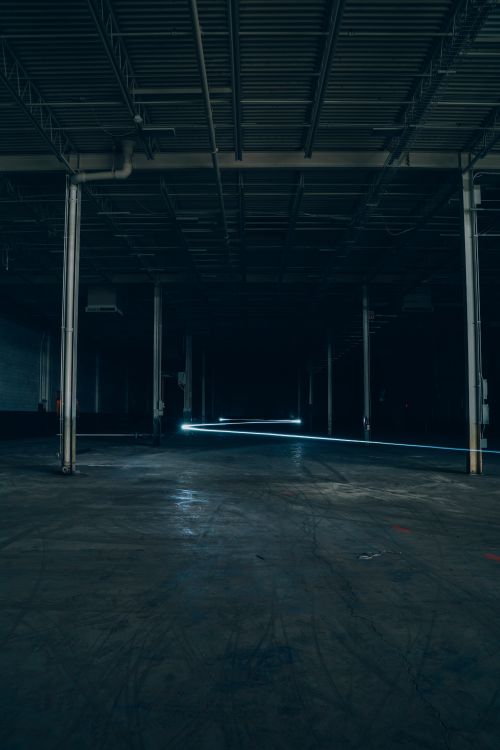
Illustration: an empty factory with a concrete floor before application, not a Kadier project. Photo: Ricky Esquivel via Pexels — Pexels.
