

 Tiếng Việt
 中文 (中国)
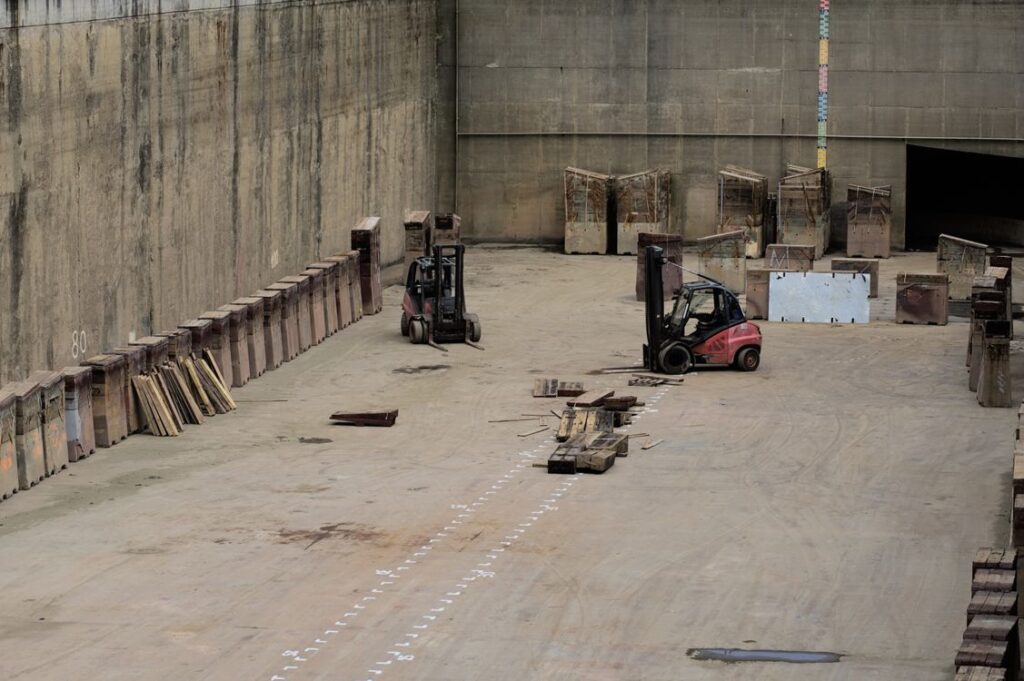
Two figures often confused when reading epoxy documents are compressive strength and adhesion strength. Compressive strength concerns the load-bearing capacity of the coating itself and the substrate system beneath it, while adhesion strength concerns the force holding the coating firmly to the substrate. A floor can bear compression well yet still peel if adhesion is poor, and conversely good adhesion does not compensate for a weak substrate or loads beyond the capacity of the system.
This article distinguishes the two concepts, explains the test methods, and explains how to read results at acceptance inspection. This article does not record a compressive or adhesion figure for any Kadier product, because no product-specific Kadier figures are published in a confirmed technical data sheet (TDS) yet. Any figure used to select a product or for acceptance must come from the TDS of the specific product and the acceptance standard agreed in advance.
What is compressive strength?
Compressive strength is the maximum compressive stress a material withstands before failure, usually expressed as force per unit area. For epoxy floors, it must be understood that forklift, racking or equipment loads do not act only on the thin top coating but are transmitted down through the concrete substrate. When assessing load-bearing capacity, the whole system of coating plus substrate must therefore be considered, not just one figure for the paint layer alone.
In practice, concentrated load at the wheel is the most damaging factor, not the total weight of the whole vehicle. Small, hard wheels carrying heavy loads create high concentrated stress at the contact point, easily causing indentation, cracking or peeling of the coating along the wheel track. When describing loads to a supplier, state the vehicle type, wheel load, wheel type and traffic density, rather than only the total load.
What is adhesion strength?
Adhesion strength is the force needed to separate the coating from the substrate, usually measured by the pull-off method: a pull stub is bonded to the coated surface, then pulled perpendicularly until the coating detaches, and the stress at failure is recorded. The result is not just a figure, but also the failure location: failure at the bond between coating and substrate, failure within the coating itself, or failure within the concrete substrate. Each failure location leads to a different conclusion.
If failure occurs within the concrete substrate, that shows the bond is stronger than the substrate itself, and the problem lies in substrate quality. If failure occurs exactly at the coating-substrate interface, substrate preparation, substrate moisture, the primer coat and application conditions need reviewing. At pull-off acceptance testing, therefore, ask for both the value and the failure location, together with the measurement locations on the floor plan, rather than accepting only an average figure.
How do the two figures relate to each other?
A durable floor system needs both: sufficient load-bearing capacity and adhesion good enough that the coating does not separate from the substrate under repeated loading. Repeated loads, vibration and temperature change can all reduce adhesion over time, even when the initial measurement meets the requirement. Initial acceptance is therefore a necessary condition, but maintenance and periodic inspection remain necessary to detect areas beginning to deteriorate early.
Substrate preparation is the step that most determines adhesion: grinding to open the surface, removing weak layers, dust, oil and grease and old coatings that no longer adhere, treating cracks, and measuring substrate moisture before application. A good coating applied to a weak, dirty or excessively damp substrate still risks peeling, no matter how high an adhesion strength its TDS records.
How to read results at acceptance inspection
Before application, agree in writing: the test method, number of measurement points, measurement locations, pass thresholds, and how to handle a point that fails. After measuring, compare each point against the agreed threshold, look at the failure location, and record the results in the acceptance report with photos. If results fail, identify whether the cause lies with the substrate, the material or the application before deciding on local repair or rework of the area.
See Kadier’s coating systems to compare system build-up and general scope of application: LevelFlow and RollCoat. Compressive and adhesion figures for each system, if available, must be taken from the TDS of the specific product.
Request a consultation — describe the wheel loads and the current substrate condition so they can be checked against the TDS of a suitable product and an appropriate acceptance approach.
Illustration photo: Pexels, photographer Richard REVEL. General reference framework: TCVN 9014:2011 and TCVN 12574-2018 on paints and coatings; product-specific figures are to be checked against the TDS of the specific product.
