

 Tiếng Việt
 中文 (中国)
Duc Hoa is the western gateway of Ho Chi Minh City, home to the widest range of incoming industries in the western group: from electronics, engineering and supporting industries to textile dyeing, pharmaceuticals, cosmetics and logistics. This article goes industry by industry through Duc Hoa, rather than looking at the whole cluster in general as the cluster overview does, and focuses on two substrate risks specific to this area: newly reclaimed land, and the wet areas and bleaching chemicals of textile dyeing.
Note on names: “Long An” in this article is only a familiar geographic area name (the former Long An); for administrative purposes today, the Duc Hoa area belongs to Tay Ninh province following the merger effective 01/07/2025. This article does not use the old name as a current administrative unit.
Duc Hoa: why its industry range is the widest in the western group
The parks in Duc Hoa include Tan Duc, Hai Son, Xuyen A and the Duc Hoa 1–3, Duc Hoa Dong and Huu Thanh parks, with industries spanning electronics assembly, engineering, textiles and packaging through food processing, pharmaceuticals and logistics. The biggest difference from parks with strict industry filters is that Xuyen A also accepts industries with a higher pollution risk, such as electroplating, textile dyeing and chemicals, thanks to a centralised wastewater treatment system of 10,000 m³/day according to the source. That creates a very different flooring problem: floors must cope not only with loads and abrasion, but also with moisture, bleaching chemicals and constantly wet areas.
Xuyen A versus strictly filtered parks: an inverted filter, so floors must differ
In parks that restrict textile dyeing, electroplating and chemicals, clean floors and load-bearing floors are enough for most factories. In Xuyen A, it is precisely the additionally accepted industries that set their own requirements: dyeing and electroplating areas need moisture and mild chemical resistance plus slip resistance when wet; chemical and cosmetics areas need seamless floors that are easy to clean and wash down. This article states clearly: the list of accepted industries is information from the industrial park’s own sources, and each sub-zone may have its own rules, so a survey must check the actual sub-zone rules rather than applying one rule to every factory. This article also does not state an absolute area for Xuyen A, because sources differ on the measurement scope (the whole park versus individual phases).
Floors for textile dyeing: moisture, bleaching chemicals, wet areas, slip resistance
A textile dyeing workshop combines three stresses at once: high humidity, bleaching chemicals and wastewater in wet areas. Floors here need to be seamless so dirty water does not sit in joints, slip-resistant for people and transport vehicles in wet areas, and mildly chemical-resistant according to the manufacturer’s chart. The AquaBase water-based system may be considered for areas needing low VOC, but the final choice still follows the substrate survey and the paint manufacturer’s chemical resistance chart, not the industry name in general.
Floors for pharmaceuticals, cosmetics and food: clean, seamless, easy to clean
Pharmaceutical, cosmetics and food processing groups need seamless floors with few joints that are easy to clean and withstand frequent washing. The LevelFlow self-levelling system is often considered for clean areas because it creates a seamless flat surface, but the specific cleanliness level of each factory is still set by that factory’s own internal standards and cannot be inferred from the industry name. The raw material and finished goods warehouses of this group return to the problem of forklift loads and lane markings, so clean areas and warehouse areas must be separated when choosing a system instead of coating the whole factory uniformly.
Floors for engineering, electronics and supporting industries: medium loads, abrasion resistance, ESD where needed
Engineering, electronics assembly and supporting industries in Tan Duc, Hai Son and the Duc Hoa parks have medium machine loads, localised oil and grease, and metal dust. The RollCoat roller system suits many production and warehouse areas because it withstands forklifts and abrasion well, while electronics areas with anti-static requirements need a separate survey before choosing the StatGuard anti-static system — not every electronics workshop needs ESD, and the specific ESD level is decided by each factory’s own requirements.
The reclaimed-land substrate problem: survey settlement and moisture before coating
Many new workshops in Duc Hoa are built on reclaimed former farmland, so the risks of settlement and ground moisture are higher than in the urban core. Coating a settling substrate without treatment will crack with the substrate and peel; surveying settlement, cracks and moisture is therefore a mandatory step before coating, and if the substrate is not yet stable, it must be treated first rather than coated to meet a deadline. Duc Hoa’s position adjoining Ho Chi Minh City also means rush jobs and fast handovers are frequent, but a fast schedule must never be traded for skipping the substrate survey.
Frequently asked questions
Do all workshops in Duc Hoa choose coatings the same way? No. Textile dyeing needs moisture and bleaching-chemical resistance, pharma and cosmetics need seamless clean floors, and engineering needs load and oil resistance; each industry group is a different problem.
Does every electronics workshop need anti-static flooring? No. Only areas with an ESD requirement confirmed by survey need an anti-static system; the specific requirement level is decided by each factory.
Can a newly built workshop floor be coated straight away? Moisture, substrate age and settlement risk must be checked first, especially on reclaimed land. Coating an unstable substrate easily cracks and peels with the substrate.
Why does this article not state an absolute area for Xuyen A? Because sources differ due to different measurement scopes (the whole park versus individual phases); this article only uses the industry direction from those sources and does not assert a single absolute figure.
Contact us for advice and a quote
Is your workshop or warehouse in Duc Hoa (Tan Duc, Hai Son or Xuyen A), in which industry, and is the substrate new or old? Send us the area, the type of factory or warehouse and the industry so we can advise on a coating system and arrange a survey. See epoxy floor coating quote, browse epoxy floor coating systems, or contact us via the contact page (hotline/Zalo 0899355489, WeChat wxid_95o54joujyrr12).
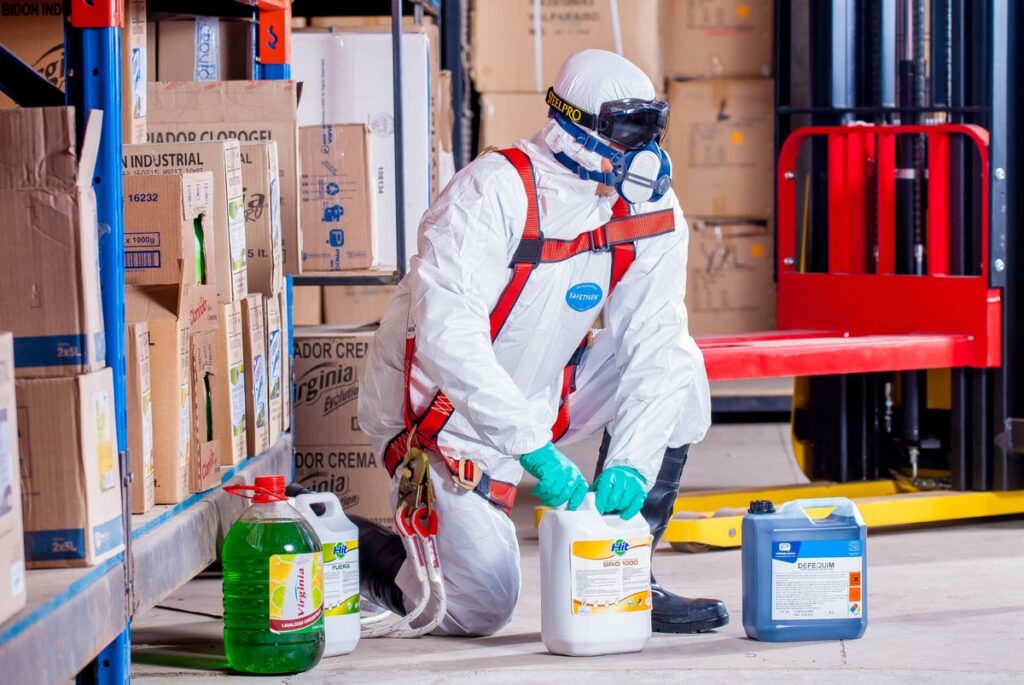
Illustration: Pexels stock photo (photo ID 209230). Illustration only, not a Kadier project.
