

 Tiếng Việt
 中文 (中国)
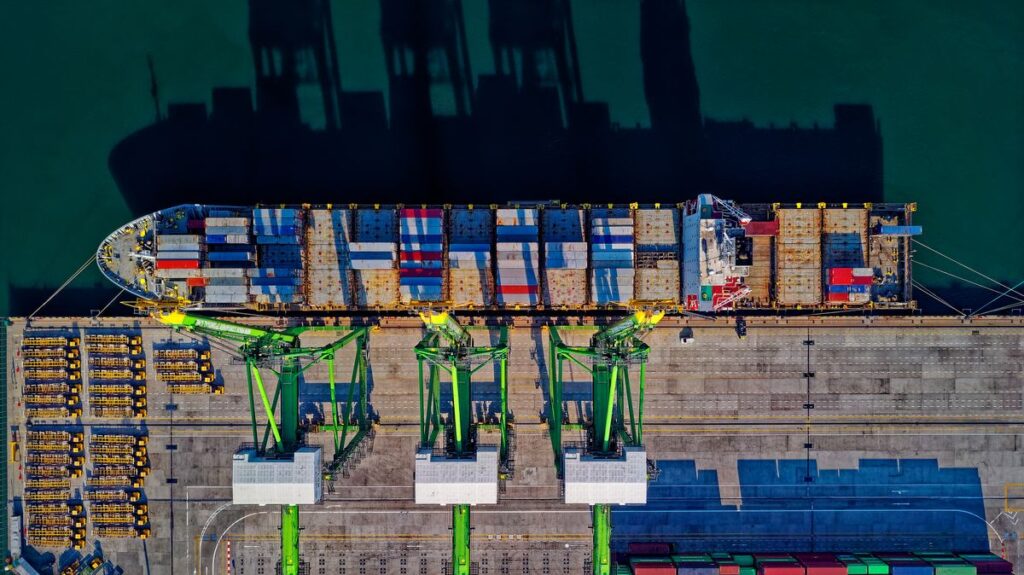
Phu My is where an industrial floor faces the harshest combination of conditions on a single surface: extremely heavy loads, chemicals and oil and grease, salt air and the high humidity of a coastal environment. This article goes zone by zone through Phu My to match the coating system to each area, rather than looking at the whole port and heavy-industry cluster in general, as the cluster overview does.
Note on names: “Ba Ria – Vung Tau” in this article is only a familiar geographic area name; for administrative purposes today, this area belongs to Ho Chi Minh City following the merger effective 01/07/2025. This article does not use the old name as a current administrative unit.
Why floors in Phu My are harsher than ordinary factory floors
An ordinary factory usually has to cope with only one or two main stresses, for example forklift traffic or frequent cleaning. In Phu My, the same area can simultaneously face trucks and containers coming and going, heavy machinery and cranes, leaking oil, grease and chemicals, plus salt air and high ground moisture because of the nearby sea. Choosing the wrong system on a single factor — for example good load resistance but poor chemical resistance, or good indoor adhesion but rapid chalking outdoors — can lead to early peeling. Surveying the substrate and checking the paint manufacturer’s chemical resistance chart for each chemical, concentration and contact time is therefore a mandatory step before choosing a system, and the final specification always follows the manufacturer’s technical documents together with the results of the on-site survey.
Phu My 1 zones (A/B/D): a different system choice for each zone
Phu My 1 covers a total of 945.13 ha according to the official source of the former regional investment promotion centre, with a clear zone structure: Zone A covers power, fertiliser and steel (361.5 ha), Zone B is chemicals (216 ha), and Zone D is warehousing and yards (73.5 ha). This division is precisely the framework for choosing coatings: heavy production zones prioritise load and impact resistance; chemical zones prioritise chemical resistance according to the manufacturer’s chart; warehouse zones prioritise vehicle loads, slip resistance and lane markings. Lumping the three zones into one generic “Phu My floor” would erase exactly this distinction.
Floors for steel, metallurgy and heavy engineering: extremely heavy loads, impact, oil and grease
Steel, metallurgy and heavy equipment manufacturing set the highest demands for load and abrasion: heavy truck wheels, containers, moving machinery and dropped heavy objects. Coatings here need sufficient thickness, impact and abrasion resistance, and oil and grease resistance, since oil is a constant presence on engineering floors. The concrete substrate needs grinding, crack repair and oil cleaning before coating; coating over an oily substrate without treatment is a common cause of peeling. Where cranes or trucks regularly turn, the vehicle routes should be surveyed separately and reinforced where needed instead of increasing thickness uniformly across the whole floor.
Floors for chemicals, fertiliser and energy: chemical resistance according to the manufacturer’s chart
Phu My hosts the gas – power – fertiliser complex together with chemical and fertiliser plants, so floors in the chemical zone cannot be chosen by feel. Every chemical, every concentration and every contact time has a different resistance level; storage areas and areas at risk of leaks need specialist systems, and the paint manufacturer’s chemical resistance chart must be checked before application. This article does not claim that epoxy floors resist all chemicals or solvents, because such a claim would be technically wrong. Outdoor or semi-outdoor areas also need a PU topcoat to resist chalking under UV light, since ordinary epoxy chalks quickly in direct sunlight.
Phu My 3 port warehouse and inland container depot floors: container loads, slip resistance, markings
Phu My 3 is a specialist zone built on a Vietnam – Japan model, with an inland container depot (ICD) inside the park, in operation since 28/10/2023 according to the source. Port warehouse floors here serve containers and high-frequency truck traffic, so they need heavy load capacity, slip resistance when wet, clear lane markings, and resistance to semi-outdoor conditions. Unlike an indoor factory floor, a port warehouse floor must also allow for rain, dust and sun: outdoor areas need a PU topcoat, while indoor warehouse areas need slip resistance for both forklifts and pedestrians. An MDI chemical project with a scale of 100,000 tonnes/year according to a 2023 source also shows that demand for heavy chemical-resistant floors in this area will keep growing, but every system choice must still rest on the survey and the manufacturer’s chart, not on the scale of the project.
The marine environment: moisture, salt, rising damp treatment and heavy-load acceptance
Salt air and high humidity are Phu My’s own background conditions compared with inland industrial parks. Before coating, substrate moisture must be measured and rising damp treated if the substrate risks pushing moisture upward, since ground moisture is a leading cause of blistering. Acceptance testing for heavy-load floors must also use the real loads and real vehicle routes, rather than visual inspection alone. The systems commonly considered by area include the RollCoat roller system for warehouses and forklift areas, the LevelFlow self-levelling system for areas needing a seamless flat surface, and a PU topcoat for outdoor areas; which system suits which area is still decided by the survey.
Frequently asked questions
Can epoxy floors resist all chemicals in Phu My? No. Chemical resistance depends on each chemical, its concentration and contact time, and must be checked against the paint manufacturer’s chemical resistance chart and the on-site survey.
Can epoxy be applied directly outdoors? Ordinary epoxy chalks easily under UV light, so outdoor or semi-outdoor areas usually need a protective PU topcoat; details follow the paint manufacturer’s technical documents.
Why do floors near the sea often blister after coating? The usual cause is substrate moisture and untreated rising damp. Measuring moisture and treating the substrate is a mandatory step that cannot be skipped to shorten the schedule.
Should Phu My 1 and Phu My 3 floors be treated differently? Yes. Phu My 1 is divided by production zones A/B/D, while Phu My 3 is built around port warehousing and an inland container depot inside the park; their load and chemical problems differ, so their system choices differ too.
Contact us for advice and a quote
How much load does your factory or port warehouse carry, and which chemicals does it come into contact with? Send us the area, the type of factory or warehouse and the industry so we can advise on a coating system and arrange a survey. See epoxy floor coating quote, browse epoxy floor coating systems, or contact us via the contact page (hotline/Zalo 0899355489, WeChat wxid_95o54joujyrr12).
Illustration: Pexels stock photo (photo ID 1554646). Illustration only, not a Kadier project.
