

 Tiếng Việt
 中文 (中国)
Phu My 3 Specialized Industrial Park, in Tan Phuoc Ward, Ho Chi Minh City, is a case where an industrial floor cannot be chosen from a single generic formula. Developed by Thanh Binh Phu My Joint Stock Company, the park was established in December 2014 under Vietnam – Japan cooperation, with an area of about 999 ha. According to information published by the developer in September–October 2026, the park has attracted 51 investors/projects with total registered capital of more than USD 6 billion, across heavy industry, chemicals, metallurgy, mechanical engineering, energy, supporting industries, high technology and logistics.
Note on names: This article covers only Phu My 3 Specialized Industrial Park at Phu My, Ho Chi Minh City — not Phu My 1 (see Epoxy Flooring for Phu My Industrial Park), not the “Phu My 3 Can Tho” project by the same developer in Can Tho, and not Phu My Industrial Park in Gia Lai. The old name Ba Ria – Vung Tau below refers only to the geographic area; the park now sits in Ho Chi Minh City administratively. This article also differs from the Ba Ria – Vung Tau industrial park cluster (Phu My, Cai Mep) overview: the cluster article looks at the whole region, while this article goes deep into one park only, Phu My 3.
The four-zone map: Phu My 3’s framework for choosing a floor
Phu My 3 is planned in four specialised functional zones: heavy industries; supporting industries and multi-sectoral industries; port and logistics; and administration and support services. Each of these four zones imposes its own demand on the floor — load, chemicals, flatness or vehicle flows — so the floor choice for Phu My 3 has to start from this four-zone map rather than from one coating for the whole park. That is also why this article does not reuse the Phu My 1 Zone A/B/D framework from the general Phu My article: the two parks are structured differently, and a different zone structure means a different way of choosing floors.
Two infrastructure advantages of the park shape the floor problem from the start. First, the park is about 2 km from the Cai Mep – Thi Vai deep-water port cluster, so heavy goods flows and containers are a permanent condition, not an exception. Second, according to the developer, the park has an underground power system, industrial gas supplied to the factory fence and a central wastewater treatment plant meeting column A standards — meaning the chemical, metallurgy and engineering plants in the park run at high, continuous intensity, and floors must withstand that rhythm. A land lease term of up to 70 years (according to developer information) also means the coating choice here is a long-term decision: fixing a wrong system on an operating plant floor costs far more than surveying properly before application.
Heavy, metallurgy and mechanical zones: a floor under load, impact and oil at once
In the heavy zone of Phu My 3, the floor works under combined pressure: heavy trucks and containers moving in and out continuously, machinery in motion, heavy objects that can fall onto the surface, and oil that stays on engineering floors day after day. A coating for this zone therefore has to meet three demands at the same time — thickness and toughness against impact, endurance against wheel abrasion, and adhesion that oil does not destroy. Before application, the substrate should be ground flat, cracks repaired and oil removed; skipping the oil-removal step is a frequent reason for peeling even when the coating type itself was correctly chosen. On routes where cranes or trucks turn regularly, the survey should separate out those routes for local reinforcement, because thickening the whole floor evenly costs more and still misses exactly the points under the greatest load.
Acceptance should follow real operations as well: run vehicles at their actual loads along the routes the plant will use every day, instead of judging the finished floor by eye. A floor that looks flat can still fail early exactly on a truck turning route or under a heavy machine if those points were not surveyed separately. The survey record for the heavy zone should therefore state: the maximum load, the vehicle types and frequencies, the turning routes and load-concentration points, and the state of oil and grease on the substrate.
Chemical and supporting zones: there is no single resistance rating for every chemical
The chemical resistance of a coating is not one general number that applies to every case: the same system can perform well against one chemical at low concentration for a short time, yet fail quickly against another chemical at high concentration or after prolonged contact. In the chemical and supporting-industry zones of Phu My 3, the first step is therefore not to pick a system name but to list the plant’s real chemicals and check each one against the paint manufacturer’s chemical resistance chart. Storage positions and places where a leak could occur need their own solution and cannot share a system with ordinary dry areas. It should also be stated plainly: no epoxy system resists every chemical and solvent, and any advice claiming otherwise is not technically trustworthy. For outdoor or semi-outdoor stretches, the top layer should be a type that withstands UV, since ordinary epoxy chalks under prolonged direct sunlight.
Phu My 3’s specialised character makes a shortened chemical list even less acceptable: plants in the park operate in chains — raw materials, intermediate chemicals, products and waste all pass across the floor. The chemical resistance chart must therefore be checked against the plant’s full real chemical list, including cleaning chemicals and generated waste, not only the main process chemicals. The substrate in leak-risk areas must also be treated as a system — coating, joints, collection channels and drainage points — rather than a flat surface coated and considered finished.
High-technology zones: seamless flat surfaces, dust control, to the plant’s own standard
The high-tech zone in Phu My 3 poses a very different problem from the heavy zone: floors need to be flat, seamless, low-dust and easy to clean, serving production with demanding technical requirements. In August 2026, the Tokuyama Vietnam polysilicon plant at Phu My 3 was inaugurated, with investment of more than USD 60 million and maximum capacity of about 4,955 tonnes per year (as reported in the press) — this example shows the park is attracting high-tech projects with exacting plant requirements, not only traditional heavy industry. This article makes no claim about that plant’s actual floor; the example is used only to identify the audience: a high-tech plant needs a survey against its own standard, including flatness, cleanliness and — where applicable — electrostatic discharge requirements, before a system is chosen.
For high-tech zones, the common mistake is using one coating system for both the production area and the support areas without distinguishing their requirements. The production area needs a seamless surface and dust control; storage and passage areas must handle forklift movement without slipping; the technical areas need light chemical resistance and easy maintenance. Separating these three requirements at the survey stage avoids both extremes: over-specifying the support areas, and under-specifying the production area.
Port, logistics and inland container depot zones: their place in the map, details in the general Phu My article
The port and logistics zone of Phu My 3 — which includes an inland container depot (ICD) inside the park — is the link carrying the park’s plants’ goods out to the Cai Mep – Thi Vai port cluster (see also Epoxy Flooring for Cai Mep Industrial Park). Floor demands here revolve around high-frequency container and truck traffic: the surface must carry heavy loads, stay non-slip when wet, carry clear lane markings, and cope with rain and sun on semi-outdoor stretches. Detailed coverage of port warehouse and ICD floors already exists in Epoxy Flooring for Phu My Industrial Park, so this article only fixes this zone’s place in the four-zone map instead of presenting that material again: its problem is container loads and slip resistance — different from the chemical zone’s resistance problem and the high-tech zone’s seamless-surface problem.
Phu My 3’s coastal conditions: salt, moisture and floors that push damp upward
Phu My 3 sits close to the sea, so its floors face two stresses that inland parks rarely meet: salt in the air and high moisture inside the concrete substrate. Before application, substrate moisture should be measured with instruments, and if the substrate risks pushing damp upward, a rising-damp treatment layer must go in first — skipping that step is the most common reason a coating blisters some time after use. Likewise, outdoor stretches need a top layer that tolerates sun and rain, rather than the same indoor top layer expected to last outdoors on its own. Both items — moisture measurement and the outdoor top layer — belong in the mandatory survey, not in the list of things that can be cut to shorten the schedule.
The eco-industrial direction and what to settle before signing
Phu My 3 is moving from a specialised-park model toward a green and ecological industrial park model: since 2023, JICA has run a technical assistance programme aimed at building model, smart and ecological industrial parks in the Phu My area, and in October 2026 the Ho Chi Minh City Export Processing Zones and Industrial Parks Authority issued a report concluding that the park meets all conditions for eco-industrial park certification. The recognition application is under consideration; this article does not claim the park has already been certified. For a plant owner, this direction has a practical consequence for floors: requirements on efficient resource use, emission reduction and industrial symbiosis will increasingly attach to material and application choices — so a system chosen today should be maintainable, locally repairable and cleanable without replacing the whole floor when a plant partly changes its function.
Before signing a flooring contract inside Phu My 3, a plant owner should have answers on the following points: which of the park’s four functional zones the plant belongs to, and whether its governing demand is load, chemicals or cleanliness; what the maximum load and the real operating vehicle routes are; what the full chemical list is — including cleaning chemicals — with concentrations and contact times; whether moisture readings have been taken and damp treatment completed before coating; and whether the proposed system matches the paint manufacturer’s chemical resistance chart for exactly that list. The final system decision rests on the manufacturer’s technical documents and the on-site survey findings, not on the size of the project or the park’s general name.
Contact us for advice and a quote
For advice on a coating system matched to your Phu My 3 plant or warehouse zone, loads and chemicals, send the area, the type of factory or warehouse and the industry, and the Kadier team will advise on a system and arrange an on-site survey. Pricing is on the epoxy floor coating quote page, system options are on the epoxy floor coating systems page, and direct messages go through the contact page. Reach the team on the hotline and Zalo number 0899355489, or on WeChat at wxid_95o54joujyrr12, and mention the park zone, loads and chemicals so the first reply can be specific.
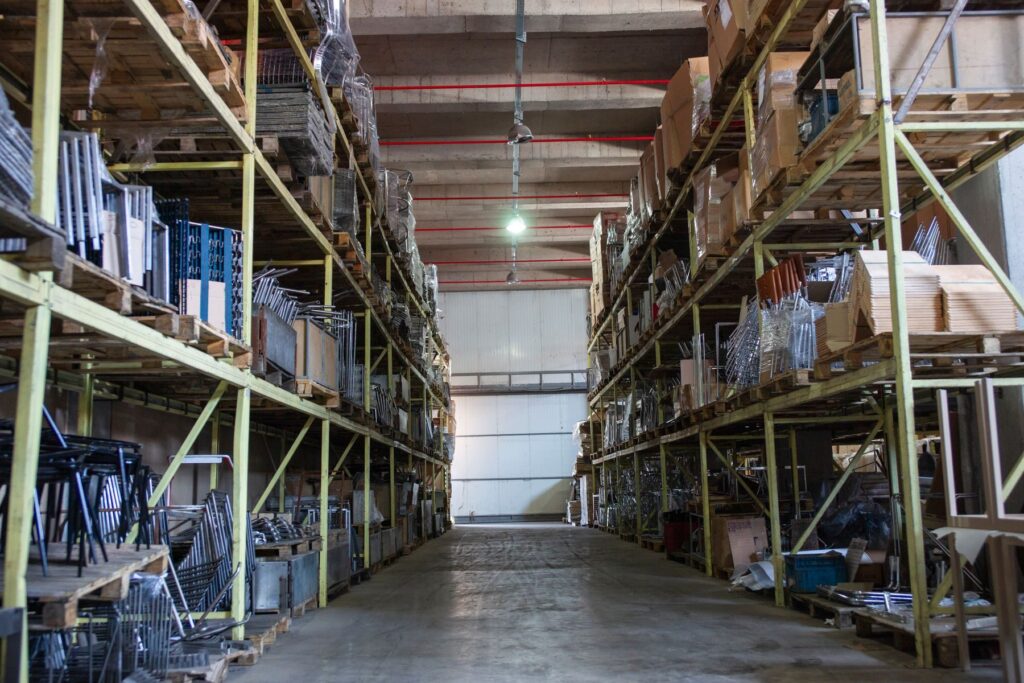
Picture: Pexels photo library, photo 4170172 — generic illustration, not a Kadier project and not a floor inside Phu My 3 Specialized Industrial Park.

Pingback: Epoxy Flooring for Phu My 2 Industrial Park (Ho Chi Minh City): Floors for a Multi-Industry, Assembly and Warehouse Park