

 Tiếng Việt
 中文 (中国)
The article Epoxy vs Polished Concrete, Tile and PU Flooring compared four flooring types broadly to give you an overall picture. This article goes deep into a single pair: PU flooring and epoxy flooring. Only when the two materials are placed side by side against the same set of criteria — build-up, mechanical properties, chemical resistance, application, maintenance, and selection cases — can you see why epoxy is the right choice for some projects, why PU is more suitable for others, and why choosing on a single advantage alone often leads to a wrong decision.
This article presents the general properties of the two materials. The statements below are a general framework, not confirmed specifications of a specific Kadier system or of any PU brand. The specific parameters of each coating system must be taken from the official technical data sheet (TDS) of that system when available. The standards TCVN 9014:2011 and TCVN 12574-2018 are mentioned as general reference bases when assessing materials.
1. Build-up and how it works: hard and seamless versus flexible and elastic
Epoxy flooring is made from epoxy resin and hardener, curing into a hard, seamless film that adheres tightly to the concrete substrate. The greatest characteristic of epoxy is high surface hardness and good wear resistance and load-bearing ability under stable substrate conditions. The weakness that comes with hardness is poor tolerance of deformation: when the substrate cracks, shrinks, or moves, a hard epoxy film easily cracks along with it.
PU flooring is made from polyurethane resin and hardener, curing into a film with clearly higher elasticity. PU can partly deform and then recover, allowing it to tolerate small substrate movements, vibration, and temperature changes better. In return, the PU surface is usually softer than epoxy, so its resistance to wear from wheels repeatedly turning in place or from sharp objects being dragged may be lower under the same conditions.
In short: epoxy wins on hardness and wear resistance on a stable substrate; PU wins on tolerance of deformation, vibration, and thermal shock. Projects with a new, stable substrate, heavy loads, and little temperature variation lean toward epoxy; projects with an old substrate prone to hairline cracking, vibration from machinery, or large temperature differences lean toward PU.
2. Mechanical properties: load-bearing, impact resistance, and wear resistance
For static load-bearing and surface wear resistance, epoxy generally has the advantage thanks to its hard film. Heavy-forklift routes, loading and unloading areas, and turning points are where epoxy shows its strengths most clearly, provided the substrate has sufficient strength and the coating is thick enough for the load.
For impact resistance and deformation tolerance, PU has the advantage. Objects dropped from a moderate height, vibration from equipment, and small structural movements cause less cracking in a PU film. However, “flexible” does not mean “does not wear”: PU still wears under hard wheels running repeatedly, and when worn, local PU repair also requires the correct compatible system, just as with epoxy.
A practical note: the mechanical properties of a film only show their full effect when the substrate is good. A weak, damp, or contaminated substrate makes both types of film peel, differing only in the failure mode: epoxy usually peels in hard patches, while PU may blister or delaminate flexibly. Comparing mechanical properties while ignoring substrate preparation is therefore an incomplete comparison.
3. Chemical resistance and UV resistance
The chemical resistance of both materials depends strongly on the specific formulation, so no general conclusion can be drawn that one type is “more chemical-resistant” without stating the chemical, concentration, and temperature. In general terms, epoxy has a broad chemical-resistance range for oils and greases, alkalis, and many dilute acids under spillage conditions, and specialist chemical-resistant epoxy systems using modified resins can withstand higher concentrations. PU also resists many chemicals well, especially oils and greases and some solvents, but some PU formulations are more sensitive to some strong acids and concentrated alkaline cleaners.
The clearer difference lies in UV resistance. Epoxy generally tends to yellow and chalk when exposed to direct sunlight for a long time, so outdoor areas or areas with direct sunlight through a large skylight roof are usually not a good setting for epoxy unless a specialist UV-resistant topcoat is used. PU, especially aliphatic-based PU, keeps its color and surface better under sunlight, so it is often considered for semi-outdoor areas, roof decks, or areas with direct sunlight.
4. Application: substrate moisture, curing time, and odor
Epoxy is sensitive to substrate moisture and dew point during application: a substrate that is too damp beyond the permitted level, or application when the surface temperature is close to the dew point, easily causes blistering and loss of adhesion. PU also has moisture requirements, but some PU systems tolerate substrate moisture better than epoxy and can be applied in more humid conditions. Conversely, some PU systems are sensitive to moisture during the curing process itself and may develop bubbles if they encounter uncontrolled moisture vapor.
For time to return to service, both types have fast-curing and standard-curing systems; no general statement can be made that one type is faster without comparing the same specific system class. For odor and VOC, both have water-based or low-VOC versions; for areas in operation such as hospitals, food plants, or partly operating warehouses, the low-VOC version of the correctly chosen material type should be selected, rather than changing material type only because of odor.
5. Maintenance, repair, and service life
Daily maintenance of the two floor types is similar: sweeping, vacuuming, and damp mopping with a suitable neutral cleaner, avoiding cleaners that attack the film. The difference lies in repair: local epoxy repair is relatively convenient because the hard film is easy to abrade to create roughness and overcoat with the correct system; local PU repair requires more attention to compatibility between old and new coats, because different elasticity can create stress at the repair edge.
The actual service life of both depends more on substrate, load, and operation than on the material name. An epoxy floor on a good substrate, with loads as designed and correct cleaning, will last longer than a PU floor on a weak substrate with loads beyond design. When a supplier promises a service life, ask what substrate, load, and maintenance conditions that service life applies to.
6. Quick selection table: when to choose PU, and when to choose epoxy?
Lean toward epoxy when: the concrete substrate is new, stable, and rarely cracks; heavy forklift loads and high wear apply; a hard, level floor surface that is easy to line-mark is needed; the area is indoors with little direct sunlight; good resistance to oils, greases, and dilute chemicals is required at a reasonable cost structure.
Lean toward PU when: the old substrate has hairline cracks, vibration from machinery, or large temperature changes; a flexible film with thermal-shock and deformation tolerance is needed; the area receives direct sunlight or is semi-outdoor and color retention is required; the area suffers frequent dropped-object impacts.
Consider a hybrid system when: the hardness of epoxy is needed in the load-bearing coat but flexibility is still needed in the top coat, or a UV-resistant PU topcoat is needed over an epoxy system below. A hybrid system should only be applied when the manufacturer confirms compatibility between coats; combining two systems from different brands without checking compatibility is the fastest way to create delamination at the layer interface.
On the epoxy side, the Kadier coating systems include the roller-applied RollCoat system, the self-leveling LevelFlow system, the water-based AquaBase system, and the anti-static StatGuard system. Whether a specific epoxy system meets the requirements of a project must be checked against the official TDS of that system, after the material type — epoxy or PU — has been settled using the selection table above.
Request a consultation to compare the actual substrate, load, temperature, and sunlight conditions of your project before finalizing the choice between PU flooring and epoxy flooring.
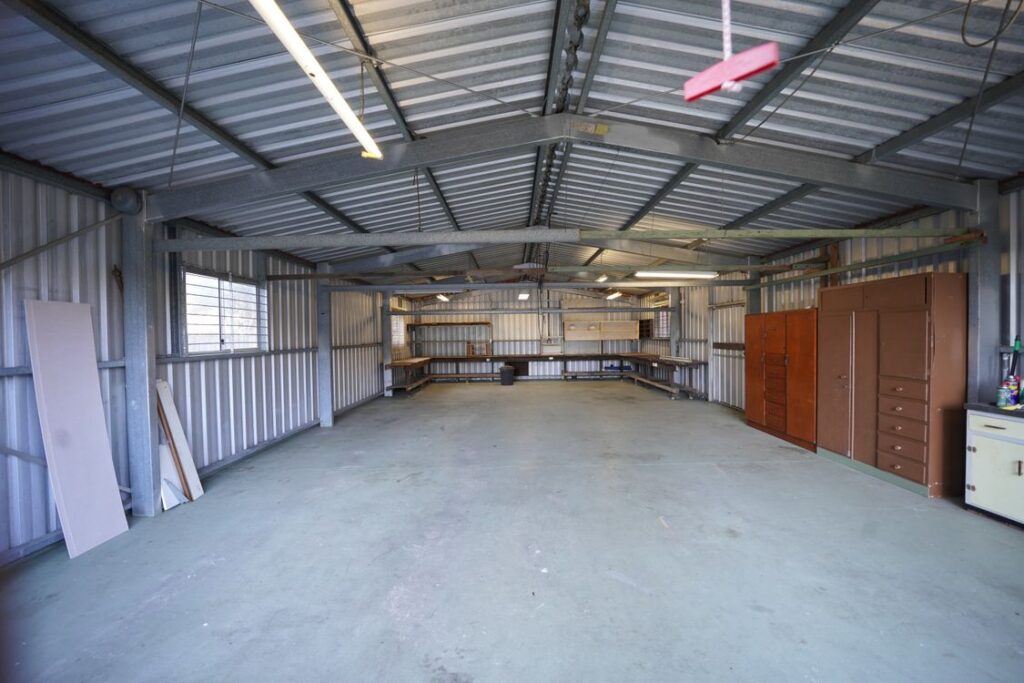
Illustrative image: an empty factory interior with a concrete floor (Source: Kevin Chuang / Pexels).
