

 Tiếng Việt
 中文 (中国)
This article is only about Phu My 2 Industrial Park, developed by IDICO (planned area 620.6 ha) — not the general Phu My park or Phu My 1 with its A/B/D sub-zones, not the specialized Phu My 3 park, and not the Phu My 2 Expansion park, which is a separate park (400.87 ha). The former name Ba Ria – Vung Tau below refers only to the geographic area; the current administrative unit is Ho Chi Minh City.
What Phu My 2 is: a multi-industry park, not a pure heavy-industry park
Phu My 2 Industrial Park was established under Decision 1729/CP-CN dated 18 November 2004 of the Prime Minister and Decision 2089/QD-UBND dated 29 June 2005 of the former Ba Ria – Vung Tau provincial People’s Committee; its master plan was approved under Decision 1130/QD-BXD dated 10 August 2006 of the Ministry of Construction, according to compiled sources. The park is located in the Tan Phuoc and Phu My ward area (pre-merger names), now in Ho Chi Minh City, with a planned area of 620.6 ha, and IDICO is its infrastructure investor. According to the investor, technical infrastructure was invested synchronously, including internal roads, power supply, water supply and centralized wastewater treatment. The park sits in the Seaport No. 5 planning area, linked to the Cai Mep – Thi Vai deep-water port cluster and the Highway 51 corridor.
The defining feature of Phu My 2 is its multi-industry orientation: electronics and information technology, consumer goods, assembly and mechanical repair, biotechnology, and stationery. That is a much broader and lighter industry mix than the heavy-industry frame of Phu My 1 or the specialized frame of Phu My 3. The floor question here therefore does not start from extreme loads or heavy chemical resistance. It starts from three more practical questions: how flat and clean must an assembly-line floor be, how does a warehouse floor carry forklift traffic, and how is the floor of an operating plant refurbished without tearing everything out.
Why the Phu My 1 and Phu My 3 frames do not transfer to Phu My 2
The article on epoxy flooring for Phu My Industrial Park works through the A/B/D sub-zones of Phu My 1 — steel, chemicals, port warehousing — while the article on epoxy flooring for Phu My 3 Specialized Industrial Park builds its floor framework from that park’s four-function map, including port and logistics. Both frames are right for their own parks, but applying either wholesale to Phu My 2 would miss the point: an electronics assembly plant does not need a container-load floor system, and a consumer-goods warehouse does not need the heavy chemical resistance of a chemical zone. The Ba Ria – Vung Tau industrial park cluster (Phu My, Cai Mep) article covers the whole region at overview level, while this article goes deep into one park only, Phu My 2, with its own zone map. The Cai Mep Industrial Park article and the neighbouring Chau Duc Industrial Park article are points of comparison in the same region, not sources of figures for Phu My 2.
The Phu My 2 zone map: assembly, warehousing, light ancillary areas
Assembly and electronics lines: flatness, a seamless finish, dust control. An assembly production area needs a flat, seamless floor that generates little dust and is easy to clean, because dust and uneven joints affect the line and the product directly. A self-levelling system is often considered for the production area itself, while aisles and buffer warehouses still need forklift resistance and slip resistance — two requirements that should not be merged into one system. If a plant has its own anti-static requirement, the survey must check it against that plant’s own standard before a system is chosen; this article does not claim that ordinary epoxy is anti-static, and it does not assign Phu My 2 any general requirement that the sources have not confirmed.
Warehouses and goods-in/goods-out areas: forklift loads, slip resistance, lane marking. Warehouse floors in Phu My 2 serve high-frequency forklift and truck traffic in a port-linked environment, so they must carry wheel loads, resist slipping when wet, and carry clear lane markings. At turning points and load-concentration points, the survey should separate the actual vehicle routes for local strengthening instead of thickening the whole floor evenly. Semi-outdoor areas and goods-out routes exposed to rain and sun need a PU topcoat for protection, because ordinary epoxy chalks under direct UV exposure.
Light ancillary and consumer-goods areas: chemical resistance matched to the real list. Where light chemical contact occurs — cleaning chemicals, oils and greases, detergents — chemical resistance must be checked item by item against the coating manufacturer’s resistance table, for the actual chemicals, concentrations and contact times of the plant. No epoxy system resists every chemical and solvent, and any advice claiming otherwise is not technically trustworthy. Storage areas and places at risk of leaks need their own solution, not the same system as an ordinary dry area.
Coastal conditions: substrate moisture and salt air remain mandatory checks
Even though Phu My 2 is lighter on loads and chemicals than its two neighbours, the coastal conditions are unchanged: salt air and high moisture in the concrete substrate. Before coating, substrate moisture must be measured with instruments, and if the substrate risks pushing moisture upward, an anti-moisture treatment layer must be applied first — skipping this step is the most common cause of coating blistering after some time in service. Likewise, outdoor floor sections need a topcoat that withstands sun and rain, not the same topcoat as indoors in the hope that it will last outdoors on its own.
Refurbishing the floor of an operating plant: survey first, work in phases
Many plants in Phu My 2 are already in operation, so the common job is not a new floor but refurbishment of an old one: wear along vehicle routes, local peeling, long-standing oil and grease. The correct sequence is grinding flat, repairing cracks, removing oil completely, and only then coating; coating over an oily substrate without treatment is a common cause of peeling. Work should be phased by the plant’s real operating areas, so the plant does not have to stop its whole line for one floor, and acceptance should run vehicles at the real loads and on the real routes the plant uses every day, rather than judging the floor by eye alone.
Points to have answered before signing a flooring contract in Phu My 2
Before signing, a plant owner should have answers to the following points: which zone of the Phu My 2 map the plant falls in — assembly, warehousing or ancillary — and whether its main requirement is flatness, vehicle load or light chemical resistance; the maximum load and the real vehicle routes, including turning points and load-concentration points; the full chemical list — including cleaning chemicals — with concentrations and contact times; whether substrate moisture has been measured and anti-moisture treatment applied; and whether the proposed system has been checked against the manufacturer’s chemical resistance table for exactly that list. The final system decision rests on the manufacturer’s technical documents and the survey results at the plant, not on the size of the park or its general name.
Contact for advice and a quote
For advice on a floor system suited to the zone, loads and chemicals of a plant or warehouse in Phu My 2, send the area, the type of plant or warehouse and the industry; the Kadier team will advise on a system and arrange a site survey. See the epoxy floor coating quote page, or contact us through the contact page (hotline/Zalo 0899355489, WeChat wxid_95o54joujyrr12).
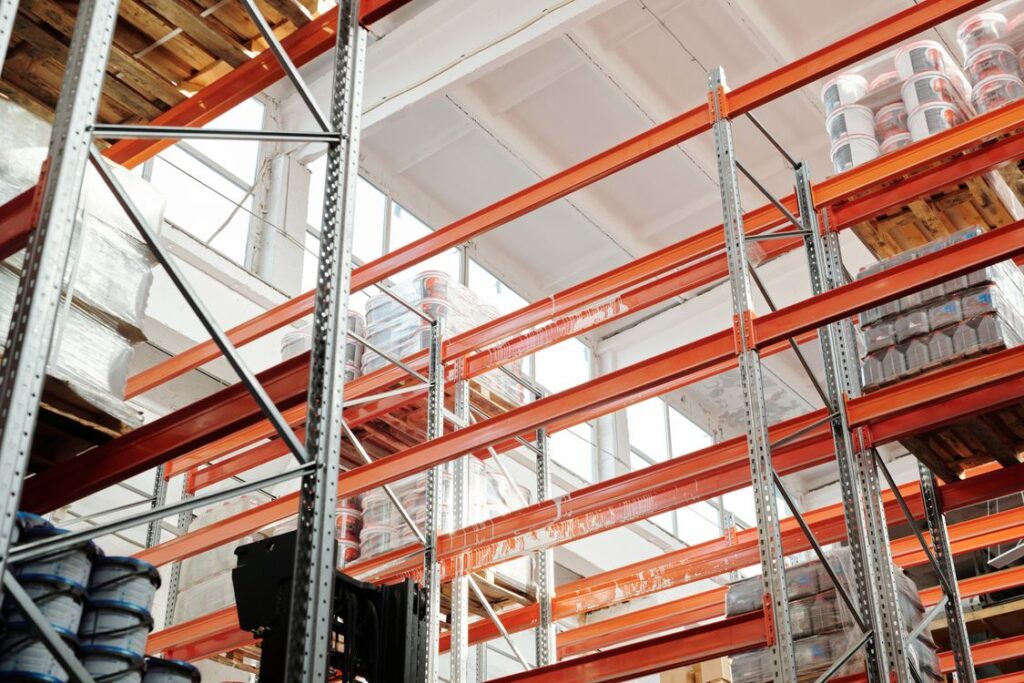
Illustration: Pexels stock photo (photo ID 4487364). Illustration only, not a Kadier project and not a floor inside Phu My 2 Industrial Park.
