

 Tiếng Việt
 中文 (中国)
Epoxy Floor Coating for Chau Duc Industrial Park, Ba Ria – Vung Tau: Common Industries and Floor Types
Chau Duc is not a plain industrial estate. Developed by Sonadezi Chau Duc Joint Stock Company, the Chau Duc Urban Industrial Park and Golf Course covers about 2,287 hectares in total, of which the industrial area accounts for about 1,556 hectares, the urban area and golf course for about 689 hectares, and land outside the urban area for about 42 hectares. The park’s published investor profiles report about 92 domestic and foreign secondary investors, with more than 547 hectares leased, an occupancy rate of about 49%. Those figures are quoted from published profiles, not presented as a census taken on the day you read this, and this article names no individual tenant.
A note on names: “Ba Ria – Vung Tau” is used here as the familiar geographic name for the area. Administratively, the area now belongs to the expanded Ho Chi Minh City following the merger of 1 July 2025. The article keeps “Ba Ria – Vung Tau” so readers can recognise Chau Duc, not as a claim about its current administrative status.
The floor decision in Chau Duc turns on a single fact: the park is split into two admission zones with different industry filters. The northern zone is reserved for high-technology industry, while the southern zone is a multi-sector zone. An electronics plant and a metalworking shop may sit inside the same park and still need two different floors, and a quotation that prices one coating system for both has not really read the address of the project.
The northern zone: high technology needs clean, flat, static-controlled floors
The northern zone of Chau Duc attracts assembly of electronic components, computers and semiconductors; cables and materials for telecommunications; pharmaceutical and medical products; and automobile assembly and accessories. What these industries share is not extreme load, but demands on cleanliness, flatness and static control. Dust shed by an uncoated concrete slab, a small crack that traps dirt, or an uncontrolled static zone can each become an operating problem even when the floor still looks acceptable to the eye.
For electronics and semiconductor workshops, the usual direction is a seamless self-levelling floor that is easy to clean and holds little dust. Where static control is genuinely required, the anti-static system must be placed in exactly the zone that requires it, with earthing and a post-installation surface-resistance check — not spread across the whole plant and then treated as done. For pharmaceutical and medical workshops, the floor needs to be seamless, free of joints that trap dirt, easy to wash, and resistant to the cleaning agents in routine use. Even so, a floor is only one infrastructure component: it does not by itself confer certification on a plant, and this article does not suggest otherwise.
In this zone, LevelFlow self-levelling is the natural fit for areas that must be flat and seamless, while StatGuard is the direction for areas with an anti-static requirement. The order matters: establish what the zone actually requires first, and only then choose the system.
The southern zone: multi-sector plants need load-bearing, abrasion-resistant, easy-clean floors
The southern zone of Chau Duc is open to precision mechanics and steel structures; agro-pharmaceutical, agricultural, food and drinks processing (excluding tapioca processing); construction materials (excluding commercial concrete and concrete structures); high-grade garments, textiles and footwear (excluding dyeing and tanning); plastic products; household appliances; wood processing and high-quality furniture; jewellery and precious metals; new materials and nanotechnology; and mechanical machining.
Here the floor problem is forklifts, heavy pallets, oil and grease, impact and end-of-shift cleaning. A metalworking shop carries concentrated loads at machine feet and along forklift routes; a finished-goods warehouse wears fastest at turning points and main aisles; a food-processing area needs a seamless floor that holds no standing water and washes down cleanly. For general production areas with moderate requirements, roller-applied RollCoat is the fitting direction, while areas that must be flat and seamless call for LevelFlow self-levelling instead.
What Chau Duc refuses to admit is itself part of the floor brief. The park turns away polluting industries, restricts rubber processing and basic-chemical manufacturing that generates industrial wastewater, and excludes dyeing and tanning from its garment and footwear intake. In practice, that means most plants here face oil, grease and light cleaning chemicals rather than sustained heavy-chemical exposure. A heavy-chemical containment system should therefore not be the default for every Chau Duc plant; only a zone with a real risk of leakage or pooling chemicals needs checking against the manufacturer’s chemical-resistance table and the findings of a site survey, and no single coating should be described as resistant to every chemical.
How Chau Duc differs from Phu My and Cai Mep
Readers who have seen the article on the Ba Ria – Vung Tau industrial park cluster (Phu My, Cai Mep) may wonder why two articles from the same region point in different directions. The answer is the character of each park: Phu My and Cai Mep form a heavy port cluster, with container loads, heavy chemicals, oil and gas, and a marine salt-and-moisture environment. Chau Duc is an inland park, with high technology in the north and lighter multi-sector industry in the south, behind a clean-admission filter. A port warehouse floor is proved by a full-load test along container routes; a Chau Duc factory floor is proved by matching the right performance to each zone — clean and static-controlled in the north, load-bearing and easy to clean in the south. Borrowing the port-cluster framework to price Chau Duc, or the reverse, is using the wrong framework.
System map by functional zone
| Functional zone | System direction | Watch out for |
|---|---|---|
| Electronics, semiconductor and telecom workshops (northern zone) | LevelFlow self-levelling; StatGuard where anti-static is required | Seamless, low-dust finish; surface-resistance check after installation in exactly the zones that require it |
| Pharmaceutical and medical workshops (northern zone) | LevelFlow self-levelling | No dirt-trapping joints, easy washing, resistance to routine cleaning agents |
| Metalworking and steel-structure workshops (southern zone) | RollCoat roller-applied, or a thicker system on forklift routes | Load bearing, impact resistance, anti-slip treatment on walkways and turning points |
| Finished-goods and raw-material warehouses | RollCoat roller-applied; LevelFlow where flatness matters | Lane marking that separates forklift routes from pedestrian walkways; wear checks at turning points |
| Food and drinks processing areas | LevelFlow self-levelling | Seamless finish, no standing water, sealed joints, wash-down at end of shift |
| Live production areas sensitive to odour | AquaBase water-based | Phased work, dust control and low odour beside lines that keep running |
This table gives directions only. Thickness, number of coats and the exact product for each zone must follow a survey of the actual substrate, the heaviest vehicle load, and any chemical exposure, and only then be fixed in a quotation.
An inland position: warehouse and forklift floors feeding port-bound goods flows
Chau Duc sits inland, beside the Highway 56 corridor, about 13 kilometres from Highway 51, about 16–19 kilometres from the Thi Vai – Cai Mep port system, and about 54 kilometres from the Long Thanh airport site, according to the park developer’s published profiles. That position gives Chau Duc floors a distinct role: a plant here is not a port warehouse, but its finished-goods and raw-material warehouses are the starting point of goods flows heading to port. Warehouse floors therefore have to carry continuous forklift and pallet traffic, stay anti-slip on walkways, and carry clear lane marking that separates vehicles from pedestrians — without needing a container-yard specification. That is the key contrast with Phu My and Cai Mep: “near the port” sounds similar, but the load on the floor and the acceptance test are entirely different.
For outdoor and semi-outdoor areas inside a plant compound, one further point applies: ordinary epoxy chalks under ultraviolet light, so outdoor areas need a protective polyurethane topcoat above the epoxy. The topcoat is not decoration; it is what allows an outdoor epoxy floor to last under sun and rain.
Working inside a lived-in complex: phased, low-odour, dust-controlled
Chau Duc is an industrial, urban and service complex in one, with housing, a commercial centre, schools, a hospital and a golf course in the same development. For a plant already in operation, floor work cannot treat the surroundings as empty land. Work should be phased by zone so that part of the plant keeps running while another part is coated; odour-sensitive areas beside live lines should consider water-based AquaBase; and grinding work needs dust control, because grinding dust affects both the production line inside and the neighbours outside.
Before any coating goes down, the concrete substrate deserves a proper survey: moisture measurement, strength and flatness checks, and repair of cracks and weak areas before priming. A damp substrate coated too early is liable to blister, and salt or contaminants left on an untreated substrate reduce primer adhesion. For a renovation over an old floor, the old coating’s adhesion must be established first, so the choice between grinding it off and overcoating it rests on evidence rather than on photographs of the floor.
Frequently asked questions
How does a Chau Duc factory floor differ from a Phu My or Cai Mep port-warehouse floor?
In load and in chemicals. A port warehouse carries container loads and heavy chemicals; a Chau Duc plant carries forklift and pallet loads, mostly light chemicals such as oil, grease and cleaning agents, plus clean and anti-static requirements in the northern high-technology zone. The system choice and the acceptance test therefore cannot be shared between the two.
Does the whole plant need an anti-static floor?
No. Only zones with an anti-static requirement need StatGuard, with earthing and a post-installation check. Coating the whole plant adds cost without improving static control where it actually matters.
Can floor work go ahead while the plant is running?
Yes, if the work is phased by zone and the system suits odour-sensitive areas — typically a water-based system such as AquaBase beside live lines, with dust control during grinding. The work programme must fit the plant’s production schedule, not the other way round.
What information is needed for advice?
Whether the plant is in the northern or southern zone, the function of each area, the heaviest vehicle load, any chemical exposure, whether each area is indoors or outdoors, the area of each zone, and the condition of the substrate. That is enough to point to the right system by zone before a survey and a detailed quotation.
Which zone of Chau Duc is your plant in, and which of your areas need a clean, anti-static or load-bearing floor? Send the details for system advice matched to your zone through the quote page or the contact page (hotline/Zalo 0899355489, WeChat wxid_95o54joujyrr12).
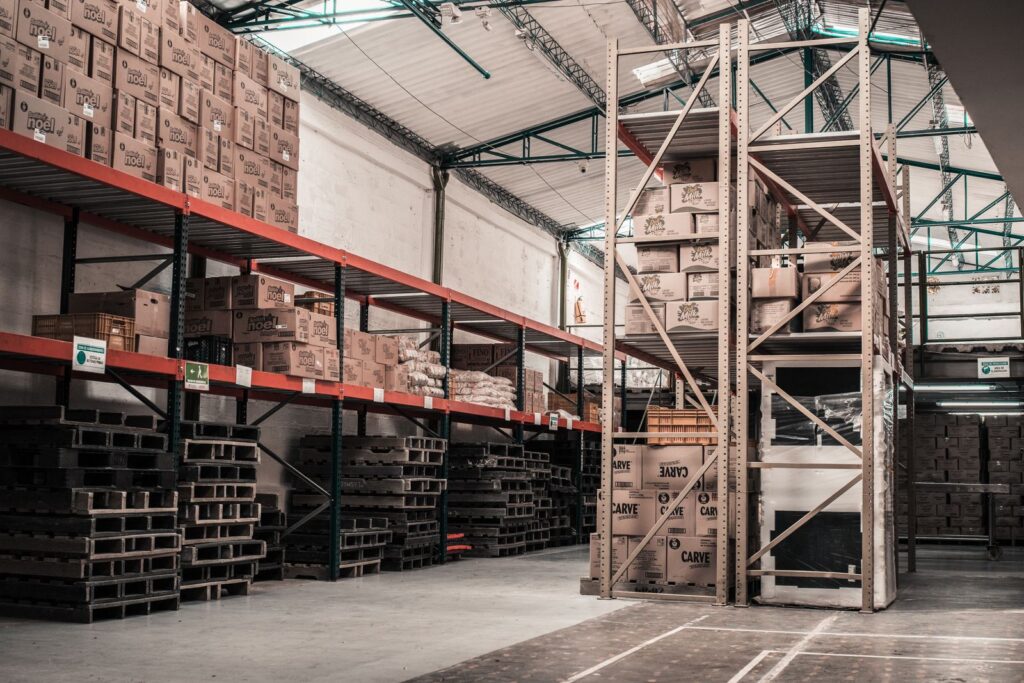
Featured image: a stock photo from Pexels illustrating a general industrial warehouse, not Chau Duc Industrial Park and not a Kadier project.

Pingback: Epoxy Flooring for Dong Xuyen Industrial Park (Rach Dua Ward, Ho Chi Minh City): Operating-Plant Floors, Port Warehouses and Marine-Mechanical Workshops