

 Tiếng Việt
 中文 (中国)
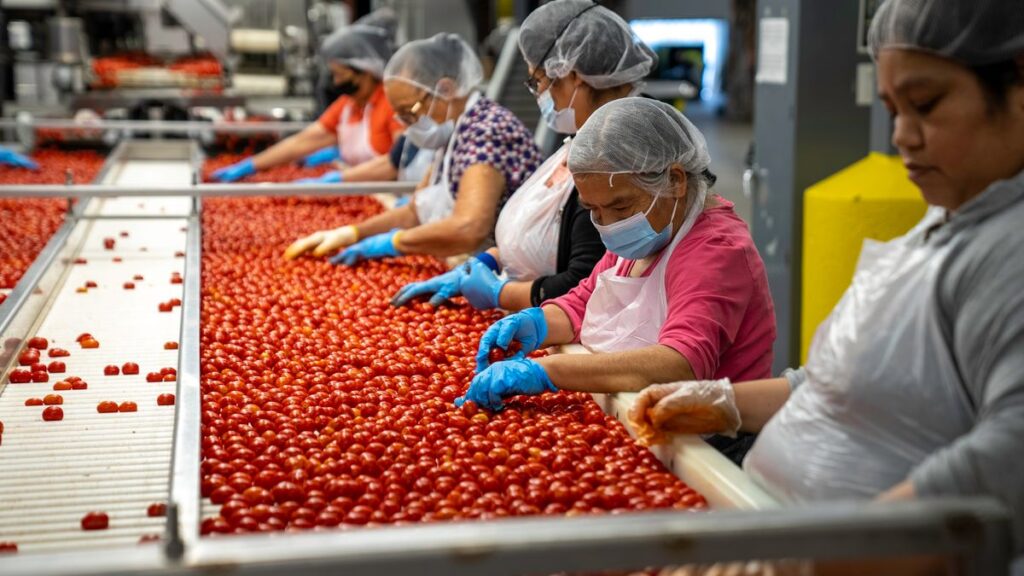
This article stands on exactly three distinctive points of the My Tho, Tan Huong and Binh Minh cluster, and does not copy the outline of the Can Tho cluster article. First, this is the Trung Luong expressway gateway, the Mekong Delta cluster nearest to Ho Chi Minh City, where small and medium workshops plug into supply chains serving the city. Second, the leading industries are animal feed and medium-scale agricultural and food processing, unlike the large-scale seafood processing for export and concentrated cold chain at the centre. Third, Binh Minh is a multi-industry zone in a small area, where food, textiles, electronics assembly, pharmaceutical chemistry and cosmetics coexist and each industry needs its own flooring standard.
Administrative note: from 01/07/2025, the former Tien Giang area now belongs to Dong Thap province, while the new Vinh Long province comprises the former Vinh Long, Ben Tre and Tra Vinh. The names Tien Giang and Vinh Long in this article’s title are therefore only familiar geographic cluster names, not a single combined administrative unit that still exists. These two former areas now belong to two different new provinces, and this article uses the old names only to indicate the geographic location of the industrial parks mentioned. More generally, old province names in this article are geographic cluster names only, not current administrative units: the new Ho Chi Minh City comprises the former Ho Chi Minh City, Binh Duong and Ba Ria – Vung Tau; the new Tay Ninh comprises the former Tay Ninh and Long An; the new Dong Nai comprises the former Dong Nai and Binh Phuoc; the new Dong Thap comprises the former Dong Thap and Tien Giang; the new Vinh Long comprises the former Vinh Long, Ben Tre and Tra Vinh; and the new Can Tho City comprises the former Can Tho, Soc Trang and Hau Giang.
Distinctive angle one: the Trung Luong expressway gateway, nearest to Ho Chi Minh City
The gateway position sets the cluster’s working rhythm. Workshops in My Tho and Tan Huong can receive raw materials and deliver goods to Ho Chi Minh City within the day, so the common model is small and medium workshops, modest buffer warehouses and steady — but not overwhelming — truck and forklift traffic, unlike a large transit warehouse. Floors therefore need to be durable, easy to clean and easy to repair locally when a spot wears, rather than specialised for a single process.
Gateway location also means workshops often sit among residential areas and main transport routes, so application work must limit odour and dust affecting the surroundings. For zones that stay in operation, work should proceed in sections, with low-odour systems prioritised near production lines and finished-goods warehouses. The AquaBase water-based system, with low VOC, is worth considering for these zones, but actual loads must still be checked before it is confirmed.
Distinctive angle two: animal feed and medium-scale processing
Animal feed and medium-scale agricultural and food processing have three distinctive flooring traits. First, dust: dry raw-material dust, powder dust and packaging dust arise continuously, so floors need to be seamless, hold little dust and be easy to sweep at the end of each shift. Second, machine loads: mixers, bagging machines and internal forklifts create medium, evenly spread loads and wear, not the extreme concentrated loads of a container warehouse. Third, moderate wet zones: washing areas, fresh raw-material areas and equipment-cleaning areas need slip resistance and moisture resistance, but they are not zones soaked in salt water continuously like export seafood processing.
For this workshop group, the RollCoat roller system is usually suitable for production areas and dry warehouses thanks to fast application over medium areas and the ability to mark vehicle and pedestrian lanes. Zones demanding higher flatness and cleanliness, for example food packing areas, may call for the LevelFlow self-levelling system. Differentiating by zone inside the plant, rather than applying one system to the whole factory, is how to avoid both waste and the wrong choice.
Distinctive angle three: Binh Minh, many industries in a small area
Binh Minh, covering about 134.82 ha according to compiled sources, packs many industries into a small footprint: agricultural processing, medium-scale seafood processing and preservation, food, textiles, electrical and electronics assembly, household wood products, fruit and vegetables, starch, consumer goods, high-tech pharmaceutical chemistry and cosmetics. Many industries in a small area means a single workshop can hold several different flooring standards separated by only a wall.
Electrical and electronics assembly zones need flat, low-dust floors and, depending on the investor’s requirements, electrostatic control with the StatGuard system. Food processing zones need seamless, easy-to-clean floors with slip resistance in wet zones. Textile, wood and consumer-goods zones need abrasion-resistant, easy-to-clean floors. Binh Minh’s problem is therefore not choosing one coating system for the whole zone, but mapping a coating system zone by zone before application, and accepting each zone against its own standard.
River-region slabs at medium scale: measure moisture first, never coat over a slab with problems
The gateway cluster still carries river-region slab traits: high slab moisture and localised weak ground. For small and medium workshops, the common risk is not extreme load-bearing failure but blistering after the first rainy season because slab moisture was never treated, or coating cracks because slight slab settlement was never surveyed. Measuring moisture and checking for cracks and settlement is therefore mandatory before coating, however small the workshop.
If slab moisture exceeds the chosen system’s permitted threshold, a rising-damp barrier primer or another suitable moisture treatment is needed before the main coats. Coating directly over a damp slab to meet a deadline is a short-term saving and a long-term cost, because a peeling coating must be ground off and the whole zone redone.
When to choose the gateway cluster, and when to choose the central cluster?
Choose the gateway cluster when the workshop is medium-scale, needs to be near Ho Chi Minh City, has a short supply chain and works in animal feed or medium-scale processing. Choose the central cluster when the plant is tied to deep processing and a large-scale export cold chain, where cold storage, river ports and a concentrated processing network form their own ecosystem. The two options complement each other within the same region; they are not two versions of one problem.
For an investor torn between the two clusters, the deciding questions are not about place names but: where does the product go, is cold storage the centre of the chain, and does the workshop need to be near Ho Chi Minh City or near the processing centre? Answering those three questions makes the right cluster immediately clear.
Frequently asked questions
What kind of floor does an animal-feed workshop need?
A seamless floor that holds little dust, carries machinery and internal forklift loads, is easy to clean at the end of each shift and resists slipping in washing areas and damp raw-material zones. Dry raw-material storage and bagging zones can use a roller system, while zones demanding higher cleanliness should consider a self-levelling system.
Do small and medium workshops need slab moisture measurement?
Yes, and all the more so in a river region. A small area does not reduce the risk of blistering from slab moisture; on the contrary, a small workshop usually finds repairs harder when it must stop its whole line to redo a floor. Moisture measurement is the cheapest step in the whole process and the one step that should never be skipped.
Must a multi-industry workshop use one coating system throughout?
No. Each zone should have a coating system matched to its own function: electronics needs flatness and may need ESD, food needs seamlessness and wet-zone slip resistance, textiles and wood need abrasion resistance. Mapping coating systems zone by zone before application avoids both waste and substandard zones.
Does coating an operating workshop at the gateway cause odour for the surrounding area?
It can, depending on the coating system and ventilation. For workshops near residential areas or main transport routes, low-odour systems, work in sections and suitable working hours should be prioritised. Workshop owners should state their odour requirements clearly from the survey stage so the application team can choose a suitable system and schedule.
How is an epoxy flooring quotation for this cluster calculated?
Kadier quotes after an on-site survey, based on area, slab condition, the coating system for each zone and the work schedule. This article gives no specific prices, because price lists circulating online are not Kadier prices and do not reflect the actual slab condition of each workshop.
Request advice and a quotation: send the workshop location, industry, area and whether the slab is old or new via Kadier’s quotation page or contact page. Direct contact: hotline/Zalo 0899355489, WeChat wxid_95o54joujyrr12. Illustrative photo: Pexels stock photo (photo ID 8877381), a general illustration of food processing, not a Kadier project.
