

 Tiếng Việt
 中文 (中国)
Vinh Thanh Industrial Park Phase 1 (VSIP Can Tho), in Vinh Trinh commune, Can Tho City, is an industrial park still being built — not yet a fully operating park. Its legal name is the project to invest in, build and operate the infrastructure of Vinh Thanh Industrial Park, approved in principle by the Prime Minister in Decision No. 1255/QD-TTg dated 17 October 2022, on a land area of 293.7 hectares with total investment of more than VND 3,717 billion, about US$159.91 million. As of October 2026, phase-1 infrastructure was under construction at an estimated progress of about 42%. Against that background, on 19 September 2026 the Bestway Can Tho factory was inaugurated as the first factory to operate inside the park — one first factory, not a list of operating factories.
A note on names: This article is only about Vinh Thanh Industrial Park Phase 1 (VSIP Can Tho) in Vinh Trinh commune, Can Tho City — not phase 2 (540.58 hectares, sometimes called “Phu My 3 Can Tho” in task-force documents), not Phu My 3 Specialized Industrial Park in Phu My, Ho Chi Minh City, and not Tra Noc, Hung Phu, Thot Not or O Mon in the same Can Tho cluster. Older documents cite Vinh Thanh district; the current address is Vinh Trinh commune, Can Tho City. The Can Tho cluster and central Mekong Delta article looks at the whole cluster, while this article goes deep into a single park — Vinh Thanh phase 1 — at exactly its construction stage. The O Mon Industrial Park article shows the opposite case: an operating park with settled industries, whereas Vinh Thanh phase 1 is still completing its infrastructure.
The legal and physical record: figures already established
The three investors approved under Decision 1255 are the Industrial Development and Investment Corporation (Becamex IDC), the Vietnam–Singapore Industrial Park Joint Venture Company Limited, and the Vietnam–Singapore Urban and Industrial Park Development Joint Stock Company; VSIP Can Tho Joint Stock Company is the infrastructure project investor. The investment registration certificate was granted on 25 October 2022, and the project operates for a term of 50 years from the date of approval. Of the 293.7 hectares, 291.2 hectares are park infrastructure land and 2.5 hectares are the safety corridor of a 220 kV power line, a strip kept intact with measures to guarantee a safe distance. Investor equity exceeds VND 557.69 billion, with the balance raised from other sources. The project broke ground in September 2023 and is planned in five stages running to September 2028. The whole park is planned at about 900 hectares, but the figure that matters for this article is the 293.7 hectares of phase 1 — the rest belongs to later stages and is not this article’s subject.
Construction status in October 2026: about 42%, and what is already finished
The report of Can Tho City Task Force No. 5, published by Bao Can Tho in October 2026, puts estimated progress at about 42% for levelling, roads, storm drainage, wastewater drainage, water supply, lighting, telecommunications and power supply in phase 1. The two connecting roads are the clearest bright spots in that picture: the road linking National Highway 80 to the park has been completed and put into use, while the road linking the Vam Cong bridge access road to the park has passed 76%. The resettlement area serving phase 1 has also completed construction. According to the project summary, the park fronts National Highway 80 and sits about 7 km from Vam Cong bridge, a location tied to the region’s road-and-river transport axis rather than buried deep inland.
The mid-2026 picture reported by the Can Tho Export Processing Zones and Industrial Parks Management Board adds detail to the 42% figure: the project had disbursed more than VND 2,118 billion, equal to 56.97% of total investment, and levelled about 50 hectares including the Bestway factory land. The central wastewater treatment plant (module 1, capacity 6,000 m3 per day) had then reached about 90% by volume and was having its process equipment installed, while the 22 kV power system had been completed to provide temporary power for secondary investors. At the same moment, the unfinished work was stated plainly: about VND 21.5 billion in compensation and support had not yet been paid, and 50 houses together with power, water and telecommunications systems had not yet been relocated, directly affecting the progress of technical infrastructure. An honest article about a park under construction has to hold both sides — what is finished and what is not — rather than picking only the favourable side.
The first factory: Bestway, and the limits of a single example
The Bestway Can Tho factory of Bestway Can Tho Sports Technology Company Limited received its investment registration certificate before its inauguration on 19 September 2026, with total investment of about US$100 million, about VND 2,603 billion, on about 28 hectares. Its phase-1 construction area is about 280,000 m2, with annual capacity of about 5.83 million inflatable and plastic toys, 160,000 water-sports items, and 16.02 million plastic components, equipment, accessories and PVC sheets. Under the company’s plan, a 120,000 m2 second phase is expected to begin production in July 2027, and the whole project is expected to reach about 530,000 m2 with about 6,000 jobs when complete — all of it plan, not present fact.
What matters is reading this example correctly. Bestway proves that a large factory can be completed and put into operation while the park’s shared infrastructure is still being built, but it does not turn Vinh Thanh phase 1 into an operating park. Alongside the first factory, VSIP Can Tho Joint Stock Company reported that, as of July 2026, it had signed reservation letters with secondary investors covering a registered lease area of about 16.5 hectares, equal to expected investment of about US$200 million. A reservation letter is a step in investment preparation, not a lease that has become a factory, and this article does not present those reservations as a list of operating factories. Any article about this park that speaks of “the factories in the park” as a general operating reality has already gone further than the evidence allows.
Why the construction stage is the moment that decides the floor
For a new factory in a park under construction, the floor decision carries an advantage an operating factory no longer has: the slab can still be surveyed, treated and coated before machinery takes its position and before heavy trucks run daily over the plant’s final routes. That advantage only survives if the sequence is respected. Coating too early, while construction vehicles and heavy materials still cross the slab every day, damages the coating before the factory ever opens. Coating too late, once machines are placed and lines installed, makes grinding, moisture treatment and application expensive and disruptive. The right moment sits in between: after heavy works finish, before dust- and vibration-sensitive equipment is installed.
The river-region ground of Can Tho adds a requirement that cannot be skipped. Moisture inside a new concrete slab, and the risk of rising damp from below, must be measured with instruments before coating, and if the risk is real, a moisture barrier must go in first — skipping that step is the fastest way to blistering a few months after handover, even when the coating system itself was the right choice. A new-plant survey should therefore record moisture at several points, cracking and flatness of the concrete, the expected vehicle routes with their heaviest loads, and the plant’s full chemical list — including cleaning chemicals — so each item can be checked against the coating manufacturer’s chemical-resistance chart by chemical, concentration and contact time.
Choosing a system by future use, not by the park’s general name
Vinh Thanh phase 1 has no operating industry map to copy yet, so the right way to choose a floor is by the future use of each specific factory. Assembly and packing areas need a flat, seamless floor that is easy to clean and stands up to forklifts moving all day. Areas connected with plastics and materials processing — the product family of the first factory — need chemical checking against the real list, rather than reliance on a general chemical-resistance claim. Warehouse and logistics areas need floors that carry truck and container loads, with lane marking laid out from day one so that driving lanes, loading zones and no-parking areas do not have to be redrawn after operations begin. Each use leads to a different floor requirement, and one factory may need more than one system across different zones of the same site.
Lane marking and zone painting from day one deserve to be treated as part of the floor system, not as decoration added later. When driving lanes, pedestrian routes and hazard areas are marked before the factory opens, workers form the right movement habits from the start, and redrawing routes later — once the warehouse is full of goods — becomes far harder. Similarly, handover testing should mirror the working day to come: vehicles carrying their real loads should travel the exact internal routes the plant will use daily, instead of the slab being judged by sight once coating ends. A surface that looks perfect can still crack early at the bend where trucks habitually turn or beneath a heavy machine foot, if neither spot was measured and reinforced on its own.
Questions to answer before signing
Before signing a flooring contract for a new factory at Vinh Thanh phase 1, the investor should have answers to these questions: which use the factory serves — assembly, packing, materials processing or warehouse logistics — and whether its main demand is flatness, chemical resistance or load; what the heaviest loads and the real vehicle routes are; how many points the slab moisture was measured at and whether rising damp has been treated; whether the full chemical list has been checked against the manufacturer’s resistance chart; and where the coating programme sits inside the overall construction schedule — after heavy works, before equipment installation. The system finally chosen should rest on the manufacturer’s technical documents and on survey figures taken at the site, not on how large the project is or on the park’s general name. The Hung Phu Industrial Park article shows the useful opposite picture: in an operating park the main problem is renovating and upgrading old slabs, while at Vinh Thanh phase 1 the main problem is getting it right at the first coating.
Contact for advice and a quote
If you are preparing a new factory at Vinh Thanh phase 1 and need a floor system matched to the plant’s use, loads and chemicals, send Kadier the area, the factory or warehouse type and the industry to receive advice and book a site survey. See an epoxy floor coating quote, browse the epoxy systems, or get in touch through the contact page (hotline/Zalo 0899355489, WeChat wxid_95o54joujyrr12).
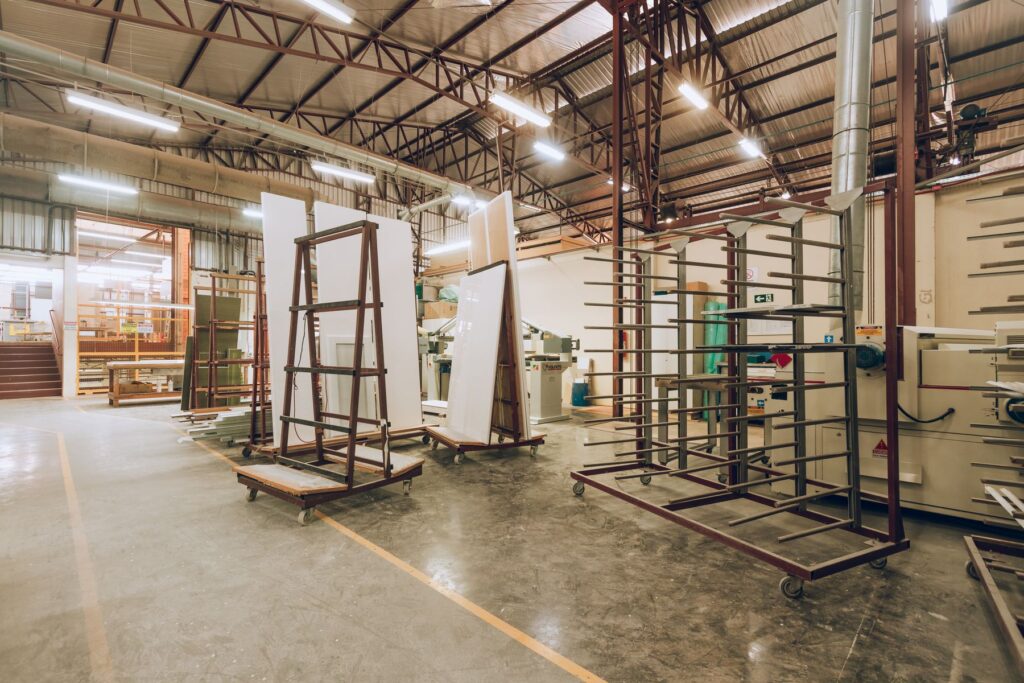
Image: a generic illustration from the Pexels stock library (ID 30990849); it shows no Kadier project and no real floor inside Vinh Thanh Industrial Park Phase 1.
