

 Tiếng Việt
 中文 (中国)
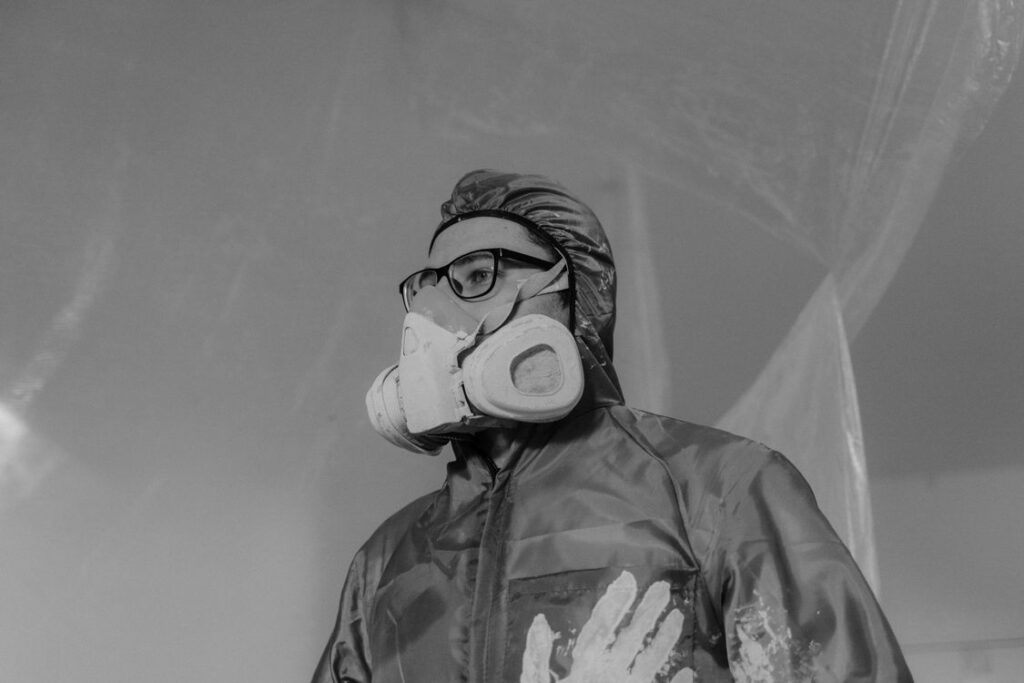
Paint odor during epoxy application is something everyone can sense, but odor is not a measure of safety. Some harmful volatile compounds are not warned of early enough by odor, and there are also times when the odor has gone but the curing process is still emitting. The correct approach is therefore not to endure the odor, but to control the emission source, ventilation, and respiratory protection for each stage of application.
This article presents the general characteristics of epoxy materials in general; product-specific data for each Kadier system, including the VOC content of each product, is applied only according to the manufacturers official technical documentation and safety data sheet (SDS) when available. When working with a specific product, the SDS of that very product is the highest authority, not this general article.
1. What is VOC, and where do emissions come from?
VOCs are volatile organic compounds, emitted most strongly during mixing, application, and the first hours of curing. The main emission source is solvent in the paint and hardener, followed by solvent used to clean tools. Solvent-based paint usually emits more than water-based paint, but water-based does not mean no emissions; hardeners and additives in water-based systems can still emit at levels that need control.
Spray application emits more and creates more paint mist than rolling or brushing, because part of the paint is dispersed as fine particles in the air. Grinding the substrate before recoating emits dust, which is a different form of pollution, requiring dust extraction and a dust mask of its own, not to be confused with measures against solvent vapor. Each form of emission needs its own measure; there is no single mask for every stage.
2. Reducing emissions starting with material selection
The most effective measure is often the least noticed: choosing the right product from the start. For areas in operation, enclosed areas, hospitals, food plants, or pharmaceutical plants, a low-VOC water-based system is usually the preferred choice, because it reduces the burden on both ventilation and protection. See the AquaBase system, a water-based system, and When to Use Low-VOC Water-Based Epoxy? for a fuller understanding of this choice.
In addition, mixing only the amount to be used within the pot life of the mix, keeping paint containers closed when not in use, and cleaning tools correctly also reduce emissions considerably. A paint container left open overnight in an enclosed area is a persistent source of odor that no ventilation system handles as effectively as simply closing the lid.
3. Ventilation: principles and layout
Good ventilation is not just opening doors. The principle is to bring clean air in on one side and extract contaminated air on the opposite side, creating an airflow through the application area without recirculating. An extraction fan placed near the emission source, such as the area being painted or where mixing is taking place, is more effective than a fan placed far away. Intake and exhaust openings must be arranged so that the airflow does not pass through an area where other people are working before it exits.
There is no single airflow figure for every project; airflow and fan layout must be calculated according to the volume of the area, how enclosed it is, the type of paint, and the application method. For basements, enclosed warehouses, or areas without windows, forced ventilation with fans and ducting is mandatory and cannot be replaced by natural door opening. Ventilation must be maintained throughout application and continued after painting until the coating has cured sufficiently according to the SDS of the product, because emissions do not stop as soon as workers leave the area.
During application and curing, the painted area must be barriered off and access by unrelated people restricted, especially for other work that creates sparks or heat, because solvent vapor can catch fire. Flame sources, smoking, and non-explosion-proof electrical equipment in an area being painted with solvent-based paint are risks that must be eliminated in advance, not dealt with once a strong odor is already noticed.
4. Respiratory protection: only the right type works
Cloth masks and dust masks do not protect against solvent vapor. For organic vapor, a mask with a suitable organic vapor filter cartridge is needed, worn sealed to the face and with cartridges replaced according to the instructions of the mask manufacturer and the SDS of the paint. When spraying or working in an enclosed area with high concentrations, a supplied-air mask may be needed; this decision must be based on the risk assessment for the project, not on the sense of odor.
Signs that work must stop and the worker must go outside to breathe clean air include dizziness, headache, nausea, eye irritation, or difficulty breathing. A worker with symptoms must not continue working in the hope of getting used to the odor; getting used to the odor is a sign that the sense of smell has become fatigued, not a sign that the environment has become safe. Workers must be briefed in advance on the SDS, how to wear the mask, when to replace cartridges, and the rescue procedure when someone is affected by paint vapor.
5. Residual odor after application: how to handle it
After the coating surface has dried, odor may remain for a time because curing continues. The measure is to maintain ventilation, keep the area aired, and only put it into use when the coating has cured sufficiently according to the manufacturers instructions. Using fragrances or deodorizers to mask paint odor only hides the sensation; it does not reduce emissions, and must not be used instead of ventilation.
If odor persists unusually long after the normal curing time of the product, re-check: is there an area painted too thickly, is there a paint container or paint-soaked rag still left in the area, or was ventilation switched off too early? Rags contaminated with solvent and paint must be collected in a lidded metal container, kept away from heat sources, because they are both a source of odor and a fire risk.
To choose a coating system suited to the odor and site-environment requirements of a project, see the AquaBase system, the RollCoat system, and the LevelFlow system. For advice on application measures for an enclosed or operating area, Request a consultation.
Illustration photo: Tima Miroshnichenko / Pexels.
