

 Tiếng Việt
 中文 (中国)
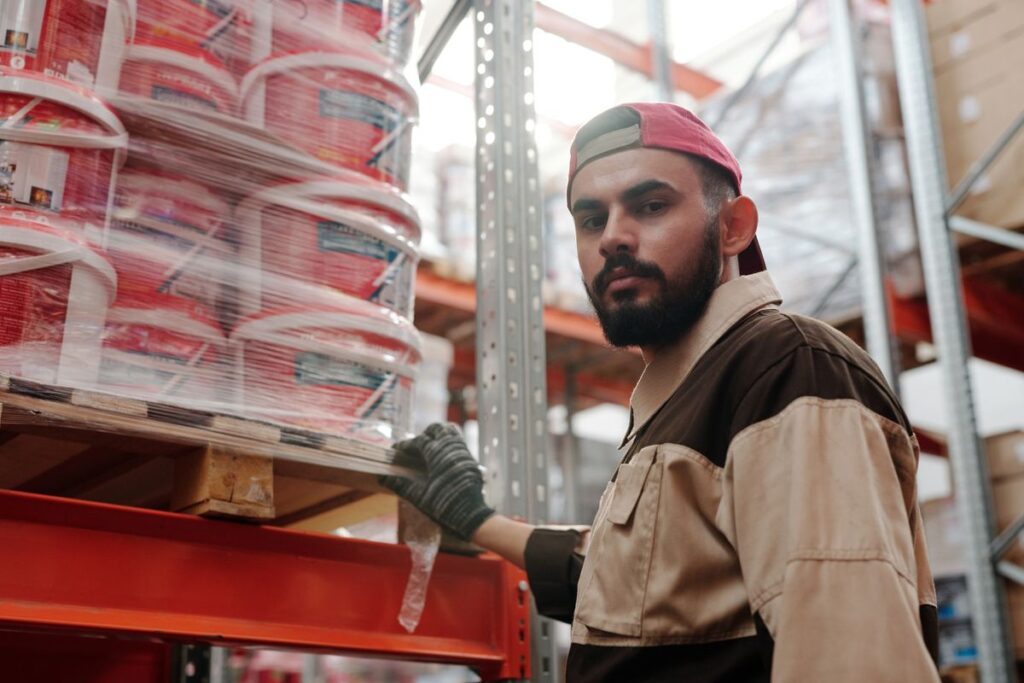
“Buy the coating and do it yourself to save money” sounds reasonable — until all the costs beyond the coating itself are added up. This article compares the two options — buying materials and applying them yourself versus hiring a full-package contractor — on the same framework of 6 cost groups, so you can decide on the true total cost, not just the coating price.
This article is a comparison framework; it gives no saving or difference figure in numerical form, because that figure depends on each project. Every specific price follows the quotation for each project.
Comparison table: 6 cost groups
| Cost group | DIY application | Full-package contractor |
|---|---|---|
| Main materials | Paid directly for the quantity bought; risk of wrong mixing ratios and higher wastage from lack of experience | Included in the package; the contractor is responsible for consumption rates and mixing to the TDS |
| Tools and machinery | Grinders, roller tools and protective equipment must be bought or hired — hired once, the full hire cost still applies | Already included in the application package |
| Labour and production downtime | Saves hiring labour but takes the in-house team’s own time, and production downtime usually lasts longer | Professional application, with the schedule committed in the contract |
| Substrate preparation | Easiest to overlook: grinding, crack repair and moisture treatment require dedicated machinery and skills | Within the scope of the contractor’s survey and quotation |
| Failure and rework risk | Borne entirely by yourself: peeling, blistering and uneven colour must all be fixed at your own expense | Within the scope of warranty and responsibility under the signed contract |
| Warranty and later maintenance | No applicator standing behind the work; every later problem is handled by yourself | Warranty and maintenance clauses are written into the contract |
When is DIY reasonable?
- Small area, good substrate, already dry and clean, with no complex preparation needed.
- Low usage requirements: light storage, walkways, areas without heavy loads, with no anti-static or special hygiene requirements.
- The applicator has read the TDS of the exact coating code carefully, understands the mixing ratio, drying time and recoat time by temperature, and has all the tools.
When should you hire a full-package contractor?
- Poor, damp, cracked or contaminated substrate — substrate preparation is specialist work that cannot be replaced by a better coating.
- Large area, many zones, or a factory that cannot stop production for long.
- Special technical requirements: anti-static StatGuard, self-levelling LevelFlow, forklift loads, chemical resistance — choosing the wrong system means the whole job is wrong.
- Acceptance documentation, warranty and a clear responsible party after handover are needed.
Checklist: 5 questions before deciding
- What state is my substrate in — has moisture been measured and surface soundness checked?
- Have I read the TDS of the exact coating code and understood the mixing ratio, recoat time, substrate conditions and application temperature?
- Do I have enough grinders, tools and protective equipment, or must I hire them — and what is the hire cost?
- If the coating fails after a few months, who repairs it and at whose expense?
- How much longer is production downtime under DIY compared with professional applicators, and what is that downtime worth?
Common DIY mistakes
- Skipping substrate preparation: coating directly onto a dirty, weak or damp substrate — see what substrate preparation costs include.
- Wrong mixing ratio or wrong application temperature: the TDS specifies the mixing ratio and the working time of the mix; even a small deviation changes the quality of the coating film.
- Using theoretical coverage as the estimate: actual coverage is always lower, due to wastage by substrate and application method — running short of coating midway causes colour variation between batches.
- Not allowing drying time between coats: applying the next coat too early or too late both affect adhesion between coats.
To see what a full package includes for each system before comparing, see the 3-coat roller package from RollCoat, the 1 mm self-levelling, 1.5–2 mm self-levelling and 3 mm self-levelling packages, and anti-static. The low-VOC water-based system is at AquaBase.
Frequently asked questions
Is DIY always cheaper than hiring a full-package contractor?
No. DIY is cheaper on labour cost but takes on all the technical risk, wastage, production downtime and rework cost. Only after adding all 6 cost groups can you tell which option is cheaper for your case.
If I buy Kadier materials and apply them myself, is there a warranty?
This article makes no commitment about any warranty policy for self-applied purchased materials, because that policy has not been confirmed. To be certain, ask clearly in writing before buying: what does the materials warranty cover, and does it include application faults?
Is DIY worth it for a small area?
Worth considering if the substrate is good, requirements are low and you are confident about the technique. Conversely, a small area with a poor substrate can make machine hire and substrate preparation costs mean DIY is no longer cheaper.
Message your area and intended use for advice on choosing an option: via the quotation page, the contact page, or Zalo 0899355489 (Hotline/Zalo 0899355489, WeChat wxid_95o54joujyrr12).
Illustration: Tiger Lily / Pexels (stock photo, not a Kadier project).
