

 Tiếng Việt
 中文 (中国)
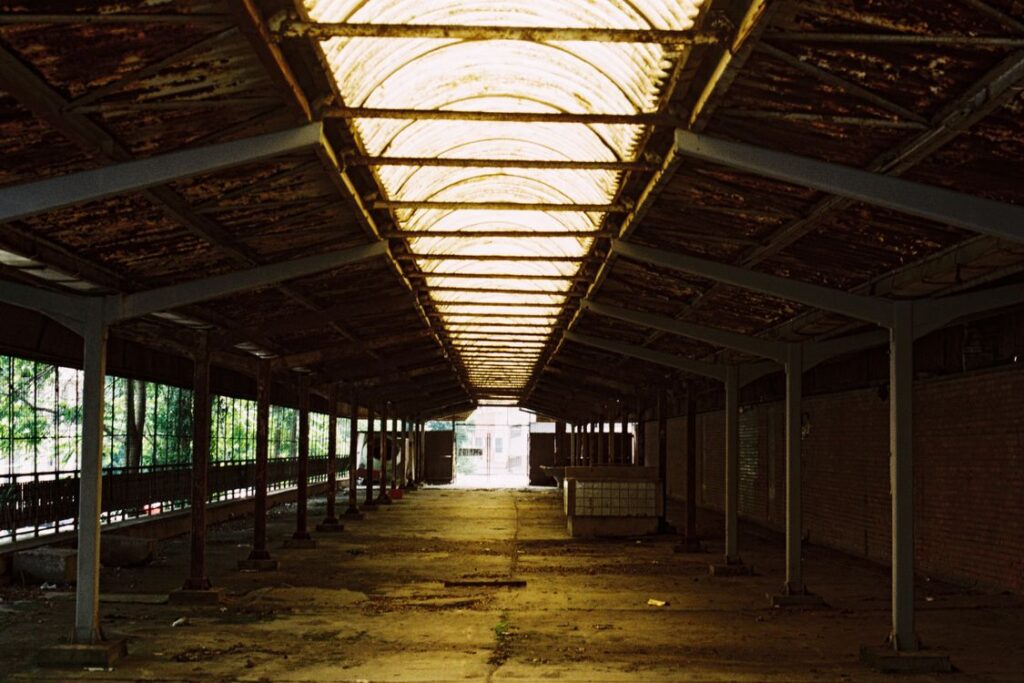
Factories inside Vinh Loc Industrial Park rarely start their flooring question from zero. This is an industrial park founded in 1997, now close to fully occupied, with its Binh Tan portion in Binh Hung Hoa B ward sitting beside National Highway 1A at the western gateway of Ho Chi Minh City. Most businesses moving in take over a plant that has already been used, changed tenants, changed function, or had its warehouse extended over an old slab. So the real question is not “what colour should a new floor be”, but “can this old slab be saved, which zone goes first, and how do we keep the production line running”.
Read this name note before requesting a quote: this article covers only the existing Vinh Loc Industrial Park, founded in 1997, with land in Binh Hung Hoa B, Binh Tan. That name is different from Vinh Loc 2 Industrial Park in Ben Luc, Long An — a different province, a different investor, and a much larger site — and different again from the Vinh Loc 3 expansion area in Binh Chanh, which is still being developed with low occupancy so far. Confusing these three names means getting a quote, a survey schedule, and even a system recommendation for the wrong park.
Why Vinh Loc flooring is mostly a renovation job
A park close to thirty years old carries a very particular floor history. Concrete slabs in many plants have carried forklifts continuously through several tenancies; a zone once used as a light warehouse may now be a production floor, and a zone once dry may now hold a washing or packing area that stays damp. Old coatings, where any remain, are rarely uniform: worn down to concrete in places, still well bonded in others, blistered where ground moisture or long-term oil contamination has done its work. Coating straight over such a surface without grinding, degreasing, and crack repair is the fastest way to make the new coat peel with the old one — and in a park this full, the cost of stopping production to redo the job a second time always exceeds the cost of a proper survey first.
One point needs stating plainly: infrastructure conditions are not uniform across the lots and phases of this park. Do not assume that every lot shares the same slab condition, drainage, and site access, and do not take the condition of one good lot as representative of the whole park. Before any system is chosen, the specific lot and the specific plant must be surveyed: slab moisture, concrete grade, cracks, old oil contamination, and areas repaired in the past. A quote only means something after that step.
The park industries and what each one asks of a floor
Vinh Loc is oriented toward light, clean industry with low pollution, and its main groups are mechanical manufacturing, electronics and household appliance assembly, garments and textiles, food processing, paper, carton and plastic packaging, and pharmaceuticals and medical products. Each group asks something different of a floor, and a single plant in the park usually contains several of those demands at once, divided by zone rather than answered by one system for the whole building.
Mechanical manufacturing and electronics assembly. A mechanical zone concentrates load where machines stand, along forklift routes, and at turning points. The floor must resist abrasion, local impact, and peeling where forklifts turn repeatedly in the same spot. An electronics assembly zone instead needs a flat, low-dust, easy-to-clean surface, and where electrostatic control is required, the system and earthing must follow the plant owner own standard — no single standard fits every factory.
Garments, textiles, and packaging. These are wide plants with high densities of people and trolleys, where fabric dust and paper dust are a daily problem. Floors need to be seamless, with few joints to trap dust, easy to sweep at the end of a shift, and marked with clear lanes so trolleys, forklifts, and pedestrians do not share an unmarked lane. Finished-goods packaging warehouses are especially sensitive to ponding: a locally hollowed slab that holds water will damage stored stock long before anyone notices the coating.
Food processing and pharmaceuticals. These two groups set the highest bar for hygiene, moisture resistance, and washability. Wet zones, washing areas, and packing zones need a seamless, easy-to-clean surface with no ponding, and wall bases and corners must be detailed so they do not become dirt traps. Where production is running nearby and sensitive to odour, a low-odour system is a priority, because coating odour drifting into a production zone can affect the product itself.
Choosing a system by zone inside the plant
A plant should be divided by function before any system is chosen. General production areas, walkways, and large areas that need fast application can use the RollCoat roller system, suited to light to medium loads. Zones that need an absolutely flat, seamless, easy-to-clean surface — such as clean packing areas — should consider the LevelFlow self-levelling system. Electrostatic-control zones get the StatGuard system only in the zones that actually require it, with earthing and testing under the plant owner procedure, not spread across the whole plant. For zones next to running production where odour matters, the AquaBase water-based, low-VOC system is the option to consider. Warehouses and forklift routes need added anti-slip aggregate and marked lanes.
This zoning matters more than picking a single “best” system. One garment plant in Vinh Loc might need RollCoat for general production, LevelFlow for a clean packing zone, and AquaBase beside a running line — three systems in one building, each in its right place. A quote that applies one system to the entire area without zoning is a reason to ask questions.
The three old-floor problems most common in this park
First, oil-contaminated slabs and cracked joints. After years of operation, oil and grease soak into porous concrete and cut adhesion. An old slab must be ground down to sound concrete, degreased by the correct procedure, and adhesion-tested before coating. Cracked joints need to be cut and filled with a suitable material before overcoating — never coat over a working joint and let the coating crack with it.
Second, locally hollowed slabs and ponding. The signs are a slight hollow, water standing after cleaning, and expansion joints at different levels. Epoxy does not fix a hollowed or settling slab. The cause and extent must be identified and the slab treated first, then ground, repaired, and coated. Coating over a slab that keeps moving only hides the defect for a short time.
Third, working inside an operating plant. This is the most common problem in a park this full, where a factory cannot shut down entirely. The usual answer is phased work: fence off one zone, finish it completely, hand it back, and move on, while choosing a low-odour system beside running production. The schedule must fit the plant machine-stop calendar, inbound and outbound delivery calendar, and cleaning calendar — no single programme fits all. The park western-gateway position beside National Highway 1A also means truck movements through the park gate need to be factored into the phasing plan, so trucks are not left waiting on a coating day.
From survey to handover
Work starts with a survey: slab moisture measurement, concrete grade check, recording of cracks, old oil contamination, and previously repaired areas, together with the infrastructure condition of that specific lot. Then comes grinding, crack repair, moisture treatment where needed, and only then primer and coating, zone by zone. Handover should measure thickness at many points, test forklift running and turning at load points, check peeling and ponding, and allow full curing time before the zone returns to full-load operation. Plant owners should keep the survey and handover records by zone, because in a park of this age the next renovation will certainly need them.
For the wider picture of flooring demand across Ho Chi Minh City and nearby areas, see Epoxy Flooring for Industrial Parks in Ho Chi Minh City and Nearby Areas: Demand and Service Scope. That article covers many parks; this one goes deep on Vinh Loc alone, on the Binh Tan side.
Frequently asked questions
Can a new coat go over an old floor in Vinh Loc Industrial Park?
Yes, but only after grinding to sound concrete, treating oil contamination, repairing cracks, and testing adhesion. Coating directly over a peeling, blistered, or heavily oil-contaminated old floor will make the new coat peel with the old one.
Can floors be renovated while the plant is running?
Yes, with phased work: finish one zone completely and hand it back, choose a low-odour system beside running lines, and fit the schedule to the plant machine-stop and delivery calendar. Total time depends on the area of each phase and the condition of the slab.
Why not judge the whole park by one lot?
Because infrastructure and slab conditions vary between lots and phases in this park. Each plant needs its own survey before a system and a quote are fixed.
What information is needed for advice?
The plant zone inside Vinh Loc Industrial Park (Binh Tan side or another part of the park), the area of each zone, old or new slab, industry, the vehicles running on the floor, and the expected machine-stop schedule. That is enough to point to a system and a survey date, before a specific quote follows the survey.
Which lot is your plant in at Vinh Loc Industrial Park (Binh Tan, Ho Chi Minh City), how large is each zone, and is the slab old or new? Send the details for system advice and a survey date through the quote page or the contact page (hotline/Zalo 0899355489, WeChat wxid_95o54joujyrr12).
Featured image: stock illustration of an empty industrial hall, not a Kadier project.
