

 Tiếng Việt
 中文 (中国)
Tan Binh Industrial Park at 906 Truong Chinh, Tay Thanh, Tan Binh, Ho Chi Minh City is one of the city’s older inner-city industrial parks, established in 1997. Sitting inside the urban area, close to major arteries such as National Highway 1A and National Highway 22, the park has little vacant land left for brand-new factories. The epoxy question here is therefore rarely “which coating for a new floor in a new plant” and usually “how to recoat an old floor in a plant that has run for many years”: concrete that is worn, oil-stained and cracked at the joints, while production must keep running and the owner has only short shutdown windows for renovation.
Name check — read this first: this article covers only the Tan Binh park in Ho Chi Minh City, at the 906 Truong Chinh address above. A different industrial park also called Tan Binh, located in Bac Tan Uyen (formerly Binh Duong), is an entirely separate park with a different scale, establishment date and industry mix. Every fact in this article belongs to the Ho Chi Minh City park; no figure from the Bac Tan Uyen park is used for it.
Unlike the general picture of industrial parks in Ho Chi Minh City and nearby areas, this article stays inside Tan Binh alone: which industries operate here, what each functional zone’s floor needs, and the sequence for recoating an old floor here so the work does not have to be redone.
An older park, a very different floor problem
Most plants in Tan Binh have been through many years of production, several changes of tenant and several changes of use. An area once used as light storage may now carry forklifts all day; an area once dry may now hold washing and damp packing zones. An old coating, where any remains, is rarely uniform: worn down to bare concrete in places, still bonded in others, blistered where ground moisture or long-term oil ingress has undermined it. Coating straight over such a surface, without survey and without substrate preparation, is the fastest way to make the new coat peel with the old one — and in a tight inner-city park, shutting a plant a second time to fix a failed recoat costs far more than doing the job properly the first time.
The park’s industry mix shapes the floor problem. Tan Binh is a multi-industry park that prioritises clean industry, with its main groups being components and electronics, food processing, textiles and garments, precision mechanics and supporting industries. Because each group stresses the floor differently, no one coating suits the entire park. The right answer always follows the functional zone inside each plant, after a survey of the actual floor.
The pilot-conversion direction, and what it means for floor choices
Tan Binh is among the existing parks that Ho Chi Minh City is studying for pilot conversion towards high-tech, eco, industrial-urban-service and logistics models, together with Tan Thuan, Hiep Phuoc, Cat Lai and Binh Chieu. One direction named for Tan Binh is to become a high-tech service park after 2047. That is a pilot direction under study, not a conversion already completed, and this article does not present it as an accomplished fact.
Even so, the direction yields a practical rule for any owner weighing a recoat today: favour floors that are clean, low-odour, easy to clean and easy to maintain, rather than locking a plant into a finish that is hard to clean, quick to soil or that gives off odour into neighbouring production areas for a long time. A well-executed recoat should serve today’s production and not become a liability if the plant later raises its cleanliness standard or converts part of its use.
Industries and common floor types in Tan Binh
Components and electronics: flat, low-dust, easy to clean
Component and electronics production needs a flat, seamless floor that holds little dust and is easy to wipe down, because dust from a flaking floor can reach products and equipment directly. Aisles and areas with frequent medium forklift and trolley traffic also need abrasion resistance. Where an area has an electrostatic-control requirement, the system choice must follow the owner’s own standard and the results of on-site testing, not one generic standard applied to every plant. In these zones, a self-levelling system is often considered for the main production area, while an anti-static system is placed only where required, with earthing and testing under the owner’s procedure.
Food processing: wet-tolerant, washable, no ponding
Food plants add a wet problem: washing, preparation and packing zones are regularly in contact with water and cleaning solutions. Floors there need to be seamless, washable and free of ponding at low spots, and joints and gaps need treatment so they do not become dirt traps. The coating for a wet zone cannot be picked by colour; it must follow a survey of floor moisture and the actual chemical exposure of each zone. This article does not claim that an epoxy floor by itself confers any food hygiene or safety certification — certification belongs to the plant’s own system.
Textiles and garments: trolley and forklift traffic, fibre dust
Garment plants combine dense trolley and medium forklift traffic with pedestrian movement and constant fibre dust. Floors need to be flat so trolleys do not judder, abrasion-resistant on the main aisles and easy to clean so dust does not settle into cracks or peeled patches. Shared aisles used by both forklifts and pedestrians should have clearly marked lanes, and fabric and finished-goods stores need a stable, load-bearing surface without local settlement that could topple stacked goods.
Precision mechanics: flat, and resistant to concentrated load
Precision engineering demands high flatness where machines stand and resistance to concentrated load at machine feet, forklift turning points and loading areas. A locally settled or cracked floor under a machine foot cannot be fixed by adding a thicker coat; the substrate needs survey, crack treatment and, where necessary, structural repair before coating. Once the substrate is stable, a self-levelling system helps achieve the flatness and seamless finish that precision machine areas require.
Warehouse and in-park logistics: slip resistance and lane marking
Stores, forklift aisles and inbound/outbound areas take the heaviest abrasion in a plant. Warehouse floors need abrasion resistance, slip resistance on aisles and turning areas, and marked lanes so forklifts and pedestrians do not share an unmarked lane. For a warehouse in operation, phased work is the usual approach: finish one zone completely and hand it back for use, instead of closing the whole store for many days.
System map by functional zone
Divide the plant by function first, then pick a system for each part. Large general production areas and aisles with light-to-medium loads and a need for fast application: consider the RollCoat roller system. Zones demanding absolute flatness, a seamless finish and straightforward cleaning: consider the LevelFlow self-levelling system. Zones with a genuine anti-static requirement: use the StatGuard system in exactly those zones, with earthing and testing under the owner’s procedure. Zones in operation that are sensitive to odour: favour the water-based, low-VOC AquaBase system. Warehouse and forklift aisles additionally need anti-slip aggregate and lane markings.
Recoating sequence for an old floor in Tan Binh: survey first, coat second
A recoat should start with a survey: floor moisture measurement, concrete grade checks, and a record of cracks, old oil contamination and areas previously repaired. Next comes grinding down to sound concrete, oil removal under the proper procedure, cutting and filling cracked joints with a suitable material, moisture treatment where needed, and only then primer and coating, zone by zone. The work schedule must fit the plant’s machine shutdown calendar, inbound/outbound timetable and cleaning roster; areas beside live lines should favour low-odour systems, good ventilation and temporary partitions separating the work zone from production.
At acceptance, check thickness at many positions, run a forklift through and turn it at the heaviest load-bearing point, look for peeling and ponding, and wait out the full curing time before the zone goes back to full-load operation. Only after survey — once area, floor condition and the system for each zone are known — does a quotation gain a real basis. Any price quoted before the old floor has been seen is an estimate, not a commitment to execute.
What recoating cannot fix
Epoxy is a coating, not a structural repair. A floor that is still settling will drag the coating into cracks at exactly the same places; settlement cracks need their cause investigated and the substrate treated first, and cannot be hidden under a thick coat. Heavily oil-contaminated concrete that is not ground deep and treated under the proper procedure will lose adhesion. A working joint coated over will crack again along the joint. Recognising these limits before work starts spares the owner a second repair that costs more than the first.
Frequently asked questions
Is it possible to coat over an old floor in Tan Binh?
Yes, provided the floor has been ground to sound concrete, oil contamination treated, cracks repaired and adhesion tested. Coating directly over a peeling, blistered or heavily oil-contaminated floor, by contrast, will make the new coat peel along with the old one beneath it.
How long does recoating take in a plant that stays in operation?
There is no single answer, because duration depends on the area of each phase, the extent of floor damage and the curing time of the chosen system. Phased work lets a plant stop only one zone at a time instead of the whole plant, but the total time still has to follow the plant’s actual shutdown calendar.
Can work odour reach neighbouring production?
During application and curing, some systems do give off odour. Beside live lines, prefer a low-odour system, keep ventilation strong, put up temporary partitions between the work zone and production, and keep the work away from peak hours of odour-sensitive lines.
What details should you send to get advice?
Send the plant’s location inside Tan Binh Industrial Park, each zone’s area, whether the floor is old or new, the industry, the vehicles running on the floor and the expected shutdown calendar. With that much information, an adviser can point towards a system and arrange a survey visit, and a specific quotation follows the survey.
How is your plant’s floor holding up at Tan Binh Industrial Park (TP.HCM), and which zone should be recoated first? Send the details above so an adviser can suggest a system and arrange a survey visit via the quote page or the contact page (hotline/Zalo 0899355489, WeChat wxid_95o54joujyrr12).
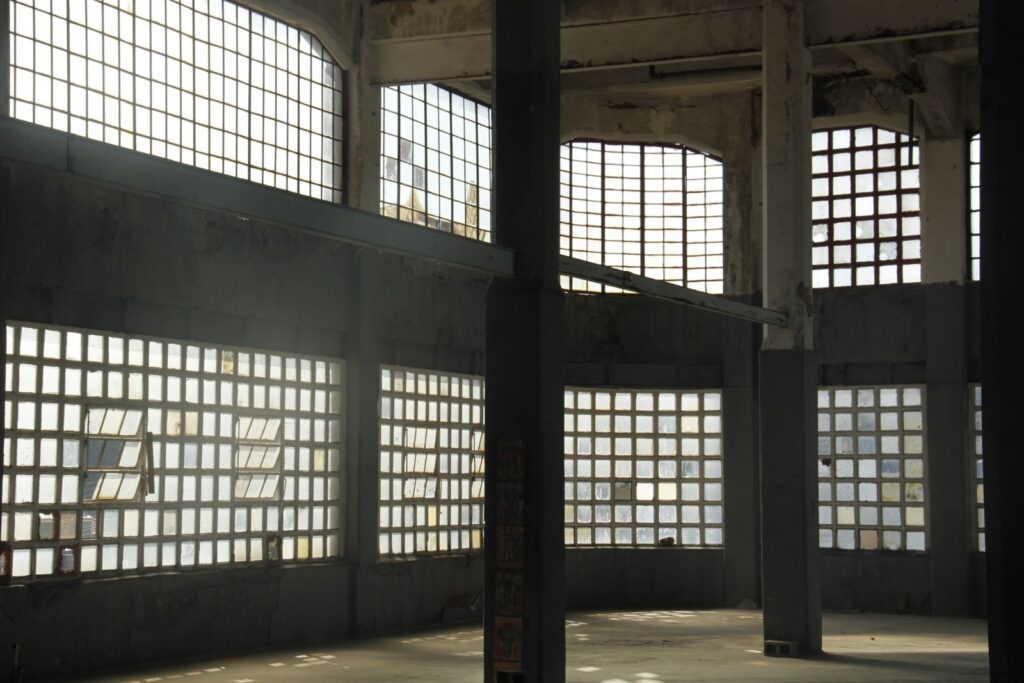
Featured image: Luis Eduardo Marques on Pexels — view the original on Pexels. Stock illustration showing an empty industrial hall; it does not depict an actual Kadier project.
