

 Tiếng Việt
 中文 (中国)
This article is a deep-dive into a single industrial park: Tan Phu Thanh, in Tan Phu Thanh commune, former Chau Thanh A district — now part of the new city of Can Tho. If you are securing a site, building a new factory, or refurbishing a floor inside this park, it maps your industry to the right type of floor before any coating system is discussed. It is guidance by industry and by zone of use; it does not claim Kadier has built in Tan Phu Thanh or served any specific tenant in the park.
Administrative note: since 01/07/2025, former Hau Giang, former Soc Trang, and former Can Tho have merged into the new city of Can Tho. In this article, “former Hau Giang” is a familiar search and location name, not a current administrative unit. For the wider southern-cluster picture, see our epoxy flooring guide for the Hau Giang and Soc Trang industrial park cluster — that article covers three parks, while this one covers Tan Phu Thanh alone.
Tan Phu Thanh: location, scale, and industry orientation
Tan Phu Thanh was added to Vietnam’s industrial park development plan by a Prime Minister official letter dated 30/07/2009, with a planned area of about 201 hectares for phase 1. The park sits right beside National Highway 1, a practical advantage for truck access and for moving raw materials and finished goods across the Mekong Delta and back to Ho Chi Minh City. That position places Tan Phu Thanh in the southern industrial belt of the new city of Can Tho, close to neighbouring parks but with its own boundary and industry mix.
The park is oriented as a multi-sector park using advanced, modern, environmentally friendly technology. Its target sectors include mechanical assembly and electronic components and spare parts; consumer goods and handicrafts; textiles and footwear; food, grain, and agricultural processing; non-metallic mineral products; plus precision mechanics, telecommunications and electronics, and metal processing. That very diversity is why one coating for the whole park is the wrong approach: each sector poses a different floor problem, and even within one factory, each zone has different requirements.
What each industry in the park needs from its floor
Mechanical assembly, precision mechanics, and metal processing. Machine shops carry concentrated loads: fixed machines, forklifts moving blanks and finished parts, oil and grease around machining areas. Floors here need even load and abrasion resistance, oil resistance, low dirt retention, and easy cleaning after each shift. Precision machine areas also need a stable, level surface, since local settlement can throw off fixtures. Marked walkways and work zones keep people away from forklift traffic and reduce uneven wear.
Electronics, components, and telecommunications. Electronics plants are usually dry, clean, and densely staffed with people standing for long shifts. Floors should be low-dust, seamless, and easy to wipe down, without shedding dust from the surface itself. Where a survey confirms an electrostatic control requirement — inspection rooms, sensitive-component areas — anti-static protection should be applied to exactly those zones, not to the whole plant. The StatGuard system belongs only in zones with a confirmed requirement, since the rest of the factory does not need that level of protection.
Textiles, footwear, and consumer goods. This group brings fabric dust, leather dust, and high foot traffic. Floors need low dust retention, even abrasion resistance along repeated walking routes, and easy end-of-shift cleaning. Cutting, sewing, and packing areas carry medium loads, but trolleys and pallets move constantly, so the surface must resist spreading scratches. The finished-goods warehouse of the same plant is closer to a logistics problem — forklifts and line marking — than to a sewing-shop problem.
Food, grain, and agricultural processing. This is the hardest floor problem in the park: wet zones, water, fats, spilled raw material, and frequent washdowns. Floors must be seamless, slip-resistant, resistant to cleaning chemicals, and well drained, while carrying heavy forklifts loaded with raw material. Raw intake, pre-processing, packing, and finished-goods storage must be zoned separately, because their wetness and cleanliness levels differ sharply. One system for the wet zone and the dry zone, without zoning, leaves one of them below standard.
Handicrafts, non-metallic minerals, and metal processing. This group is varied: material dust, offcuts, medium to heavy loads depending on the process step. Floors need impact and abrasion resistance, easy sweeping of material dust, and no joints or grooves that trap dust. Metalworking areas add oil and swarf, so oil resistance and fast cleaning matter more than surface gloss.
Zone the factory before choosing a coating
Before picking a system, divide the factory into zones of use: main production, raw and finished-goods warehouses, wet zones, clean or inspection zones, forklift aisles and corridors, and outdoor yards and parking. Each zone has its own trio of criteria: load, wetness and chemical exposure, and cleanliness and cleaning frequency. A single agricultural processing plant in Tan Phu Thanh can need three different floors in one building: a wet-resistant, slip-resistant floor for pre-processing, a seamless, easy-clean floor for packing, and a load-bearing, line-marked floor for the warehouse.
Zoning also drives the construction schedule. Zones that must run early are built first; zones that can stop are built later. For an operating plant, zone-by-zone work keeps the line running — but the joints between old and new floors, and the curing schedule of each zone, must be planned up front.
Matching Kadier systems to zones
The RollCoat roller system suits dry warehouses, forklift aisles, and medium-load areas that need line marking and slip resistance, where durability, easy maintenance, and fast zone-by-zone application matter most. The LevelFlow self-leveling system is typically considered for areas demanding a high degree of flatness and a seamless surface — packing zones, inspection zones, clean zones — where joints and unevenness trap dust and complicate cleaning. The StatGuard system is reserved for zones with a survey-confirmed electrostatic control requirement, mainly in electronics. The AquaBase system, water-based and low VOC, is worth considering when a plant needs low odour and shorter waiting times during application, especially for refurbishment inside an operating factory. The final system for each zone still follows the coating manufacturer’s technical datasheet and the site survey — never one system for every zone.
Weak soil and high moisture: a mandatory step in the Mekong Delta
Tan Phu Thanh sits on the weak, high-moisture ground typical of the Mekong Delta. Before coating, moisture measurement, settlement and crack inspection, and rising-damp treatment are mandatory whenever moisture exceeds the chosen system’s permitted threshold. Skipping this step risks early blistering and peeling — fastest in wet zones, where ground moisture plus frequent washdowns accelerates failure. New concrete needs adequate curing time before coating; refurbished floors need an assessment of whether the old layer can stay or must be fully treated. The rainy season should also be factored into the schedule: ground moisture runs higher, and waiting times between coats can lengthen.
New build versus refurbishment: two different schedules
A new factory in the park has the advantage of building the floor from scratch: moisture testing, ground treatment, zone-by-zone system selection from the drawings, and coating before machines are installed. A refurbishment is the reverse: old floors, running machines, and a production schedule that cannot wait. Surveys must identify the old coating type, whether the old floor still bonds or has already delaminated, which zones need only a new topcoat, and which need full ground treatment. The park’s position beside National Highway 1 eases delivery of materials and equipment, but truck schedules still need coordination with park management and the plant’s production calendar.
Checklist before choosing a floor system in Tan Phu Thanh
One, what is your industry, and which zones are wet and which are clean? Two, what is the heaviest load on the floor — which forklift type, what weight, fixed routes or spread traffic? Three, is the existing slab new concrete or an old floor, and has moisture been measured and cracks and settlement checked? Four, which zones have a confirmed electrostatic or special cleanliness requirement? Five, can the plant stop zone by zone for application, or must work happen outside production hours? Six, do outdoor areas and yards need a separate weather-resistant coating? Answering all six turns system selection into a zone-by-zone match — instead of guessing by price or habit.
Frequently asked questions
How does this article differ from the Hau Giang – Soc Trang cluster article?
The cluster article covers three parks — Song Hau, Tan Phu Thanh, and Tran De — and discusses a future port and Tran De’s four-sector plan. This article covers Tan Phu Thanh only: its 201-hectare phase 1, its position beside National Highway 1, each industry in the park, and each zone inside one factory. Read the cluster article for context; read this one to choose a floor for a specific plant in the park.
Does a newly built factory need moisture testing, or only an old one?
Both do. New concrete still holds moisture during curing, and the region’s weak, high-moisture ground makes slab moisture a standing risk. Moisture measurement is mandatory before coating in every case; new slabs are usually simply faster to treat than delaminated old ones.
Should a food processing plant in the park use one system for the whole factory?
No. Wet pre-processing needs slip resistance and drainage, packing needs a seamless, easy-clean surface, and the warehouse needs forklift load capacity. Zone first, choose a system per zone, and plan the joints between zones from the start.
How is an epoxy flooring quote for a plant in Tan Phu Thanh Industrial Park calculated?
Kadier quotes after a site survey, based on area, industry, wet or clean zones, slab condition and moisture, and the construction schedule. This article gives no specific prices, because price lists circulating online are not Kadier prices.
Which industry is your plant in Tan Phu Thanh Industrial Park, and which zones are wet or clean? Send your area and slab condition through the epoxy floor coating quote page or the contact page for advice on the right system. Direct contact: hotline/Zalo 0899355489, WeChat wxid_95o54joujyrr12.
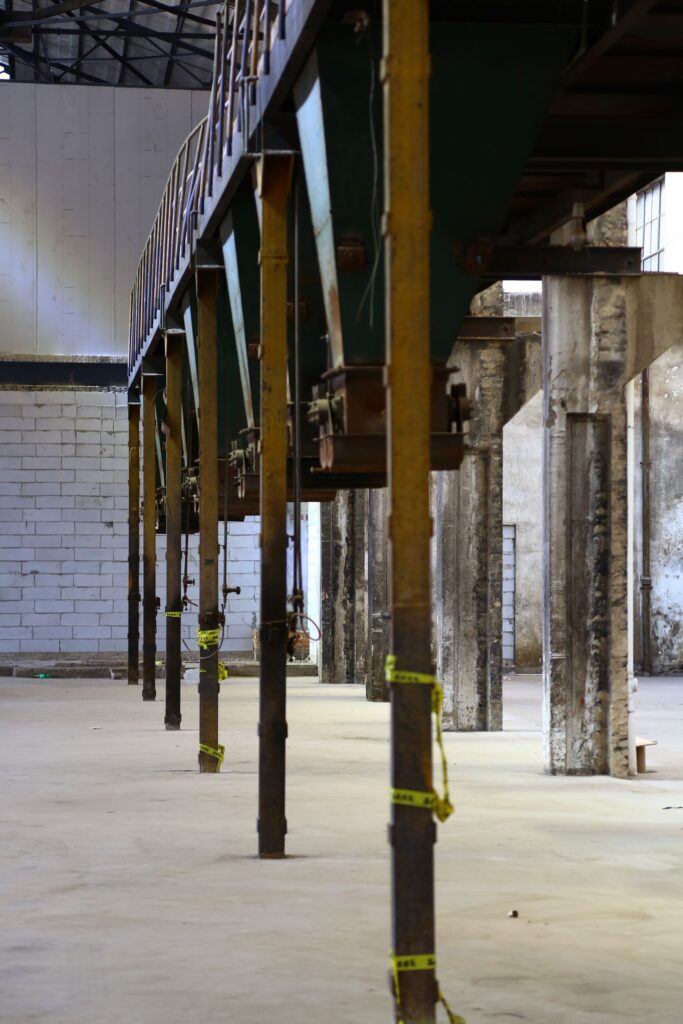
Illustrative image, not a Kadier project. Pexels stock photo (photo ID 12380630) — a general illustration of an empty factory hall with a wide concrete floor, not tied to any specific factory or industrial park.
