

 Tiếng Việt
 中文 (中国)
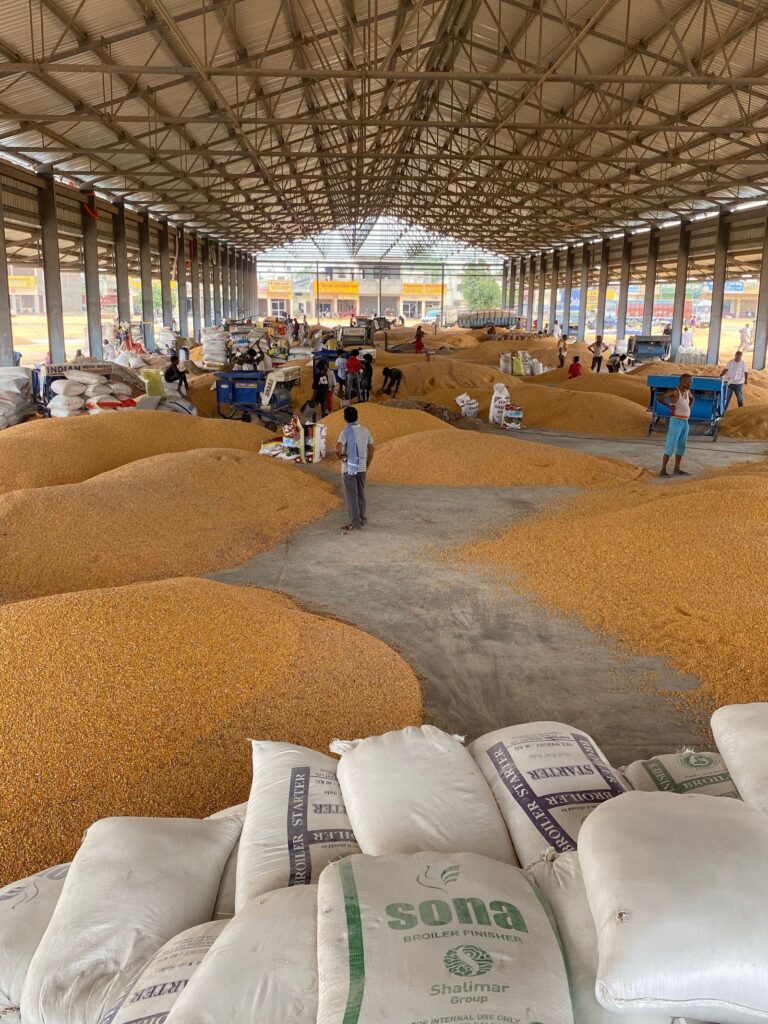
Agricultural warehouses and agricultural processing areas pose a fairly specific flooring problem: the floor must withstand trolleys, pallets and forklifts carrying heavy loads, while staying clean in an environment full of dust, moisture and spilled organic matter. Grain dust, rice husks, flour, wash water and juices from fresh produce can all stick to the floor, work their way into cracks and become shelter for mould and insects if the floor surface is not seamless. When choosing a floor for an agricultural warehouse, therefore, the first question is not colour, but this: is the floor genuinely easy to clean after every shift.
Featured image: Dptc India on Pexels.
The real pressures on agricultural warehouse floors
In grain stores, the floor is constantly exposed to fine dust generated during loading, unloading, sieving and bagging. This dust is light, easily airborne and readily lodges in every gap. If the floor is raw concrete or tiled with joints, dust falls into the joints, cannot be swept out completely and accumulates over time. A seamless floor with no joints makes sweeping and vacuuming far more thorough, and also reduces the amount of dust kicked back up when vehicles pass over it.
In processing areas, the pressure is even greater. Water used to wash raw materials, condensation, fruit juices and spilled vegetable oil leave the floor wet for much of the time. A wet floor is not only slippery, it also increases the risk of mould if the substrate underneath stays damp for a long time. In addition, forklifts and trolleys carrying sacks repeatedly travel the same routes, creating concentrated wear tracks rather than even wear across the whole floor.
Why epoxy flooring suits agricultural warehouses
In terms of the general properties of epoxy as a material (not a commitment specific to any particular Kadier product), an epoxy floor forms a seamless film over concrete, with a hard and low-permeability surface, so dust and dirt have difficulty penetrating deeply and are easy to wash off. After a processing shift, the floor can be swept, vacuumed and then mopped or washed with water and a mild detergent, without worrying about water seeping through joints as it would with a tiled floor. This seamless quality matters most in areas in direct contact with raw materials, where hygiene is a daily operational requirement, not merely an aesthetic criterion.
Another operational advantage is the ability to mark zones by colour and line marking. An agricultural warehouse usually needs a clear separation between goods-in, storage, processing, packing and forklift routes. Lines marked on an epoxy floor help operators see traffic flows clearly, reduce collisions between vehicles and pedestrians, and make zone-by-zone hygiene checks easier. When the warehouse layout needs to change, the zone lines can also be repainted to match the new floor plan.
Substrate moisture: the point to survey before painting
Agricultural warehouses, especially those at ground level or near washing areas, often have higher substrate moisture than dry factories. If epoxy is applied over an untreated damp substrate, the coating risks blistering and peeling after a period of use. Before application, therefore, the concrete substrate needs its moisture measured and checked for rising damp. Where the substrate is damp, a suitable moisture-barrier solution is needed before the finish coat is applied, rather than painting over it and hoping the coating will cope with the moisture on its own.
This is also why a coating system should not be chosen on the basis of its generic name alone. Thin roller-applied systems, self-levelling systems and water-based systems differ in composition and application conditions; which system is suitable depends on the substrate moisture level, vehicle loads and the actual floor-washing frequency of each warehouse. The specific parameters of each Kadier coating system — such as substrate-moisture tolerance, recommended thickness or resistance to cleaning agents — must be checked against Kadier’s official Technical Data Sheet (TDS) when a published version is available; this article does not state Kadier-specific parameters where no published TDS is available.
Choosing a coating system for each area in the warehouse
Dry storage areas: prioritise a hard floor surface, resistant to wear from wheels and easy to sweep free of dust. A roller-applied system such as RollCoat is often considered for this area because it is quick to apply and easy to maintain locally when one area becomes worn.
Wet processing and washing areas: prioritise a seamless floor surface, with drainage to gullies and a suitable anti-slip texture. A self-levelling system such as LevelFlow creates a seamless, level surface, making floor washing easier and limiting standing water in local low spots.
Areas in operation, where odour must be limited: a water-based system such as AquaBase has a lower volatile organic compound (VOC) content in line with the general properties of water-based ranges, making it suitable when the warehouse cannot shut down for a long period. The specific VOC level of each Kadier product must still be checked against the official TDS.
Cleaning and maintaining agricultural warehouse floors
Whichever coating system is chosen, the daily cleaning routine is what determines whether the floor stays clean over the long term. Grain dust should be swept or vacuumed before wet mopping, because mopping directly over a thick layer of dust creates a thin mud that sticks even more firmly. Areas where produce juices have spilled should be washed during the same shift, rather than left to dry and form deposits overnight. Cleaning agents used on the floor need to suit the coating manufacturer’s recommendations; an unsuitable strong cleaning agent can dull the coating or shorten its service life over time.
For maintenance, the heavily worn spots should be inspected regularly: forklift entry and exit routes, turning points, rack feet and warehouse door edges. When deep scratches or edge peeling appear, early local repair will be far cheaper and faster than waiting until the damage spreads and the whole floor has to be recoated. Keeping a record of cleaning and inspection schedules by zone also helps warehouse owners spot early which zones are deteriorating faster than others.
Conclusion
What agricultural warehouses and agricultural processing areas need most from a floor is seamlessness, ease of cleaning, and resistance to moisture and to wear from vehicles and dust. Epoxy flooring meets this group of requirements well in terms of the general properties of the material, but the specific coating system, moisture-barrier solution and cleaning routine must be determined after a substrate survey and an assessment of the actual operating needs of each warehouse, and by checking Kadier’s official TDS before finalising the work.
Request a consultation on the coating system suited to your agricultural warehouse, including a substrate survey and the actual moisture conditions at the site.
