

 Tiếng Việt
 中文 (中国)
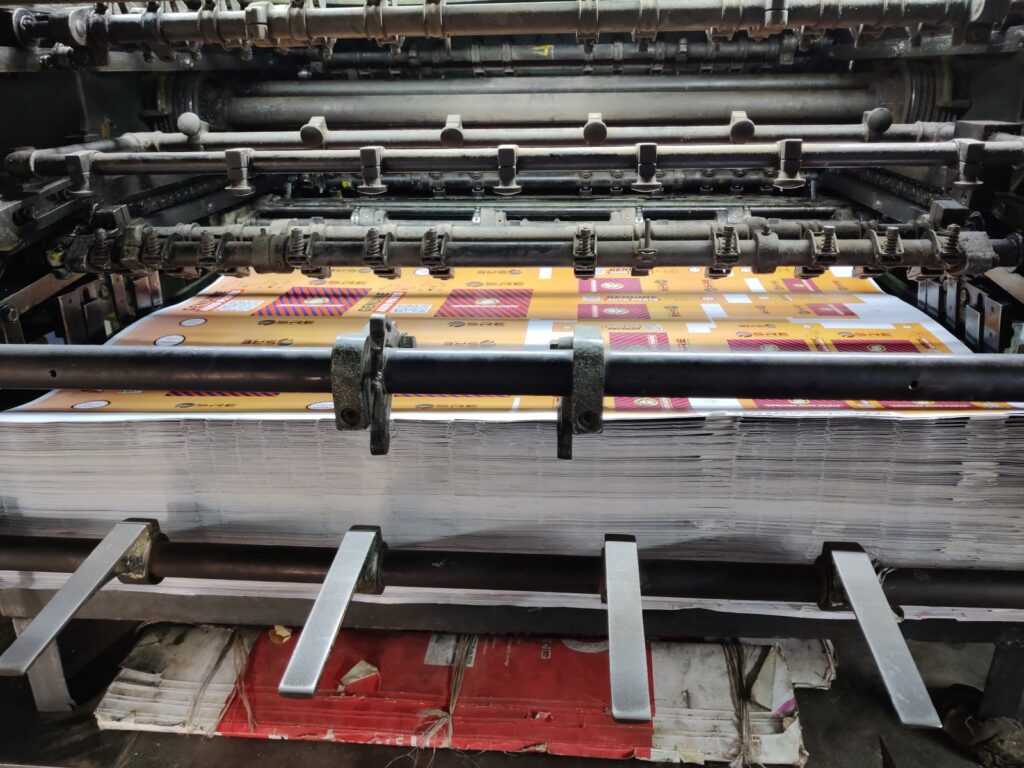
Printing and paper packaging plants face a combination of floor stresses few other industries share: fine paper dust constantly in the air, spilled printing ink, machine-cleaning solvents, heavy paper rolls and forklifts moving pallets of finished goods throughout the shift. The floor in a printing plant is not just a walking surface; it also affects print quality directly, because paper dust settling on printing plates, on finished paper or getting into machine areas can cause defects. Choosing a floor for a printing plant should therefore start with controlling dust and ink, not only with mechanical durability.
Featured image: Criiv India on Pexels.
Paper dust: an operational issue, not just a housekeeping issue
When paper and cardboard are cut, die-cut, folded and packed, they produce very fine fibre dust. This dust settles on the floor and on machine feet and is blown up again whenever there is a draught or a vehicle passes. On rough concrete or a floor with many joints, dust works its way into the joints and is very hard to clean thoroughly; each sweep only moves dust from one place to another. A seamless floor surface that holds little dust makes end-of-shift vacuuming more effective and reduces the amount of dust re-dispersed during the next shift.
Paper dust is also a factor to note for fire safety. Thick accumulations of paper dust, especially near heat sources or electrical equipment, increase fire risk. Keeping floors clean, with no dust layers left in hidden corners or under machines, is part of managing safety in a printing plant, alongside the dust extraction system and the facility fire protection rules. An epoxy floor does not replace these fire protection measures; it only makes cleaning and inspection easier to carry out.
Printing ink and solvents: the floor must be easy to clean, not stain-prone
Spilled printing ink is an everyday occurrence around printing machines, ink mixing areas and plate washing areas. Dried ink sticks firmly, wet ink spreads easily and is carried on shoe soles all over the plant. On an absorbent floor, ink stains soak deep in and leave permanent marks; on a seamless epoxy floor surface that is low in absorbency, as a general property of the material, ink stains usually stay on the surface and are easier to wipe off if dealt with promptly. The principle remains to act early: ink left to dry for many days is harder to remove than freshly spilled ink, whatever the floor type.
With solvents and printing machine cleaners, more caution is needed. Not every solvent is compatible with every epoxy coating. Before using a new solvent to clean the floor or wash a machine near the floor, the chemical resistance of the coating system in use should be checked against the manufacturer’s official TDS. This article does not list a Kadier-specific list of compatible solvents, because those figures must be checked against the published TDS for each coating system.
Light static: a requirement to understand at the right level
In printing and paper packaging plants, static electricity can cause operational annoyance: paper sheets sticking together, dust attracted and held more strongly, and occasional mild discharges when touching a machine or a metal rack. This level is different from the strict anti-static requirements of electronics plants or cleanrooms, where static can damage components. Printing plants therefore usually only need a floor that controls static at a light and stable level, combined with control of air humidity and equipment earthing, rather than investing immediately in a specialist anti-static system if there is no specific measurement requirement.
When a plant has an area packing electronic components alongside printing, or a customer sets a specific surface resistance threshold, that is when a specialist anti-static coating system such as StatGuard should be considered, with testing after application by a method the customer accepts. The specific threshold and testing procedure must be confirmed from the TDS and the project technical requirements, and should not be inferred from the product name.
Choosing a system by area inside the printing plant
Printing machine and ink mixing areas: prioritise a seamless floor surface that is easy to clean of ink and withstands trolleys and paper pallets. A roller-applied system such as RollCoat suits large areas that need fast application; a self-levelling system such as LevelFlow suits areas requiring a flat floor surface, low dust retention and deep cleaning.
Cutting, die-cutting and packing areas: this is where paper dust is heaviest and forklifts and trolleys move continuously. Beyond floor surface durability, attention should be paid to marking walkways and staging areas, so that dust and paper waste do not spread into the finished goods area.
Areas in operation, where paint odour must be limited: a water-based system such as AquaBase is considered for the general property of water-based lines of low VOC and light odour. The actual VOC level of the Kadier product must be checked against the official TDS before any commitment is made to a customer.
Cleaning a printing plant floor: process matters more than strong chemicals
An effective cleaning routine for a printing plant usually has three steps: dry-vacuum the whole floor surface first, treat local ink stains with a cleaner compatible with the coating system, and only then mop the whole area wet. Vacuuming first avoids wet mopping turning paper dust into a thin mud layer that sticks firmly. Ink stains should be treated during the same shift; leaving them overnight or over several shifts makes removal much more time-consuming.
In addition, mats or pads should be placed at entrances to the printing area and around ink mixing areas to limit ink and dust spreading on shoe soles. Forklift turning points and main walkways should be checked regularly for wear, because the coating deteriorates there first. Early local repair at these points helps the plant avoid stopping the whole line to recoat the floor.
Conclusion
A printing and paper packaging plant floor must solve three things at once: reduce paper dust settling and re-dispersing, make spilled ink easy to remove, and control static at a level that fits real operating conditions. Epoxy coating, with a seamless and low-absorbency floor surface as a general property of the material, is a suitable choice for this set of requirements, but the specific coating system and solvent resistance must be finalised after a survey and checking Kadier official TDS.
Request a consultation on flooring solutions for printing and paper packaging plants, including a survey of dust, ink and vehicle traffic at your plant.
