

 Tiếng Việt
 中文 (中国)
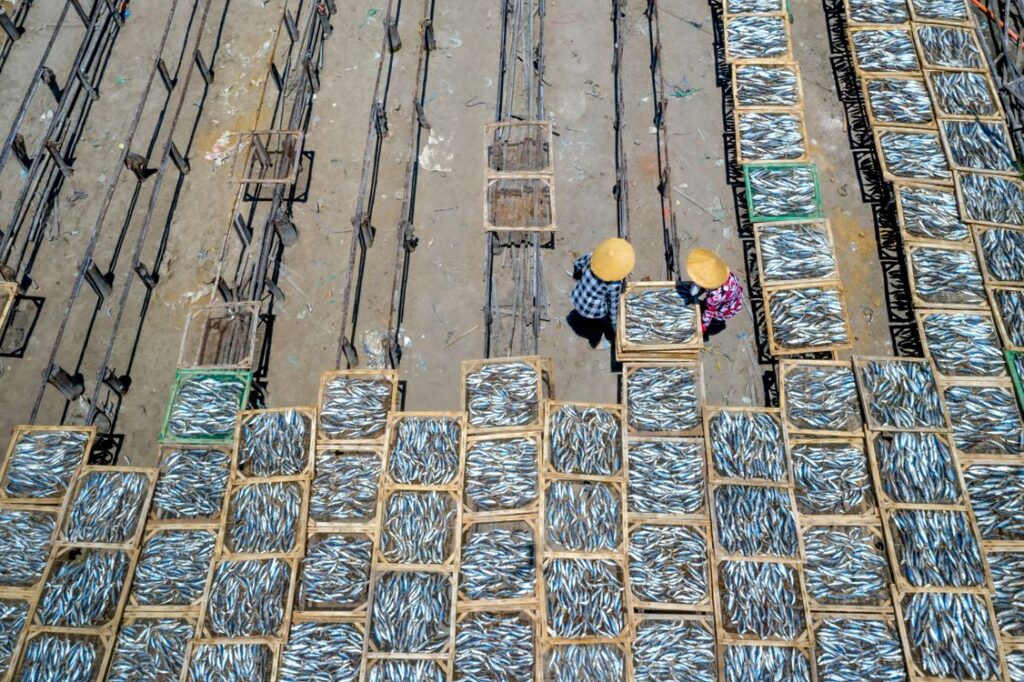
Can Tho and the central Mekong Delta are where epoxy flooring must withstand three harsh conditions at once: seafood wet zones with salt water, fish oil and frequent washdowns; cold storage with thermal shock and condensation; and the weak, high-moisture ground of a river region. This article covers the market demand of the deep-processing central cluster. It does not claim that Kadier has carried out work at any specific industrial park or seafood plant.
Administrative note: from 01/07/2025, the new Can Tho City comprises the former Can Tho, Soc Trang and Hau Giang. In this article, the name Can Tho refers only to the central geographic cluster around Tra Noc, Hung Phu, Thot Not and O Mon, and is not used to mean only the city’s former boundaries before the merger. More generally, old province names in this article are geographic cluster names only, not current administrative units: the new Ho Chi Minh City comprises the former Ho Chi Minh City, Binh Duong and Ba Ria – Vung Tau; the new Tay Ninh comprises the former Tay Ninh and Long An; the new Dong Nai comprises the former Dong Nai and Binh Phuoc; the new Dong Thap comprises the former Dong Thap and Tien Giang; the new Vinh Long comprises the former Vinh Long, Ben Tre and Tra Vinh; and the new Can Tho City comprises the former Can Tho, Soc Trang and Hau Giang.
Why this cluster is the deep-processing centre of the whole region
Can Tho acts as the linking core for deep processing of agricultural products and seafood across the Mekong Delta, with long-established industrial parks such as Tra Noc, a southern gateway area such as Hung Phu tied to its port and highway, a northern gateway area such as Thot Not, and O Mon on the Hau River tied to energy and engineering. According to data for the first nine months of 2026 published by Cong Thuong Magazine, the city’s food processing grew at double-digit rates, with seafood output and exports both rising — showing that demand for processing and cold-storage flooring is not momentary but tied to an expanding export chain.
Being the centre also means this cluster holds both old plants that need renovation and new plants and warehouses that need standard-compliant floors from the start. Long-established Tra Noc poses a renovation problem for old slabs; Hung Phu and newer zones pose a new-floor problem for processing, cold storage and logistics. The two problems need different processes and should not share one application package.
Flooring for seafood processing: wet zones, salt water, fish oil and washdowns
A seafood processing zone is its own corrosive environment: salt water, fish oil, mild organic acids and cleaning chemicals attack the floor every day, while water frequently stands on the surface. A suitable floor must be seamless, with no joints to hold water and grime, resistant to mild chemicals, slip-resistant in wet zones and easy to clean after every shift. Raw-material intake, pre-processing, packing and finished-goods warehouse zones each have different wetness and washdown levels, so zones must be divided before a system is chosen.
The LevelFlow self-levelling system is often considered for processing zones that demand flat, seamless and easy-to-clean floors, while dry warehouses and forklift aisles can use the RollCoat roller system with lane markings and slip resistance. For odour-sensitive zones or zones near food packing, the AquaBase water-based system, with low VOC, is worth considering, but its chemical resistance and load capacity for each zone must still be checked before it is confirmed.
Flooring for cold storage and the cold chain: thermal shock, condensation and slip resistance
Cold storage poses a problem ordinary floors never face: low temperatures, thermal shock when warehouse doors open and close, condensation on the floor surface and forklifts moving over a cold, slippery floor. A cold-storage floor needs a system confirmed for low-temperature conditions in the paint manufacturer’s technical documentation, plus slip-resistant aggregate and a design that leaves no standing water. One important note: a warehouse’s operating temperature points are the warehouse’s own parameters, not the coating’s parameters; a coating system may only be claimed suitable when the manufacturer’s documentation and an on-site survey confirm it.
Cold-storage floor application also needs its own schedule: the slab must be dry and meet application conditions before the temperature is lowered, and curing time must be sufficient before the warehouse operates at low temperature. Putting a warehouse into cold operation too soon is a common way to reduce adhesion and coating life, even when the floor looked perfect during application.
Flooring for rice, agricultural and fruit processing: dust, machine loads and easy cleaning
Alongside seafood, the central cluster also processes rice, agricultural produce and fruit, with their own traits: dry raw-material dust, milling and packing machine loads and internal forklifts, plus hygiene requirements to avoid cross-contamination. Floors for this group need to be seamless, hold little dust, resist even wear and be easy to clean at the end of each shift. Dry raw-material storage and packing zones can use a roller system, while zones demanding higher cleanliness should consider a self-levelling system.
The difference from the seafood group is that dry zones dominate over wet zones, so dust control and abrasion resistance take priority over continuous salt resistance. However, raw-material washing zones and equipment-cleaning zones still need slip resistance and moisture resistance, and should not be ignored just because most of the plant is dry.
The weak, high-moisture ground problem: the number one blistering risk
This is the cluster’s harshest problem and the most common cause of floor failure in the Mekong Delta. The region’s weak ground has a thick layer of weak clay, naturally high moisture and, in coastal areas, acid-sulphate and saline contamination. Extremely high slab moisture is the number one blistering risk: moisture vapour pushes the coating off the concrete, especially after the first rainy season.
The process for this cluster must therefore include slab moisture measurement, settlement and crack checks, and a rising-damp barrier primer when moisture exceeds the chosen system’s permitted threshold. Old plants in Tra Noc need one more step for old slabs: grinding off failed coatings, treating cracks and checking old oil and grease before recoating. Coating over a settling or damp slab without treatment only postpones floor failure by a few months, at a much higher repair cost.
Old Tra Noc versus new Hung Phu zones: renovation differs from new floors
Old plants need renovation: old concrete slabs, cracked joints, oil and grease and peeling old coatings are the starting point. Renovation usually requires deeper grinding, more thorough crack treatment and work in sections so production never stops entirely. New plants and warehouses in Hung Phu and newer zones, by contrast, start from new concrete slabs: controlling moisture, waiting for the concrete to reach sufficient age and choosing a suitable primer are the focus, along with coordinating schedules so floor coating does not delay handover.
Acceptance for both groups includes measuring thickness at many points, testing forklifts and turning at load-bearing points, checking for peeling, checking for standing water and allowing full curing time before operation. For electronics or quality-inspection zones in the cluster, if electrostatic control is required, resistance measurement must be added and the StatGuard system used for exactly those zones, rather than applying ESD to the whole plant.
Frequently asked questions
Why do seafood floors often blister after the first rainy season?
The most common cause is slab moisture that was never thoroughly treated before coating, combined with wet zones washed down frequently. Moisture from the slab pushes the coating up into blisters, which then break into peeling patches. The correct remedy is to measure moisture, use a suitable rising-damp barrier primer and coat only when the slab meets the conditions — not to add another coat of paint over a blistered spot.
Can cold storage be coated with epoxy, and what must be noted?
Yes, if the coating system is confirmed by the manufacturer as suitable for low-temperature conditions and the schedule is right: the slab must meet conditions before the temperature is lowered, curing time must be sufficient before cold operation, and the floor must resist slipping and leave no standing water. Warehouse operating temperatures should not be taken as coating parameters, and a warehouse should not be put into cold operation too soon after application.
How does a seafood wet-zone floor differ from a dry rice and fruit floor?
A seafood wet zone prioritises seamlessness, resistance to salt water and mild cleaning chemicals, slip resistance and good drainage. A dry rice and fruit zone prioritises low dust retention, abrasion resistance and easy cleaning. Using one system for both zones without dividing them leaves one of the two zones below standard.
Can an old plant in Tra Noc be recoated over its old slab?
Yes, if the old slab is still sound enough, failed layers have been ground off, cracks and oil and grease have been treated, and moisture measurements meet requirements. If the slab is settling, cracks are spreading or high moisture is untreated, recoating only covers the problem temporarily and will peel again. Surveying the old slab is the deciding step, not a step that can be skipped to save time.
How is an epoxy flooring quotation for the Can Tho cluster calculated?
Kadier quotes after an on-site survey, based on area, slab condition, the coating system for each zone — especially wet zones and cold storage — and the work schedule. This article gives no specific prices, because price lists circulating online are not Kadier prices and do not reflect the actual slab condition of each plant.
Request advice and a quotation: send the plant or cold-storage location, processing industry, area and which wet or cold zones need coating via Kadier’s quotation page or contact page. Direct contact: hotline/Zalo 0899355489, WeChat wxid_95o54joujyrr12. Illustrative photo: Pexels stock photo (photo ID 11670043), a general illustration of seafood, not a Kadier project.
