

 Tiếng Việt
 中文 (中国)
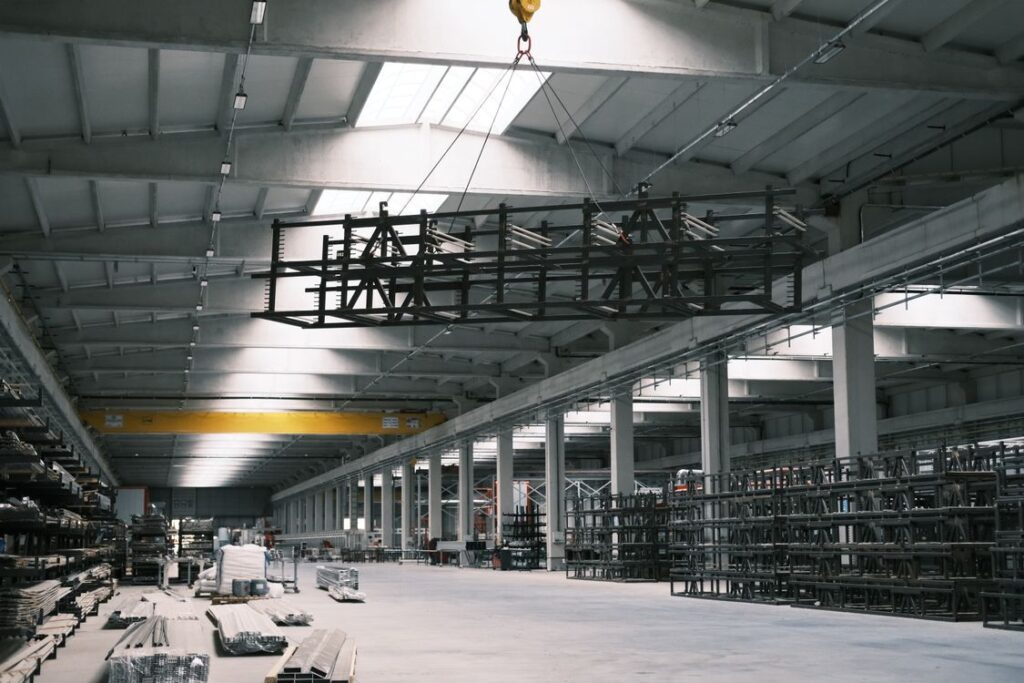
A running plant inside Dat Cuoc Industrial Park and a plant about to be built in the same park do not share one flooring problem. The running plant needs to recoat a floor that already carries heavy loads and mineral dust, without stopping production for long. The new plant needs to specify its floor from the start, while its concrete is still new and its land is still being cleared. This article separates the two jobs, so the answer for one phase is not mistakenly applied to the other.
This article is only about Dat Cuoc Industrial Park at Dat Cuoc Commune, former Bac Tan Uyen, Ho Chi Minh City, developed by KSB — not Hoa Lu Industrial Park (also KSB, at Loc Ninh), not a KSB quarry, and not any other park called Dat Cuoc.
The park on one page: a ceramic-cluster origin, two phases, two land positions
Dat Cuoc Industrial Park grew out of the Dat Cuoc ceramic cluster into a full industrial park. Its infrastructure developer is Binh Duong Minerals and Construction Joint Stock Company (KSB, formerly BIMICO). The park sits at Dat Cuoc Commune, former Bac Tan Uyen District, former Binh Duong Province, now part of Ho Chi Minh City following the merger of 1 July 2025, along the DT747 corridor and near the Ho Chi Minh City Ring Road 4.
Phase 1 is reported at roughly 212–213 ha (212.84 ha in one listing; 212.43 ha in the VCCI profile; press coverage rounds it to about 200 ha), with about 130.1 ha of industrial land for rent according to the VCCI profile. Phase 1 is described as fully occupied, in 2026 press coverage and in the listing — that is the sources description, not a measured occupancy rate at the present date, and this article gives no percentage figure. The VCCI profile, which is dated, records 31 projects (23 FDI and 8 domestic) at the profile date; that figure is a dated reference only, not a current tenant count.
The Zone B expansion covers 310.38 ha, bringing the parks planned total to 523.22 ha according to KSB on 31 October 2026; some older listings give a 553 ha total, and this article records that difference rather than presenting one figure as settled. The parks 1/2000 subdivision plan was approved according to press coverage in June 2026, with expected total investment of more than 4,211 billion VND. The 2026 focus, according to the same press coverage, is compensation, site clearance and land dossiers — which means phase-2 land is not yet ready, and any phase-2 flooring plan must start by verifying the plots status at survey time.
Dat Cuoc is a multi-industry park built on a ceramic, building-material and mining developer base. But this article is not about mining: the question here is factory floors — load-bearing, dust-tolerant, easy-clean surfaces inside plants — and KSBs mining business is only the background that explains why mineral dust and heavy loads are everyday facts around this park.
The phase-1 floor map: recoating a heavy, dusty floor inside a running plant
In phase 1, the floor has already lived with heavy machinery, forklifts and loose materials. The three most common failures are wear and peeling on forklift routes, cracked joints and edges under concentrated loads, and dust that lodges permanently in pores, joints and rough patches. A recoating system, in this setting, must first answer three questions: does the old slab still bond well enough to hold a new layer, or does it need local repair first; what loads actually travel each zone, and along which routes; and where does the dust come from — raw material, internal transport, or windblown ingress.
For plants beside mineral and building-material operations, the floor needs to be easy to clean rather than merely good-looking: a sealed, low-absorption surface with few dust-trapping joints, and cleaning routes uninterrupted by ridges, channels or redundant details. Joints and edges around machine feet, rack feet and doorways deserve treatment as a separate item, because that is where concentrated loads and forklift turns meet — and where a handsome coating with weak edges fails first. A survey should split the plant into distinct zones: forklift aisles and loading areas under repeated traffic, heavy static loads under machinery, and pedestrian and packing areas that need a clean, moderately durable surface. Merging all three into one requirement is the fastest way to pay for the wrong system and still fail at the old weak points.
Recoating inside a running plant is also a scheduling problem. Work proceeds zone by zone, one operating route stays open at all times, and acceptable machine-stop windows must be agreed before signing, not after the crew arrives. The old surface needs adhesion, moisture and local-repair checks before anyone decides whether the whole area can take one coat or whether zones need different preparation. Readers looking at the wider northern Ho Chi Minh City cluster, formerly Binh Duong, can compare the same zone logic in the neighbouring park guides: epoxy floor coating for Bau Bang Industrial Park, epoxy floor coating for Nam Tan Uyen Industrial Park, epoxy floor coating for My Phuoc Industrial Park, and the Binh Duong industrial park cluster overview.
The phase-2 first-fit map: lock the floor decisions before building, not after
Phase 2 is the reverse problem: there is no floor yet, and the cheapest mistake to fix is also the most expensive one if found late. New concrete needs curing time and a moisture check before coating — coating too early over damp concrete is a familiar cause of peeling and blistering. The decisions to lock before construction are: design loads per zone (which machines, which trucks, how much weight), joint and edge positions under load, forklift routes and turning radii, wet or chemical-exposed areas if any, and cleaning requirements per zone. These are floor-design decisions, and they belong in the design before the concrete is poured, not after.
One point must be stated plainly: phase-2 land is in compensation and site clearance according to 2026 press coverage, so no plot should be assumed ready to build on immediately. A phase-2 entrant should verify, at survey time, whether its plot has completed clearance and land dossiers, what the expected handover date is, and how the flooring schedule fits that handover. Signing a flooring contract before the plots status is verified means scheduling work on land that may not yet exist as a buildable plot.
For a new building-material or mineral-adjacent plant, the dust problem should be priced in from day one: entrances, raw-material transfer zones and packing areas need sealed surfaces that sweep and vacuum cleanly, rather than rough surfaces that hold dust. Locking these details early costs far less than recoating a brand-new floor that has just entered service.
Pre-signing checklist: five verifications that must not be skipped
- Phase identity: is the plant a phase-1 recoat of a floor in use, or a phase-2 first fit? The schedule, substrate requirements and risks are entirely different.
- Plot status: for phase 2, has the plot completed site clearance and land dossiers, and what is the expected handover date? Fix the flooring schedule only after this answer.
- Load and dust profile: list heavy machines, forklifts, traffic routes, concentrated loads and dust sources zone by zone — never one blanket requirement for the whole plant.
- Existing substrate (phase 1): have adhesion, moisture, local failures and joints and edges needing separate treatment been surveyed?
- Work windows: for a running plant, are the phased work zones and machine-stop windows agreed before signing?
Working process and quote contact
The general working process runs: receive the request and establish the plants phase; survey the floor, loads and dust zone by zone on site; recommend a floor system per zone and quote after the survey; apply in the agreed phased zones; and hand over with a check of the surface, joints and edges before the floor enters service. Quotations are prepared after survey, because the same area with different loads, dust and substrate condition means a different preparation scope.
For a survey and quotation for a plant at Dat Cuoc Industrial Park, contact hotline 0899355489 or WeChat wxid_95o54joujyrr12. When contacting, state whether the plant is phase 1 or phase 2, the area of each zone, and the main load and dust types — those three facts let the survey answer the right question from the start.
