

 Tiếng Việt
 中文 (中国)
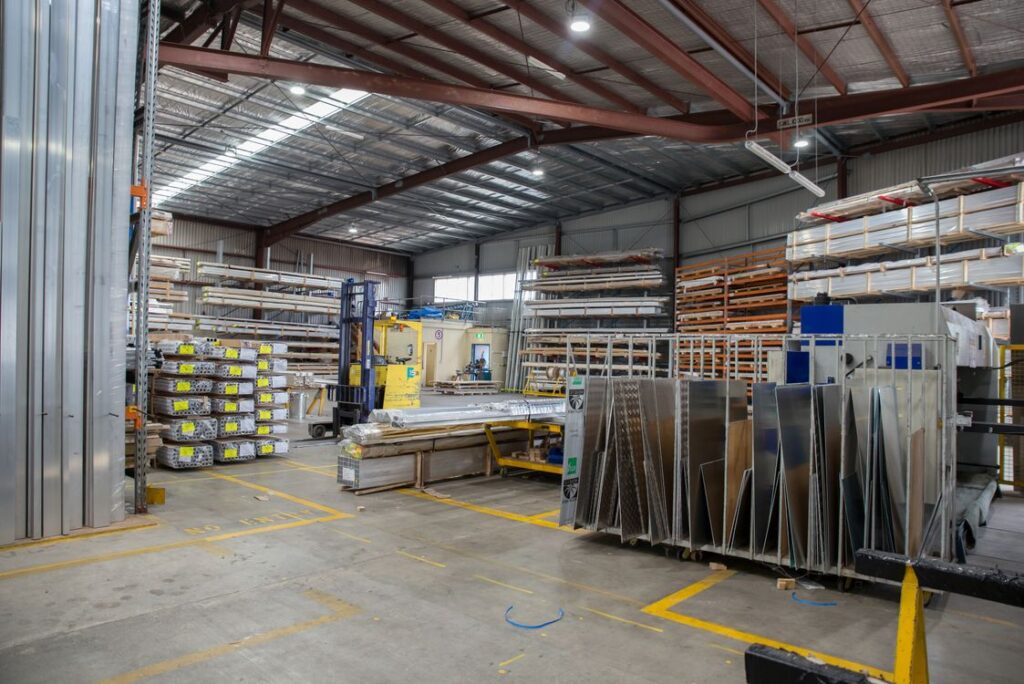
Multi-purpose warehouses and repair workshops may look like two different spaces, but they share one trait: their function changes constantly. Today the warehouse holds light goods; tomorrow it may hold additional machinery. Today the workshop repairs one type of equipment; next week it may take on another. The floor for these two spaces therefore cannot be optimized for a single function alone; it must be flexible: able to carry mixed loads, easy to clean, and easy to reconfigure when needs change.
Illustration: a spacious warehouse interior with shelving (James Richardson / Pexels). The image illustrates a warehouse space in general; it is not a Kadier project.
What does functional flexibility mean for a floor?
Functional flexibility means that the same floor must serve many usage scenarios without being rebuilt every time the layout changes. In a multi-purpose warehouse, that means switching between storage, packing, loading and unloading, and temporary work areas. In a repair workshop, it means switching between disassembly areas, areas for equipment awaiting repair, washing areas, and post-repair inspection areas. If a floor only suits one scenario, every layout change adds the cost of treating the substrate or carrying out local rework.
To achieve this flexibility, the survey stage should list every usage scenario that could occur over the floor’s service life, rather than only describing how the space is used today. That list includes the heaviest goods or equipment that could appear, the internal transport vehicles, the light oils or chemicals that could spill, and how often the layout changes. A floor designed for the heaviest scenario on the list will be far more flexible than one designed only for immediate needs.
Mixed loads: more than just the heaviest load
A mixed load is a combination of several load types existing together: static loads from shelving and fixed equipment, dynamic loads from forklifts and trolleys, point loads from jack feet and equipment bases, and friction loads from foot traffic. Each type damages the floor in a different way: static loads cause settlement and cracking of the substrate over time, dynamic loads cause wheel-track wear, point loads cause local peeling, and friction causes surface wear. A coating system assessed against only one load type will miss the rest.
In a repair workshop, point loads deserve particular attention: lifting jacks, equipment supports and heavy tools dropped from a moderate height can dent or crack the coating at the point of contact, even when the floor as a whole is still in good condition. Using protective pads at frequently used jacking positions and clearly designating where heavy equipment may be placed is a simple operating measure that greatly reduces local damage.
Light grease, dust and cleaning
Multi-purpose warehouses and repair workshops regularly have light grease, metal dust, sawdust or goods dust spilled on the floor. In terms of the general properties of epoxy materials, a seamless coating with no joints makes it harder for grease and dust to penetrate deeply and easier to clean than a floor with many joints — but this holds true only while the coating remains intact. Once the coating has cracked or its edges have lifted, grease will penetrate at the damaged point and make repair harder.
Cleaning for these two spaces should be organized in two layers: quick daily cleaning to collect dust and wipe up freshly spilled grease, and deeper periodic cleaning for areas where dust accumulates over time, such as under shelving and in workshop corners. Leaving grease on the floor for a long time not only causes slipperiness but also reduces the coating’s adhesion at that spot over time, so dealing with it early is always cheaper than dealing with it late.
Flexible zoning with colors and line markings
When layouts change frequently, floor markings and color zones need to be designed so they can change too, without reworking the entire floor. An effective approach is to use a neutral base color for the whole area, combined with line markings and color patches for functional areas that can be moved. When the layout changes, only the markings and color patches of the changed area need to be repainted, rather than recoating the whole floor. The approach to choosing colors by function presented in the article on epoxy floor color charts (RAL) still applies here, with the principle that the fewer colors used, the easier they are to remember and to change.
In a repair workshop, clean and dirty areas need to be clearly separated: inspection and handover areas should be kept apart from disassembly and equipment-washing areas, so that dust and grease from dirty areas do not spread into clean areas. This boundary can be shown by different floor colors or by clear line markings, combined with rules on how staff and equipment move.
Maintenance and local repairs
For multi-purpose spaces, maintenance should be organized by zone rather than for the whole floor at once. Each zone has its own inspection schedule, based on how intensively that zone is actually used: loading and unloading zones are inspected more often than little-used storage zones, and disassembly zones more often than the workshop’s office area. When damage is found, repairing the affected zone locally means the workshop does not have to stop all operations.
Another point to note is that information about the coating system and colors applied in each zone should be kept, so that local repairs match the rest of the floor in color and finish. Failing to keep this information is a common reason why patched areas look off-color and off-gloss compared with the surrounding floor, even when the patching technique itself is sound.
Guidance on coating systems
At a general guidance level, the roller-applied coating system RollCoat suits multi-purpose warehouses and repair workshops that need fast local maintenance and frequent layout changes; the self-leveling coating system LevelFlow suits areas that need a flat, seamless floor that is easy to clean over a large area. Where light grease is regularly present, the grease resistance of each system should additionally be checked against the official technical data sheet (TDS) when published; this article does not state any Kadier-specific grease-resistance figures and does not describe any specific project.
Request a consultation: list the current functions of your warehouse or workshop and any expected changes, to receive advice on a flexible flooring solution at Request a consultation.
