

 Tiếng Việt
 中文 (中国)
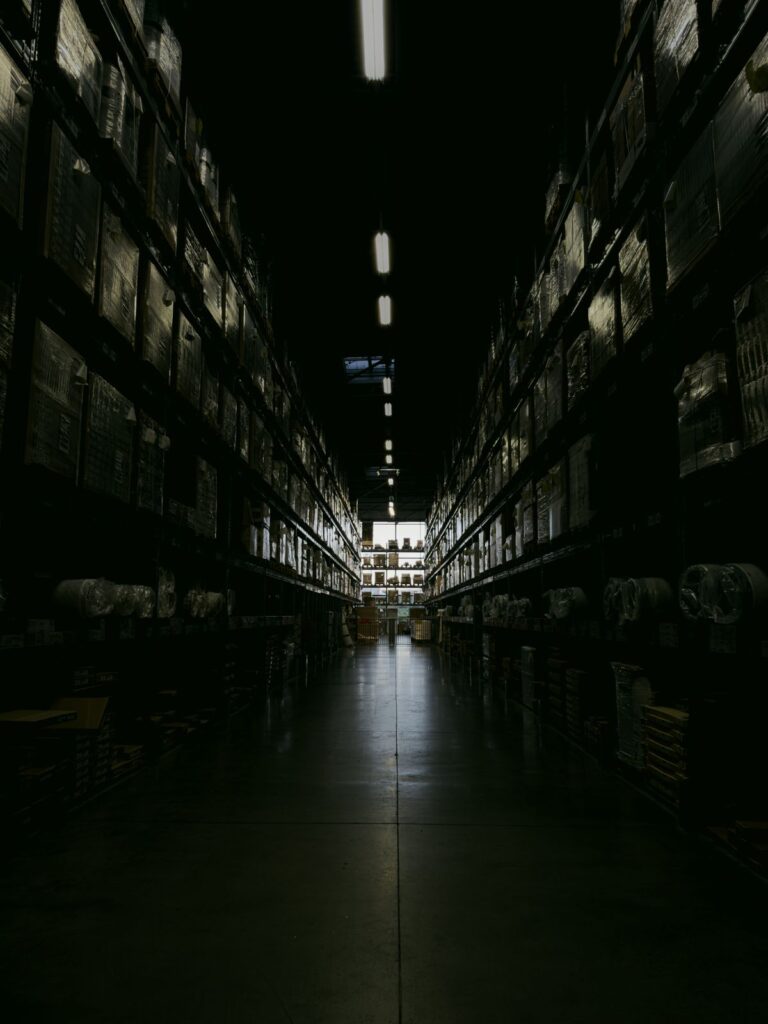
You run a plant or a warehouse in Long Binh ward, Dong Nai city, and the old floor is causing trouble at exactly the moment production cannot stop: peeling patches, cracks at expansion joints, slippery wet areas, or forklift routes that grow rougher every week. This article answers three practical questions for a buyer in Long Binh ward, Dong Nai (the former Bien Hoa area): how to choose an epoxy flooring supplier when a single ward contains three different industrial-park regimes, what to prepare so a quote reflects the real floor rather than a generic average, and how phased recoating works inside an operating plant.
There are three different industrial parks in Long Binh ward: Amata, Loteco (whose official name is Long Binh Industrial Park) and Agtex Long Binh. The three names must never be merged: Amata is a park located in Long Binh ward, while Loteco is the park that actually carries the name Long Binh Industrial Park, and Agtex Long Binh is a third, separate park centred on textiles and rental warehousing. Any quote written vaguely for “Long Binh Industrial Park epoxy” without saying whether it means Amata, Loteco or Agtex is not yet a usable quote, because the three parks set three different floor problems.
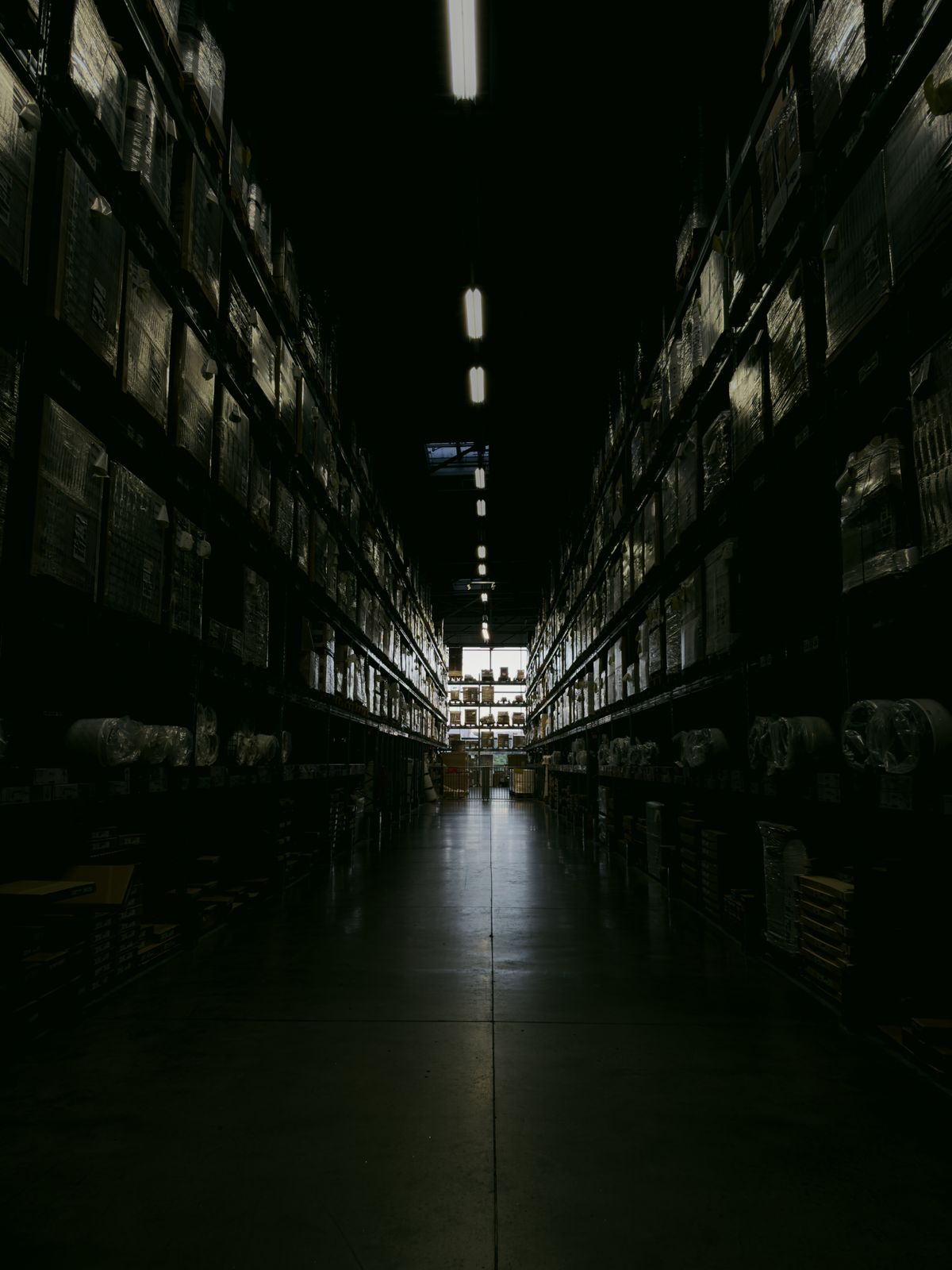
Long Binh ward and three industrial-park regimes in one ward
The new Long Binh ward was established under Resolution 1662/NQ-UBTVQH15 from the whole area and population of three former wards of the former Bien Hoa city — the old Ho Nai ward, Tan Bien ward and the old Long Binh ward — with the new commune-level administration operating from 1 July 2025. The ward is not among the 10 new wards established under Resolution 237/NQ-UBTVQH16 (effective 30 April 2026) — those 10 are Dong Phu, Xuan Loc, Long Thanh, Nhon Trach, Tan Khai, Loc Ninh, Trang Bom, Dau Giay, Tri An and Tan Phu. Since 30 April 2026, Long Binh ward has belonged to Dong Nai city. After the rearrangement its area was 44.91 km² and its population 168,614 people, as of 31 December 2024. To the east it borders the new Ho Nai ward, to the south Phuoc Tan ward, to the west Long Hung, Tran Bien and Tam Hiep wards, and to the north Trang Dai ward. The Long Binh ward discussed here is the one in Dong Nai — not the Long Binh in Thu Duc City, Ho Chi Minh City, and not the Long Binh town in An Giang.
To the east lies Ho Nai ward — home to Ho Nai Industrial Park — and to the west lie Tran Bien and Long Hung wards — home to part of Bien Hoa 2 Industrial Park; neither of those two parks is in Long Binh ward and neither is the subject of this article. This article does not claim that the whole area of any park lies inside the ward boundary, because no parcel-level boundary map has been checked against the ward boundary to verify that; what it uses is each park’s location as given by its address and profile.
Three regimes, three floor problems — the organising principle of this article
What makes Long Binh different from a ward with a single industrial park is that a buyer cannot pick one floor answer and apply it to every plant. The same supplier, in the same ward, must change its acceptance criteria, its quote file and its work schedule according to the regime of the park the plant sits in. The three regimes below are three separate briefs, not three park descriptions.
Regime 1 — Amata: the eco-industrial-park pilot, where dust, odour and detergents are scrutinised
Amata was selected by the Ministry of Planning and Investment together with the United Nations Industrial Development Organization (UNIDO) as a pilot for conversion to an eco-industrial-park model, run along circular-economy lines; according to the operator’s 2026 material, the park has been developed over 513 ha. For a floor buyer, the practical consequence is that three things are scrutinised more closely than elsewhere: grinding dust drifting into neighbouring production, paint odour reaching working shifts, and the detergent list the floor must withstand every day. Floors here must be seamless, with few joints where dust and dirt collect, and cleanable by ordinary washing routines without routine use of harsh chemicals. For recoating inside a running plant, the direction usually considered is a low-odour, water-based system applied zone by zone, with each zone handed over before the next begins — but the final system is still decided after a floor survey and against the manufacturer’s technical data, never from a distance. The full eco angle for Amata is covered in Epoxy Flooring for Amata Industrial Park: Floors for an Eco-Industrial Park; this article does not repeat that angle and uses it only as one of three regimes to compare.
Regime 2 — Loteco (Long Binh Industrial Park): an export-processing zone, multi-industry, with build-to-suit rental plants and warehouses
Loteco, whose official name is Long Binh Industrial Park, was established on 10 April 1996; according to its introductory profile, it is a park containing an export-processing zone (EPZ) inside it. According to the Dong Nai provincial portal, its industries are electromechanical, electronics and textiles — so within one park there are already several load types, several chemical exposures and several production rhythms. The second feature that makes Loteco’s floor problem different from Amata’s is rental stock built to suit: a unit can change tenant, change use and change floor history — a previous tenant may have stored different chemicals, and the previous tenant’s old coating may no longer bond well for the next tenant. A survey in Loteco must therefore record each unit and each tenant separately, and must split the scope before quoting: which floor areas are the landlord’s responsibility and which are the tenant’s. A single lumped quote for “the whole of Loteco” that does not split by rented unit will have to be redone.
Regime 3 — Agtex Long Binh: textiles and warehousing, where forklift-bearing floors and line marking are central
Agtex Long Binh is centred on textiles and rental warehousing. Its floor problem turns less on eco-cleanliness and more on movement: forklifts on fixed routes, turning points that wear fastest, and aisles and sorting areas that need clear line marking so vehicles and people do not collide. Textile areas also bring their own dampness and detergent list, which cannot be lumped together with the detergent list of an electronics area in Amata. This article gives no total area figure for Agtex, because sources disagree and no reconciled figure is available; what a buyer in Agtex needs is not the park’s area but the forklift routes, forklift loads and wet spots of their own warehouse. Acceptance in Agtex must therefore include a loaded forklift trial run and turning trial on the actual routes, and a check of line clarity and adhesion at aisles and turning points — not just a general look at the floor.
Choosing a supplier when the ward has three regimes: one criterion, three different proofs
The five criteria below are not a generic list for anywhere; each one must be proved differently depending on which regime the plant sits in. That is also what separates this article from a single-park ward article: in a one-park ward one set of criteria is enough, while in Long Binh a supplier must show it changes its method from park to park.
First, experience recoating old floors inside running plants — but “old floor” means something different in each regime. In Amata, ask how the supplier controlled grinding dust and odour while the neighbouring line kept running; in Loteco, ask how it handled the previous tenant’s old coating; in Agtex, ask how it dealt with forklift-worn ruts and cracked expansion joints under vehicle load. A supplier used only to new concrete floors will tend to miss exactly these points.
Second, whether the survey splits by zone or quotes one lump sum. In Amata the survey must split clean areas, load-bearing areas and wet areas; in Loteco it must split by rented unit and by use; in Agtex it must split forklift routes, aisles and wet areas. A lumped quote for the whole floor area, with no split by zone, is a reason to ask again — especially in Loteco, where two rented units in the same park can need two different floor preparations.
Third, whether the system recommendation rests on the plant’s own data or on one generic system. Chemicals must be named with type, concentration and frequency of contact; vehicles must be named with type, route and frequency; and any electrostatic-discharge requirement must follow the plant’s own standard. Electrostatic protection belongs only where it is actually required — covering a whole plant when only one corner needs it is waste, and missing a corner that needs it is an acceptance failure. A roller system suits general production areas with light to medium loads, a self-levelling system suits areas needing a flat, seamless surface, and a specialist system belongs only where it is genuinely required; the final system is still fixed after survey and against the manufacturer’s technical data.
Fourth, whether the phased-work plan is specific down to shift level. A running plant cannot stop entirely for floor work, so the plan must state which zone comes first, which follows, in which hours, and how grinding dust, paint odour and noise are kept away from production areas. In Amata the decisive question is dust and odour control; in Agtex it is keeping a replacement forklift route open while the main route is being worked on; in Loteco it is making sure the schedules of different tenants do not clash.
Fifth, whether acceptance is measured zone by zone or judged by eye. Acceptance should come with a record per zone: adhesion and flatness in production areas, load and turning trials on warehouse routes, slip resistance exactly at wet spots, line-marking checks at aisles and turning points, and resistance measurement where electrostatic control is required. A zone-by-zone acceptance record, with maintenance guidance afterwards, is worth more than a general quality promise.
What to prepare for a realistic quote: one framework, three regime-specific emphases
An epoxy flooring quote is priced after survey, and this article gives no unit price and no committed work duration, because such figures only mean something when tied to a specific floor. The preparation framework has eight items: the area of each zone, split by workshop, warehouse and aisle rather than one total; the condition of each zone’s floor, with photos and notes on peeling, cracks, dampness and oil; the use of each zone, including any planned change of use; the actual chemicals and detergents in contact, with type, concentration, frequency and spill risk; the vehicles and their routes, with vehicle type, fixed or free routes and frequency per route; the windows in which each zone can stop, with hours, days and short shutdowns that can be used; the specific requirements of wet areas, including slip resistance, drainage and cleaning; and the floor history of each unit, including which units already carry an old coating and which do not.
The regime difference lies in which three items must be emphasised. In Amata the most important items are the detergent list and the odour-sensitive hours: the plant must state which shifts cannot tolerate odour and which areas are packing export goods while work goes on. In Loteco the most important items are floor history and tenancy scope: each tenant sends its own floor history separately, and the file states which floor areas the landlord covers and which the tenant covers. In Agtex the most important items are the vehicle routes and wet spots: draw the fixed forklift routes on the floor plan, mark turning points and wet areas, because those three pieces of information drive most of the preparation work and line marking. Sending these eight items when first contacting a supplier lets the supplier suggest a system direction before survey and price separately after survey, instead of asking the same questions repeatedly; any item not yet known should be marked as unknown rather than guessed, because the site survey is the verification step.
Phased recoating in a running plant — and coordinating several plants and warehouses in one ward
Phased recoating, at operating level, usually follows five steps. Step one is a zone-by-zone floor survey, including grinding, crack repair and moisture measurement. Step two is a system recommendation per zone, as described above, with the final system fixed after survey rather than from this article. Step three is zone-by-zone work without stopping the whole line: finish one workshop completely before moving to the next, keeping aisles and the remaining production areas usable. Step four is zone-by-zone acceptance, with the measurements described above. Step five is maintenance: cleaning guidance and periodic checks of fast-wearing vehicle routes and wet spots, so a new coating does not degrade early just because one route was neglected.
Long Binh adds a problem a single-park ward article does not have: one company may hold a plant in Amata, a rented warehouse in Loteco and a warehouse in Agtex at the same time, or one supplier may serve three clients in three regimes within the same ward. In that case the recoating order is set by stoppage risk, not by which site is nearest: zones where peeling creates slip or contamination risk come first, forklift routes with worn ruts that jolt goods come before zones with only cosmetic wear, and the schedules of the three sites must fit together so crews, materials and floor curing time do not clash. A change of use also changes the whole floor requirement even on the same floor: a textile workshop converted to electronics assembly, or a warehouse converted to a packing area, will need different flatness, detergent resistance and slip resistance from before — so when preparing a quote, state the planned use, not only the current use.
Kadier’s general supply framework
The framework below is Kadier’s general framework, applied in every locality, not a commitment specific to Long Binh ward: contact, survey, system advice, quote, phased work, acceptance and maintenance. This article names no Kadier branch, agent, warehouse, project or customer in Long Binh ward, because no ward-level presence data has been verified for this article. The wider Dong Nai cluster context is in Epoxy Flooring for the Dong Nai Industrial Park Cluster (Bien Hoa, Nhon Trach, Long Thanh), and the general Bien Hoa industry angle is in Epoxy Floor Coating for Bien Hoa Industrial Park: Common Industries and Floor Types. The Tam Phuoc ward article — a single-park ward in the same province, using the same supplier, quote and recoating framework — is in Epoxy Flooring Supplier for Tam Phuoc Ward, Dong Nai: Choosing a Supplier, Preparing a Quote and Recoating an Operating Plant; unlike Tam Phuoc, this Long Binh article answers the multi-regime question inside one ward and the problem of coordinating several plants and warehouses in the same ward. The Ho Nai Industrial Park article for the neighbouring ward to the east is in Epoxy Flooring for Ho Nai Industrial Park: Industries and Common Floor Types, and is used only to draw the boundary, not as a subject of this article.
Contact and quote
To request an epoxy flooring quote for a plant or warehouse in Long Binh ward, Dong Nai, contact Kadier via Hotline/Zalo 0899355489 or WeChat wxid_95o54joujyrr12, sending the eight preparation items listed above and stating clearly which regime the plant or warehouse sits in — Amata, Loteco or Agtex Long Binh — because the three regimes call for different survey files and different phased-work schedules. With that information, a supplier can suggest a suitable system direction before survey and price separately after survey.
