

 Tiếng Việt
 中文 (中国)
The same epoxy system, the same contractor — yet two factories with different floor areas receive different unit prices per m². That is usually normal, not a sign of a wrong quotation. This article explains the mechanism behind it, so you can read a quotation correctly instead of comparing only the per-m² figure.
This article explains principles only. Every specific price follows the quotation for the individual project. It differs from the group of budget-framework articles by scale (1,000 m², 5,000 m² and 10,000 m² factories): those break down estimate composition; this one explains why area changes the unit price.
Why is a quotation priced per m² but not linear?
Quotations usually present a unit price per m² for easy comparison, but real costs are not spread evenly per m². Part of the cost arises once for the whole project, whatever its size. As the area grows, that fixed cost is spread over more square metres, so the unit price per m² tends to fall — the economies of scale. Conversely, a small area has to carry the whole fixed cost over few square metres, so a higher unit price per m² is easy to understand.
Four cost groups and how area affects each
1. Fixed costs: survey, transport, machinery, site organisation
Surveying the existing floor, transporting grinders and materials, setting up, protective equipment and organising the site arise in almost the same way for a small project as for a medium one. This is the cost group most strongly affected by area: the more square metres, the lower this portion per m².
2. Materials per m²: the system and thickness decide, not the area
The amount of coating per m² depends on the system and the designed thickness — for example, the roller-applied RollCoat system differs from the self-levelling LevelFlow system — and does not fall just because the area is large. A large area only makes buying and transporting materials easier; it does not change the per-m² consumption rate. The specific consumption rate must follow the technical data sheet (TDS) of the exact product code.
3. Labour per m²: a large area is not necessarily cheaper on labour
Work on a large, continuous area with few obstacles usually achieves high productivity. But if the floor is split into many small zones, with many corners, column bases, wall bases, door edges, or work interrupted so the factory keeps operating, labour per m² will rise — whatever the total area. The shape of the floor matters no less than its total area.
4. Substrate preparation: the variable that can overturn any comparison
A poor substrate needs deep grinding, crack repair and moisture treatment; a good substrate needs only light grinding and cleaning. Two factories with the same area but different substrate conditions will quite reasonably receive different quotations. See also how substrate condition affects quotations — and without a substrate survey, no conclusion can be drawn about which unit price is expensive or cheap.
Cases where a large area is still expensive: exceptions to remember
- A non-uniform substrate over a wide area: large factories often have several different substrate zones, and the poor zones push preparation costs up.
- Shift work, phased zones, handover in stages: more complex site organisation raises management and coordination costs.
- Urgent schedules or out-of-hours work: special schedule requirements always change costs, regardless of area.
- Special technical requirements: anti-static StatGuard, low-VOC water-based AquaBase, load-bearing, anti-slip — each requirement means its own system and process.
Checklist for comparing two quotations of different areas
Before drawing any conclusion, check each of the following points on both quotations:
- Are the system, thickness and number of coats the same?
- How is the measured area defined — does it include corners, wall bases and auxiliary areas?
- What preparation items are included, priced separately or bundled?
- Is value-added tax included, and what tax rate is stated on the quotation?
- Is there any item that one side states clearly while the other leaves blank?
To understand what a full-package quotation includes for each system, compare the 3-coat roller package, 1 mm self-levelling, 1.5–2 mm self-levelling, 3 mm self-levelling and anti-static packages.
Questions to send the contractor before confirming
- How is the area in the quotation measured, and which parts have not yet been measured?
- What do the fixed costs include, and how is the quotation adjusted if the area changes after re-measurement?
- Has the substrate condition been surveyed, or is this quotation assuming a particular substrate state?
Frequently asked questions
Does a larger area always mean a lower unit price per m²?
There is usually that tendency, because fixed costs are spread more thinly, but it is not an absolute rule. A poor substrate, phased zones, an urgent schedule or special technical requirements can all leave a large factory with a high unit price.
Why do small factories usually receive a higher unit price per m²?
Because all the fixed costs — survey, transport, machinery, site organisation — are divided among few square metres. A fair comparison must put both quotations on the same system, thickness and level of substrate preparation.
Is looking only at the unit price per m² enough to choose a contractor?
No. You also need to read the scope, substrate preparation, tax, variation conditions and acceptance criteria. A low unit price that omits substrate preparation items can end up costing more once variations arise later.
Get a project-based quotation: send the area, photos of the existing substrate and the intended use via Kadier’s quotation page or contact page. Direct contact: Hotline/Zalo 0899355489, WeChat wxid_95o54joujyrr12. Specific prices follow the quotation for each project.
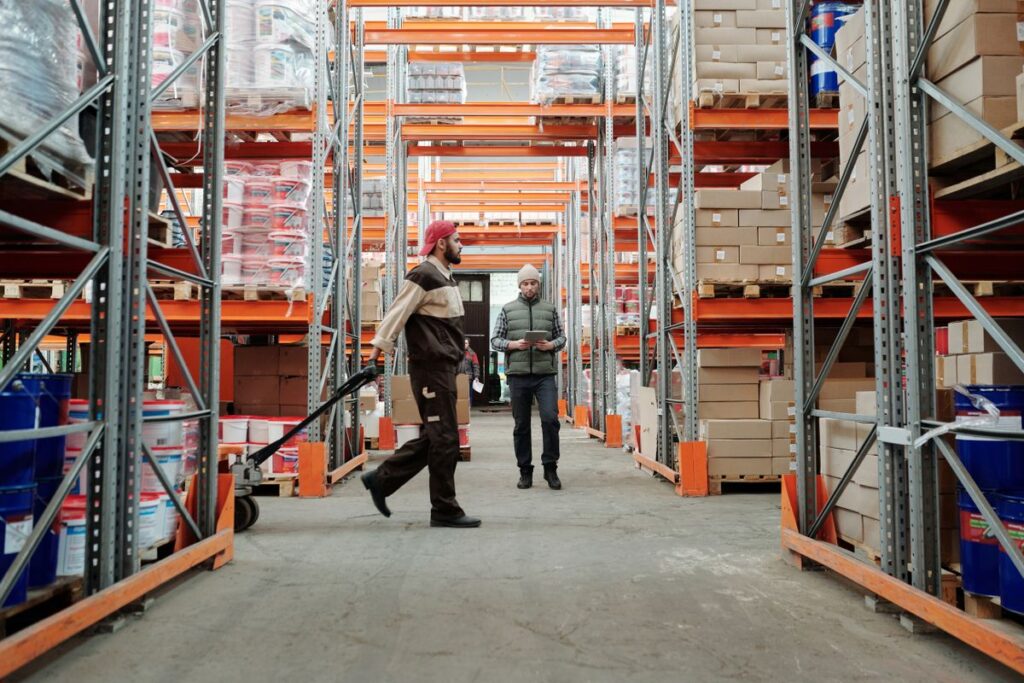
Illustration: Tiger Lily / Pexels (stock photo, not a Kadier project).
