

 Tiếng Việt
 中文 (中国)
Tan Phu Trung Industrial Park sits directly on National Highway 22 at Tan Phu Trung, Cu Chi, in the north-west gateway of Ho Chi Minh City. Park introductions put the total area at about 590 ha, of which 359 ha is industrial land and 48 ha is residential land for experts and workers, together with health and banking services. The developer is Saigon Northwest Urban Development JSC (SCD), a member of Kinh Bac (KBC). On the Trans-Asia route linking Ho Chi Minh City with Cambodia, the park serves both production plants and warehouses feeding the north-west corridor, so its floors must cope at once with production loads, forklift traffic and the cleanliness requirements of several different industries.
This article covers one park only: Tan Phu Trung. For the city-wide picture, see Epoxy Flooring for Industrial Parks in Ho Chi Minh City and Nearby Areas: Demand and Service Scope. What follows is the park-specific reading: which industries the park is attracting, what each one demands from its floor, and which system fits each zone inside the plant.
Why floors here differ from a park built all at once
Tan Phu Trung is neither a park of brand-new plants on empty land nor a cluster of old inner-city workshops. Both states exist side by side: plots already in operation, plots being prepared for construction, and remaining land still being marketed to new investors. That mix makes the flooring question harder than in a purely new park. One plant may need a coating on freshly poured concrete, while its neighbour needs a renovation of a floor worn by years of oil and forklifts, and both share the same Highway 22 frontage and the same pressure to keep shipments moving.
One practical point about this park should not be skipped. A 2021 report by the Ho Chi Minh City Department of Natural Resources and Environment recorded more than 33.02 ha of Tan Phu Trung still uncompensated for site clearance, the largest figure among the parks named in that same report. Conditions since 2021 may have changed, so this article makes no claim about the clearance status of any individual plot today. The practical conclusion is clear, though: do not describe the whole park as if its infrastructure were finished and uniform. Survey each plot and each plant on its own before choosing a system and a work schedule. A cleared plot with sound concrete is a different job from a plot still affected by clearance or an unsettled sub-base.
Location adds a second distinctive feature. Park introductions give about 25 km to central Ho Chi Minh City and about 15 km to Tan Son Nhat airport. For plants shipping towards Moc Bai border gate, Highway 22 is not just the access road but the daily route for raw materials and finished goods. Warehouses, yards and vehicle entrances are therefore part of the production chain rather than back-of-house space: their floors wear fastest, soil fastest, and are the most likely to become slippery if lane markings are unclear.
Attracted industries and what each demands from the floor
Park introductions name a fairly clear priority list: electrical and electronics equipment and information technology; precision mechanics; pharmaceuticals, chemicals and cosmetics; food and beverage processing; biotechnology; light, high-grade building materials; and other clean, high-tech industries that do not pollute. Each group loads the floor differently, and system selection should start from that load, not from colour.
Electronics, electrical equipment and information technology. These plants need a flat, seamless floor that holds little dust and is easy to clean, since floor dust can travel into component assembly areas. Where static control is required, the system must follow the investor’s own specification, with grounding and testing to that specification — no single generic standard fits every plant. Corridors and shared walkways in the same plant do not need that level, so zoning the floor before selecting a system avoids paying for performance where it is not needed.
Precision mechanics. This is the group with the heaviest and dirtiest floor load: oil leaks, metal swarf, dropped workpieces and loaded trolleys moving all day. Floors here need abrasion resistance, oil resistance and a grip that holds when the surface is oily. Before coating, an old mechanical workshop floor usually needs grinding down to sound concrete and treatment of oil that has soaked in, because a new coat laid over oil-contaminated concrete will peel exactly where the oil sits.
Pharmaceuticals, chemicals and cosmetics. These plants demand a sealed, seamless surface that withstands their cleaning chemicals. The floor must have no joints or channels where water stands and cleaning cannot reach, and the coating must be matched to the plant’s actual chemical list and concentrations. That list differs from plant to plant, so selection must be based on the real chemicals in use, not inferred from the industry label alone.
Food and beverage processing. Processing and packing areas need a floor that washes easily, does not absorb water, does not pond and stays slip-resistant when wet. The difference from pharmaceutical plants is washing frequency: wash water is present every day, so the concrete falls to drains and the position of drainage channels must be checked before coating. A coating does not create drainage falls; if the slab ponds, the coating only hides the ponding until the next wash.
Light building materials, assembly and biotechnology. For this group, general production floors and finished-goods stores make up most of the area. The main requirements are forklift load capacity, abrasion resistance on travel lanes and clear zone marking. Zoning the floor by function first, then choosing a system per zone, is usually cheaper than coating the whole plant in one premium system.
Warehouses, yards and Highway 22 traffic: where floors wear fastest
With its Highway 22 frontage, many Tan Phu Trung plants run stores and dispatch yards on the same floor standard as production. The fastest-wearing points are usually not the middle of the plant but three spots: forklift turning points, the edges of warehouse doors where wheels change direction, and the lanes run repeatedly every day between racking and dispatch doors. These spots need a more abrasion-resistant system than the rest of the floor, plus lane markings that keep forklifts and pedestrians in separate, defined lanes.
Stacked pallets and stored goods add their own load: concentrated weight at rack feet and wheel marks where loaded forklifts pass. Before coating a warehouse, record the actual forklift type and load and the pallet type in use, since a store served by heavy forklifts is a different job from one served only by hand pallet trucks. A quotation only makes sense once the area of each zone, the vehicle type and the load are known.
A zone-by-zone selection table, not one system for the whole plant
The effective approach in Tan Phu Trung is to draw up a table by zone and settle the system row by row. Broad production floors and pedestrian walkways, where a large area must be covered fast under light to medium traffic, suit the RollCoat roller system. Component assembly rooms and packing areas that need a truly flat, joint-free surface that cleans quickly lean towards the LevelFlow self-leveling system. Corners of a room that carry an investor’s anti-static rule take the StatGuard system together with its grounding and the test records that rule requires, without extending it across the whole plant. Zones pressed against running lines, where coating smell could drift into production, should favour the AquaBase water-based, low-VOC option. Warehouse and forklift lanes then add slip-resistant aggregate and painted lane lines, while wet zones get their drainage reviewed before any coating is discussed.
New floors and old floors in the same park: two different jobs
For new concrete, the order of work is: let the slab cure, check the moisture held in the concrete, and only then decide which primer fits before coating. Coating a slab that is still damp is one of the most common routes to blistering, and the defect usually appears only after the plant is back in use. For old floors the order reverses: strip the surface by grinding, fill the cracks, draw out soaked-in oil and check how well a coat will grip before any new layer is considered. Expansion joints that still move with temperature need their own treatment — recut, filled with a flexible material, then coated — otherwise the new layer will crack along exactly the line of the joint.
Because operating plants sit beside plants under construction in this park, the sensible method is to work in self-contained phases: complete one zone, return it to the plant for use, then start the next, using a low-odour system in zones pressed against running lines. Each phase timetable has to line up with three of the plant’s own calendars — machine shutdowns, Highway 22 dispatch runs and shift cleaning — rather than following one template schedule for every plant in the park.
From plot survey to phased handover
The first difference in the process at Tan Phu Trung is that the survey starts with the plot, not the floor: whether that plot is cleared, where its boundaries run and what state its slab is in, and only then the floor itself. On the floor, the survey team records moisture, concrete grade, cracks, old oil stains and spots repaired before, along with the plant’s industry, the vehicles using the floor and the hours when machines can stop. Grinding, crack filling and moisture treatment at the points that need it come next, followed by primer and coating within each marked-out phase. When a phase is handed over, the team measures coating thickness at points spread across the floor, runs a loaded forklift through its tightest turn at the heaviest-loaded corner, inspects edges most likely to lift and floods test patches to reveal ponding, then waits out the full curing period before that phase takes full load. Only with all of that data does a quotation figure genuinely reflect the area, the floor condition and the system of each zone.
Quick answers for plants in Tan Phu Trung
Can an old floor here be overcoated, or must the old layer come off entirely?
Overcoating works in many cases, provided the surface has been ground back to concrete that is still sound, soaked-in oil has been treated, cracks have been filled and grip has been tested. By contrast, coating straight onto a floor that is lifting, blistering or saturated with oil will drag the new layer down at exactly those damaged spots, most of all in mechanical workshops and forklift lanes that run all shift.
How long does one renovation round usually run?
Time is counted per phase, not per plant: the wider the phase, the worse the floor damage and the longer the chosen system’s curing period, the longer it takes. Working in phases means a plant stops one zone at a time instead of closing altogether, but the total for the whole round still has to be added up from that plant’s real shutdown calendar and its Highway 22 dispatch runs.
Can coating smell disrupt a line next door that is still running?
It can, since a few systems give off odour while they are applied and while they cure. The way to limit the effect is to pick a low-odour system for zones beside running lines, step up ventilation, put up temporary partitions between the work zone and production, and keep work out of peak hours on odour-sensitive lines such as food and pharmaceutical areas.
Does an electronics area need a different system from a mechanics area?
Yes. Electronics areas prioritise flatness, low dust and static control exactly where it is required, while mechanics areas prioritise abrasion resistance, oil resistance and slip resistance. One system across both areas in the same plant is usually too much in one place and too little in the other.
What should I have ready when asking for advice?
Just the plant’s position inside Tan Phu Trung Industrial Park, the size of each zone, whether the floors are new or old, the industry, the vehicles using the floor and the hours when machines can stop. From that, the advisory team can suggest a direction for the system and book a survey day; the detailed quotation figure comes after the survey itself.
To book a survey for your plant in Tan Phu Trung Industrial Park, write through the quote page or the contact page — hotline/Zalo 0899355489, WeChat wxid_95o54joujyrr12.
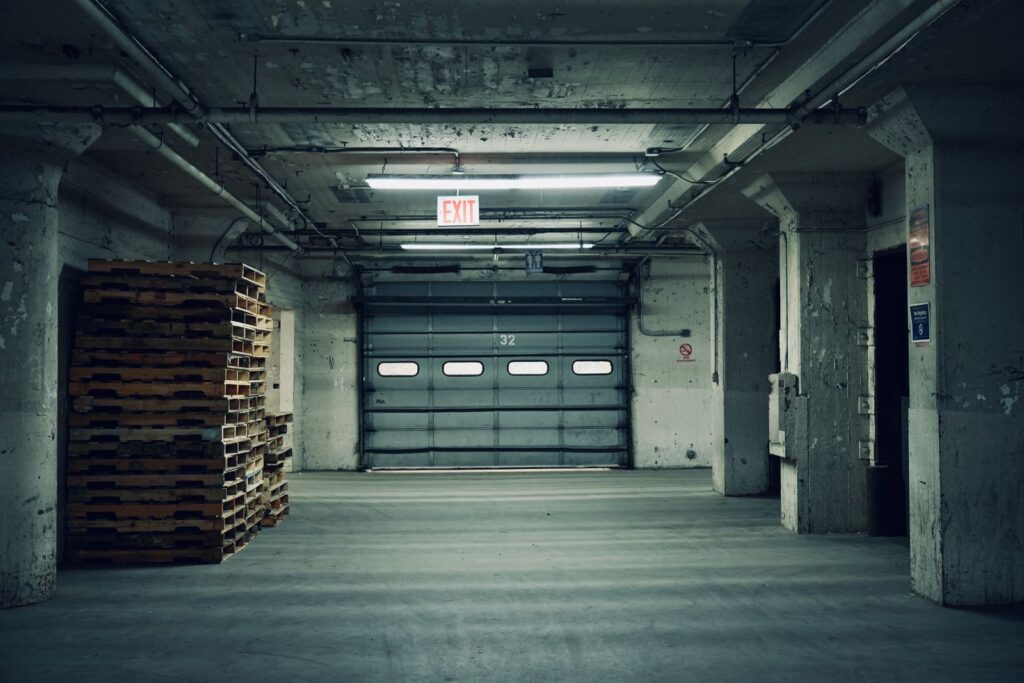
Photo: an empty warehouse by Wenxin Dong (Pexels) — view the original on Pexels. A general stock illustration, not a record of a Kadier project.

Pingback: Epoxy Flooring for Le Minh Xuan Industrial Park (Binh Chanh, Ho Chi Minh City): Industries and Common Floor Types
Pingback: Epoxy Flooring for Dong Nam Industrial Park (Cu Chi, Ho Chi Minh City): Floors for Ready-Built Factories