

 Tiếng Việt
 中文 (中国)
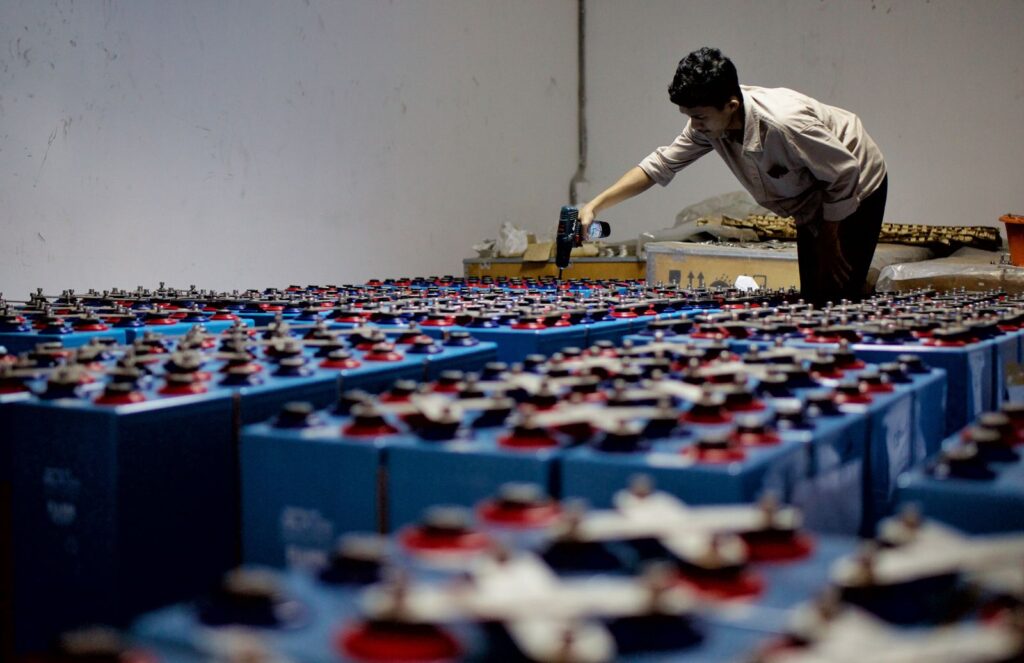
Battery and energy plants place factory floors under a different set of requirements than ordinary production workshops: alongside load and abrasion, floors are also linked to chemical safety, electrostatic control, and strict cleanliness. This article presents a general framework for assessing epoxy flooring for this group of plants. This article does not state and does not replace any battery or energy safety certification of Kadier, because Kadier has not published a separate certification for this application group; any project-specific safety requirements need to be confirmed against the technical documentation and the safety regulations of the facility.
Cover photo: Heru Dharma on Pexels.
Floors in battery plants: why are the requirements higher?
In a battery plant, raw materials and semi-finished products may include chemicals, electrolyte solutions, and electrode materials. Spills, small leaks, or material dust that soak into the floor and are not cleaned promptly can become a source of cross-contamination for the next production batch. A seamless, low-permeability floor surface helps spills to be detected and handled faster: liquid stays on the surface instead of soaking into joints, so the operating team can isolate the area, collect it, and clean it following the plant’s chemical safety procedure.
Another distinctive feature is cleanliness. Many battery production steps require a low-dust, low-airborne-particle environment to avoid contaminating electrodes and cells. Raw concrete floors generate surface dust and are difficult to clean thoroughly; seamless epoxy flooring, by the general characteristics of the material, helps reduce dust generated from the floor surface itself and makes sweeping and vacuuming more effective. However, the floor is only one part of the clean system — air filtration, room pressure, and entry procedures determine the overall cleanliness level.
Chemical safety: understanding the floor’s role correctly
Epoxy flooring is known for resistance to many common chemicals, by the general characteristics of the material, but “chemical resistance” must always be tied to the specific chemical, the contact time, and the specific coating system. A system that withstands oil, grease, and mild cleaners may not necessarily withstand electrolyte solutions or solvents specific to a battery line over a long period. Therefore, when assessing flooring for a battery plant, it is necessary to list the chemicals actually used in each area — material mixing, electrode coating, assembly, testing, and storage areas — and then check each one against the chemical resistance table in the official TDS of the proposed coating system.
This article deliberately does not list a Kadier-specific list of compatible chemicals and does not state specific concentrations or contact times, because such figures are only meaningful when taken from the published TDS of the exact product to be applied. If a chemical in the line is not in the TDS resistance table, the correct approach is to test a sample or obtain written confirmation from the coating manufacturer before large-scale application, rather than inferring from the generic label “chemical resistant”.
Electrostatic control: a requirement to be measured and tested, not just labelled
Static electricity in battery and energy-component plants can affect measuring equipment, electronic components, and operational safety. An antistatic coating system such as StatGuard is designed to control electrical charge on the floor surface, but its actual effectiveness depends on the whole system: the conductive coating layer, the grounding system, antistatic footwear and clothing for personnel, ambient humidity, and the measurement procedure after application.
Therefore, for areas requiring electrostatic control, the construction contract should state clearly the measurement method, measurement locations, and acceptance thresholds applied by the investor, rather than only naming the coating system. The surface resistance parameters and measurement conditions of Kadier products need to be checked against the official TDS; this article does not state Kadier’s own numeric thresholds where no published TDS is available.
Functional zoning in battery and energy plants
Production and assembly areas: priority is given to a seamless, easy-to-clean floor surface, with antistatic capability if the process requires it. A self-levelling system such as LevelFlow creates an even surface, convenient for trolleys and equipment that needs to move precisely.
Storage and logistics areas: priority is given to withstanding forklift and pallet loads, with clearly marked traffic lanes. A roller-applied system such as RollCoat is suitable for large areas and easy to repair locally when traffic lanes wear.
Areas where odour needs to be limited during application in an operating plant: a water-based system such as AquaBase is considered, by the general characteristics of water-based lines, as low-VOC. The specific VOC level still needs to be checked against the official TDS.
For energy storage areas and areas with special fire protection requirements, epoxy flooring is only one component. Fire protection, fire-spread prevention, ventilation, and leak-incident handling requirements must follow the facility’s fire protection design and safety regulations; epoxy flooring should not be presented as an independent fire safety or battery safety solution.
Cleaning, inspection, and maintenance
The cleaning procedure for a battery plant should keep tools and chemicals clearly separated by area to avoid carrying dust or chemicals from one area to another. Chemical spills need to be handled under the plant’s chemical safety procedure before ordinary mopping. The floor should be inspected periodically at concentrated load points, door edges, equipment feet, and grounding points of the antistatic system, because minor damage at these points can affect both cleanliness and antistatic performance.
When edge peeling, cracking, or local wear is found, early repair helps prevent chemicals from soaking into the concrete substrate through the opening. Every repair in a clean or antistatic area should be recorded, with a re-check after repair, so that operating records reflect the floor’s true condition.
Conclusion
Epoxy flooring for battery and energy plants needs to be assessed under a general framework with three pillars: chemical safety based on the actual list of chemicals used, electrostatic control based on a measurement and testing system, and cleanliness based on the clean requirements of each step. This article does not fabricate any battery or energy safety certification of Kadier; a specific coating system should only be finalised after checking Kadier’s official TDS and the project’s safety requirements.
Request a consultation on a flooring framework for battery and energy plants, with the actual chemical list and electrostatic requirements of your line.
