

 Tiếng Việt
 中文 (中国)
Sports floors and indoor play areas pose a very different problem from industrial floors: the users are athletes and children, the activities are running, jumping, falling and playing, and the highest requirement is not load-bearing capacity or chemical resistance, but safety, slip resistance and ease of cleaning. This article presents a general framework for those two spaces, does not state any Kadier-specific sports standards, and does not describe any specific sports project.
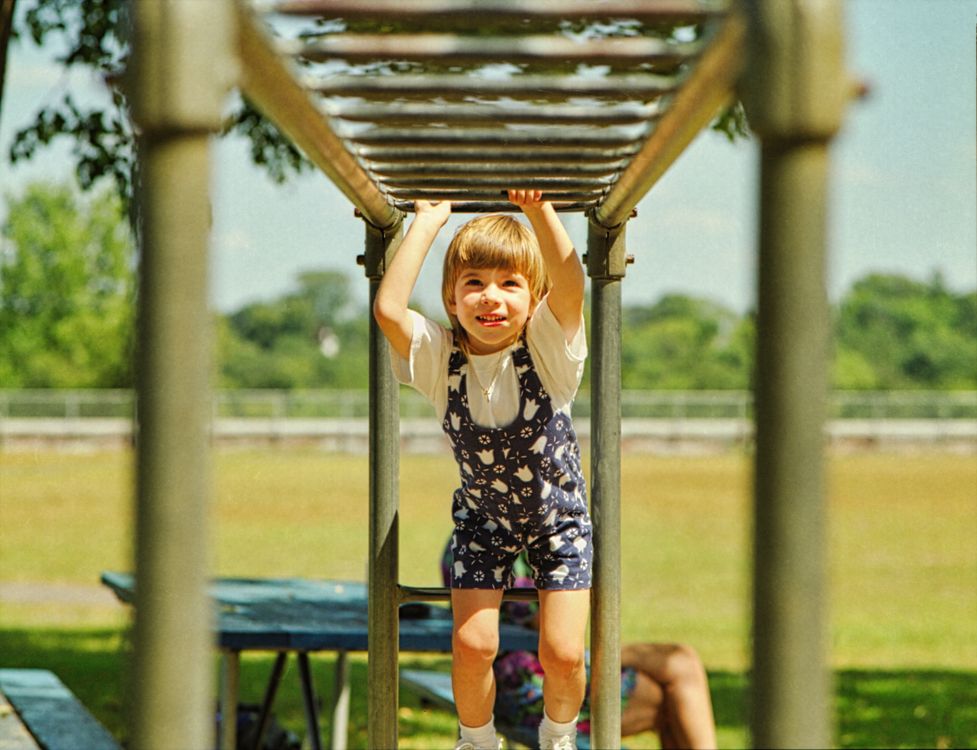
Illustration: children playing at a playground (Tom Fisk / Pexels). This is an illustration of a play space in general — an outdoor playground — not a specific indoor floor by Kadier.
Safety is the number one requirement, and safety has many layers
For sports floors, safety includes the grip of shoes when moving fast, changing direction and stopping suddenly, and at the same time reducing the severity of injury when a player falls. For indoor play areas, safety also includes a surface with no sharp edges from peeling coating, that is not slippery when drinks are spilled on the floor, and that is easy to observe so supervisors can spot dirty or damaged areas. A floor that meets only one of these layers of safety is not enough; the whole surface needs to be assessed according to the actual use of each area.
Importantly, a single standard should not be used for every sport and every age group. Basketball courts, badminton courts, gymnastics areas and children play areas have completely different rhythms of movement, types of shoes and levels of impact. The general framework in this article helps project owners ask the right questions during a survey, but the final decision for each sport and each age group needs to be based on the requirements of the operator and the official technical data sheet (TDS) of the coating system chosen, when published.
Slip resistance: enough grip, but not “sticky feet”
Slip resistance for sports floors is a balancing act. A surface that is too slippery causes slips and falls when changing direction; a surface that is too rough or too “sticky” causes tripping, shoes catching, and increases the risk of ankle and knee injuries when turning. The level of roughness therefore needs to be chosen according to the sport and the type of shoes commonly used, and an industrial anti-slip solution should not simply be applied as-is to a sports court. The article on anti-slip epoxy floors examines the texture options separately; in sports and play spaces, real-world testing with actual shoes and real intensity of movement is needed before finalising a solution for the whole floor.
For indoor play areas, water and spilled drinks occur far more often than in industrial premises. The surface needs to maintain grip both when dry and when slightly wet, and it must be easy to dry quickly so the area can soon be returned to use. Drainage channels, floor falls and the placement of absorbent mats at entrances are also part of the slip-resistance solution, and cannot be left to the surface coating alone.
Cleaning and antibacterial performance: a daily operational requirement
Sports floors and play areas come into direct contact with skin, sweat, shoes and toys, so cleaning is not only a matter of appearance but also a matter of operation. In terms of the general properties of epoxy materials, a seamless coating with no joints helps limit dirt-trapping gaps and is easier to clean than floors with many joints. However, this advantage only works when the cleaning routine is suitable: soft tools, the right type of cleaning chemicals, and a cleaning frequency matched to the intensity of use.
In children play areas, particular attention is needed to cleaning chemical residue left after cleaning, because young children often touch surfaces directly with their hands and may then touch their faces. A cleaning routine that the operator can repeat regularly every day should be preferred over a complex routine that can only be carried out from time to time. Any claim about the antibacterial capability of a specific coating system needs to be checked against the official TDS; this article makes no antibacterial claim specific to any Kadier coating system.
Court markings and play-area zoning
For multi-purpose indoor sports floors, one floor often has to serve several different sports in the same space. Marking lines for several sports on the same floor requires a clear order of priority: the main sport uses the most prominent line colour, while secondary sports use paler colours or are marked only in their own areas. If all sports are marked with the same prominence, players will find it hard to distinguish the lines for the sport they are playing, especially children and recreational players.
For play areas, zoning by colour helps separate high-activity areas, light-play areas and rest areas, and also helps supervisors observe more easily. Zoning colours should be consistent with choosing colours by function, as presented in the article on epoxy floor colour charts (RAL), but brighter, friendlier tones should be chosen than for industrial premises, suited to the psychology of children and entertainment spaces.
Durability against impacts and dragging equipment
Sports floors and play areas are subject to specific types of impact: balls bouncing and striking the floor, sports equipment dragged when rearranging the court, and toy vehicles and play equipment moving continuously. The surface coating needs to withstand these repeated impacts without peeling off in patches. Particular attention is needed at areas where heavy fixed equipment is placed, routes used to drag equipment in and out of storage, and areas under play equipment with small feet.
During periodic inspections, attention should be paid to signs such as the surface layer thinning along main movement lines, markings fading unevenly, and edge peeling at positions where equipment is frequently moved. Early local repairs at these points help the court return to use sooner and prevent damage from spreading into large patches.
Coating system guidance
At a general guidance level, the self-levelling coating system LevelFlow is often considered for sports and play floors that need flatness, a seamless surface and ease of cleaning over large areas; the roller-applied coating RollCoat suits ancillary areas and areas needing fast local maintenance. If a space has a low-odour requirement during application, for example a school operating in parallel, the water-based coating system AquaBase should also be checked. The final choice depends on the sport, the age of the users, the substrate survey and the official TDS of each system; this article does not state any Kadier-specific sports standards and does not commit to any Kadier certification.
Request a consultation: describe the type of sport or play, the age group of the users and the area of the court to receive advice on a suitable option at Request a consultation.
