

 Tiếng Việt
 中文 (中国)
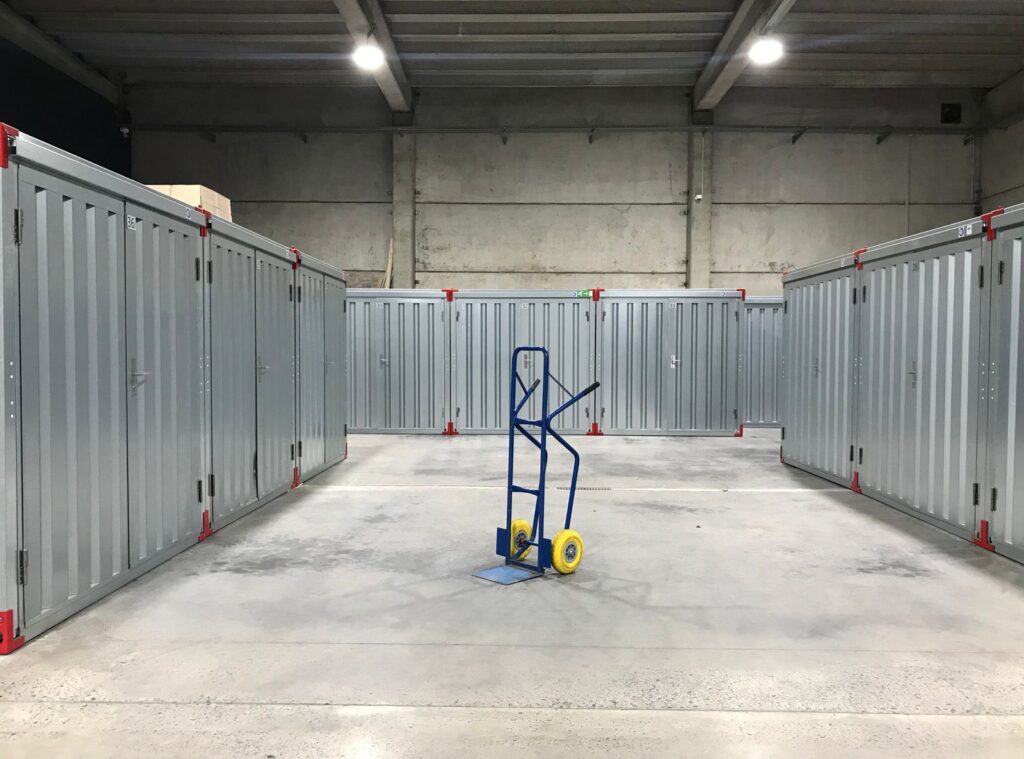
The Tra Vinh industrial cluster is uneven: of the three industrial parks covered here, only one is fully occupied and operating steadily, while the other two are still working through infrastructure and site-clearance obstacles. The epoxy flooring question therefore has no single answer for this cluster. In the filled park, the job is recoating and repairing in phases without stopping production. In the other two parks, the job is fixing the floor specification before the factory exists, so that a clear coating plan is ready when land is handed over. This article covers exactly those three parks — Long Duc, Cau Quan and Co Chien — and answers one thing: which floor type fits each park, and how each functional zone inside a factory should be treated.
On names: this article keeps the familiar name “Tra Vinh industrial cluster” because that is how investors and contractors still search for these three parks. Administratively, the former Tra Vinh area has belonged to the new Vinh Long province since 01/07/2025 under Resolution 202/2025/QH15, and this article does not treat the old name as a current administrative unit.
Unlike the Mekong Delta market overview, which compares clusters across the region, this article does not rank regions and does not discuss the value chain of the whole delta. It goes park by park inside the Tra Vinh cluster, starting with the only park that is fully operating.
Long Duc: the filled park — recoat in phases, do not stop the whole plant
Long Duc sits in Long Duc commune, in the former Tra Vinh city, near National Highways 53 and 60. According to a report by the Vinh Long provincial People’s Committee on the first six months of 2026, the park covers a planned 98.01 hectares, of which 77.64 hectares is industrial land, and its occupancy rate stands at 100 percent. That figure decides the whole flooring approach here: Long Duc is no longer a park waiting for new investors to fill empty land, but a park where operating factories need their floors maintained, repaired and upgraded while production keeps running.
Do not confuse the names: Long Duc in this article is the Long Duc park in former Tra Vinh, not the park of the same name in Long Thanh, Dong Nai. Every figure and statement in this section refers only to the Tra Vinh park.
Earlier investment-attraction records for the park mention labour-intensive sectors such as garments and food processing. Those records describe an attraction phase, not a current tenant list, and this article names no company. An investor interested in a specific lot in the park should check the current tenant mix at survey time. Even at that general level, the flooring problem in Long Duc is already clear: garment workshops need a floor that resists even wear, carries clear traffic markings and is easy to keep free of fabric dust, while food processing areas need a seamless floor that stays slip-resistant when wet and stands up to frequent washing with water. One single coating standard cannot serve both groups.
The hardest part of a filled park is the work schedule. Grinding the whole factory floor at once is not possible while machines run and goods ship. The right method is to work zone by zone: fence off one zone, grind and coat it completely, then move to the next. For forklift aisles and staging areas, the RollCoat roller system fits well because it goes down fast and traffic markings can be laid during the coating work. For production areas that need a flatter and cleaner surface, the self-leveling LevelFlow system is worth comparing, but only for that zone, not for the whole operating plant. For zones that must stay in use right next to the work area, the water-based AquaBase system with low VOC is worth comparing in order to limit odour reaching the neighbouring shift.
Cau Quan: the river-side park awaiting investment approval — fix the floor on paper first
Cau Quan sits in Cau Quan town and Ninh Thoi commune, beside the Hau River and near National Highway 60. Under the Tra Vinh provincial industrial restructuring plan to 2025, the park covers about 120 hectares, and its detailed plan at 1/500 scale has been approved since 2010. An approved plan does not mean factories already stand there: a 2024 report records the park as completing a feasibility study report for investment-policy approval, and a provincial meeting in July 2025 still directed the removal of site-clearance and infrastructure obstacles for Cau Quan along with several other parks. Investors reading this article should therefore understand Cau Quan correctly: it is a park to prepare for, not a park full of old floors waiting to be recoated.
The stated attraction direction for Cau Quan is manufacturing, processing, logistics and services — a general multi-industry direction, tied to no company name. The practical value of this article for this park lies before construction: putting floor requirements into the factory design file from the start. While the factory is still on paper, the investor can still decide floor loading, the position of expansion joints, drainage falls and which zones need slip resistance. Once concrete is poured and machines arrive, those decisions all become expensive. For a river-side park like Cau Quan, the three requirements to fix earliest are moisture measurement for each concrete pour, sealed joints and edges around the drainage system, and a floor-zone map drawn by function before fixed equipment is installed.
The warehouse and logistics zones in the park direction need to be planned early, not late. Forklift aisles, loading areas and staging zones take concentrated wear and pallet impact, so they need a high-wear coating and clear markings separating pedestrian routes from vehicle routes. If these zones are coated only with the economical roller system used for auxiliary areas, the coating will wear fastest exactly where vehicles run most, and later repairs will cut straight across warehouse operations.
Co Chien: the park established in 2021 — prepare now, verify handover lot by lot
Co Chien sits in Dai Phuoc commune, Cang Long district, covers 199.98 hectares, was established under Decision 653/QD-UBND dated 02/04/2021, and its infrastructure investor is Tra Vinh Infrastructure Development and Investment Company Limited under the provincial plan of 2021. Its progress has not run in a straight line: provincial implementation reports still place Co Chien among the parks with outstanding site-clearance, resettlement-area and investment-procedure obstacles, and the province has directed that those obstacles be removed urgently. Investors should therefore treat no older schedule as current, and must verify the handover status of each lot at survey time.
Do not confuse the names: Co Chien in this article is the park in Dai Phuoc commune, Cang Long district, in former Tra Vinh, not any same-named place elsewhere. This article uses no location or distance belonging to any other same-named place.
For Co Chien, the flooring work at this stage is also preparation, but preparation of a different kind than in Cau Quan. In Cau Quan, preparation means putting floor standards into the design. In Co Chien, preparation also means not locking the flooring decision too early to a site that is not yet certain: draw the floor-system map by functional zone, fix the principles for moisture measurement and substrate treatment for each zone type, but start coating only when the lot is handed over and the substrate meets the conditions. Coating the floor of a lot that is still tangled in site clearance, or coating new concrete that is not yet dry just to meet a schedule, guarantees grinding it off and starting again. For a multi-industry park like Co Chien, the zone map matters even more, because each industry arriving later brings a different floor requirement, and that map must exist before the first industry fixes its own factory design.
Riverine and coastal ground: moisture, salinity and soft ground — measure first, never coat a problem slab
All three parks lie in riverine and coastal lowland, where high ground moisture, saline intrusion and localised soft ground are the norm, not the exception. In Long Duc, the added risk is an old floor that has carried loads for years: cracks, local settlement and peeling old coatings must be surveyed before any new coat goes over them. Beside the Hau River in Cau Quan and in the low land around Co Chien, the added risk is saline moisture and a high water table, which degrade a concrete floor faster when the coating is not sealed. Before coating, all three parks therefore need substrate moisture measurement and a survey of cracks and settlement signs, whether the factory is large or small, new or old.
When substrate moisture exceeds what the coating system allows, the treatment is a reverse-moisture barrier primer or an equivalent dehumidifying solution, applied before the main coats. When the substrate shows settlement, the substrate structure must be treated first, because no epoxy coating compensates for a slab that keeps moving. The general rule for this cluster is: coating is the final finish of a floor, not a repair for a weak substrate. The rule applies to all three parks, but breaking it costs differently in each: in Long Duc, breaking it means stopping a running line to redo the work; in Cau Quan and Co Chien, breaking it means a newly handed-over factory needs floor repairs inside its first year.
Floor map by zone inside the factory
Instead of choosing one coating system for the whole plant, the right method for all three parks is to draw a floor-system map zone by zone before coating, and to accept each zone against its own standard. Dry production zones need a seamless floor that resists even wear and is easy to keep dust-free. Wet zones and food processing zones need slip resistance, moisture resistance and tolerance of frequent washing with water, and the real resistance to cleaning chemicals must be checked against the manufacturer’s chemical-resistance table, not assumed in general. Warehouse zones and forklift aisles need concentrated wear resistance, clear traffic markings and tolerance of pallet impact. Assembly zones, or any zone with an electrostatic-control requirement, must be identified zone by zone before coating, and where such a requirement exists the StatGuard system is the option to compare, not a default for the whole plant. Auxiliary zones such as corridors, changing rooms and technical rooms can use a more economical roller system, as long as the floor stays seamless and easy to clean.
The map also decides the work schedule for each park according to its stage. In filled Long Duc, wet zones and zones around the drainage system should be coated before new fixed equipment is placed over them, and the remaining zones should be coated in phases, each zone returning to use as soon as it is finished. In Cau Quan and Co Chien, coating should follow the handover and machine-installation sequence: whichever zone receives machines first should have its floor finished first, but the moisture reading must be kept separately for each concrete pour, because each pour has a different slab age. At any stage, no zone may be coated while its own substrate fails the conditions, even when the other zones are finished.
Which park: ask about timing, not about the park name
Choose Long Duc when the plant must start operating at once inside a park that already has infrastructure and operating companies, and when the main flooring job is maintenance, recoating and phased upgrading without stopping production. Choose Cau Quan when the plant wants floor requirements built into the design from the start on river-side land, and when the investor accepts a timeline that waits for investment-policy approval and obstacle removal. Choose Co Chien when the plant wants to prepare early for a large multi-industry park, but will commit to coating only after verifying the handover status of each lot at survey time.
For an investor weighing all three parks, the three deciding questions are: does the factory need to operate at once, or is it still at design stage; does the product need wet zones and frequent washing with water, or a dry floor with even wear resistance; and does the warehouse carry continuous forklift traffic, or serve a single line only. Answering those three questions shows at once which park fits better, and more importantly, which zone inside the factory needs the most careful floor investment. Regional demand context is available in the Mekong Delta market overview.
Closing: three questions before fixing the floor
In a filled park like Long Duc, recoating does not necessarily require stopping production: fence off one zone and coat it completely, then move to the next zone, with each finished zone returning to use at once, and the schedule accounting for the neighbouring zone that stays in operation.
In a park awaiting infrastructure like Cau Quan, the floor standard should be fixed at the factory design stage, together with floor loading, expansion-joint positions and the drainage system; fixing it late, after concrete is poured and machines arrive, removes the chance to treat substrate moisture and to place functional zones correctly.
For Co Chien, this article gives no handover or completion date, because the latest implementation reports still place the park among those with outstanding site-clearance and investment-procedure obstacles; giving a handover date in that situation would be guesswork, and investors must verify the status of each lot at survey time.
In any of the three parks, a food processing workshop needs a seamless floor that stays slip-resistant when wet, resists moisture and stands up to frequent washing with water; zones around floor drains and equipment feet must be sealed from the start, and the real resistance to cleaning chemicals must be checked against the manufacturer’s chemical-resistance table.
On cost, Kadier quotes only after a site survey, based on the area to coat, the substrate condition, the coating system chosen for each zone, and the schedule required; this article publishes no specific price, because price tables circulating online are not Kadier quotations, and they cannot reflect the substrate condition of a specific workshop.
For advice and a quotation: workshop owners send the industrial park location, the production sector, the area, and whether the substrate is old or new through the quotation page or the contact page of Kadier. Direct contact: hotline and Zalo share the number 0899355489. WeChat account: wxid_95o54joujyrr12. Illustration: Pexels stock photo (photo ID 5759145, by David Slaager), a general illustration of an industrial warehouse, not a Kadier project.
