

 Tiếng Việt
 中文 (中国)
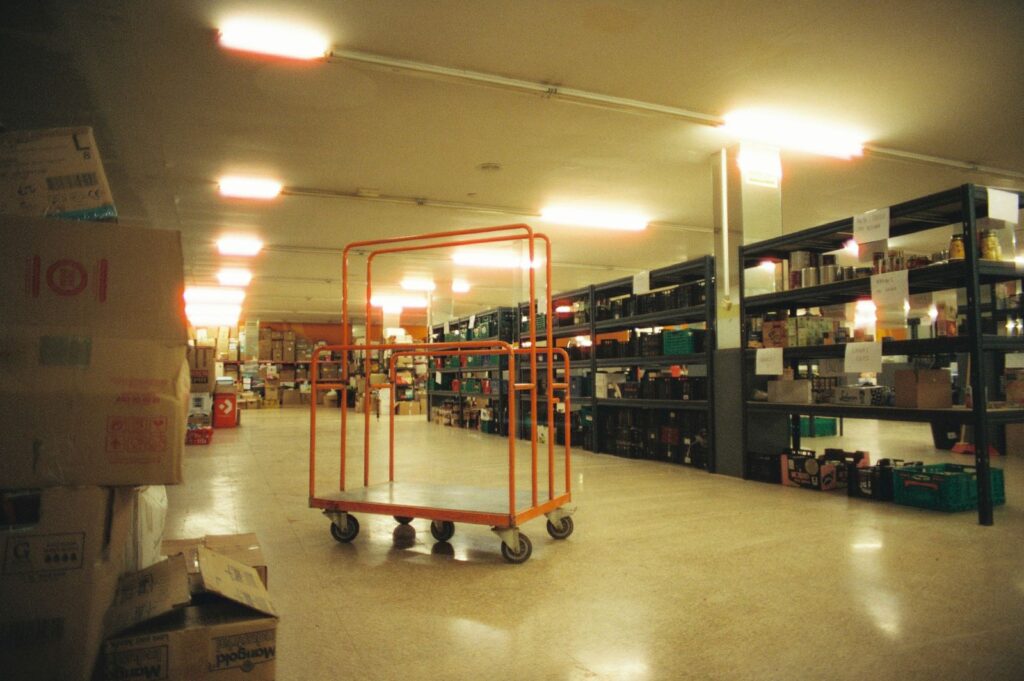
When choosing a factory floor colour, many people think only of appearance: which colour looks good, which suits the brand. But in a factory, floor colour also takes a direct part in the workspace lighting system. A light-coloured floor and a dark-coloured floor reflect light differently, so the same lighting system feels differently bright, dirt shows differently, and operators’ ability to see is affected.
This article only analyses the interaction between light colours, dark colours and factory lighting. It does not choose colour tones by aesthetic taste — the aesthetic angle for showrooms has its own article on colours and decorative patterns for showrooms — and it does not go deep into surface sheen, which is a separate technical topic. Here the only question is: in terms of lighting and visibility in the factory, what is the difference between light and dark?
1. Light-coloured floors reflect more light
As a qualitative principle, a light-coloured surface reflects a larger share of the light falling on it than a dark-coloured surface, while a dark surface absorbs more. So within the same factory, with the same light layout and the same amount of natural light through roof lights or windows, a light-coloured floor usually makes the space feel brighter and more open. Light reflected from the floor also helps soften dark zones under racking, under machines or in corners where direct light struggles to reach.
This has practical meaning when renovating an old factory: if the factory is short of light, switching from a dark floor to a light floor can improve the general sense of brightness without changing the lighting system. However, a light floor does not replace lighting design. If the lighting system was already insufficient for work needing detailed observation, changing the floor colour alone will not create enough working light. Floor colour is only one supporting factor in a whole that includes lights, ceiling height, wall colour and ceiling colour.
Another note: a light floor combined with a very glossy surface and direct lighting can cause glare at some viewing angles. Glare is more a matter of sheen and light placement than of light versus dark, so when glare appears, both sheen and light layout should be reviewed, rather than hastily concluding that the light colour is the sole cause.
2. Dark-coloured floors: a calmer space, but not necessarily a poorly lit one
A dark floor absorbs more light, so the space usually feels calmer and warmer, and machine details and racking stand out more against the dark background. In areas that do not need continuous detailed observation — such as secondary walkways, forklift waiting areas or technical areas — this calm feeling is usually not uncomfortable, as long as the area’s lighting remains sufficient for safe movement.
Conversely, if an area already has few lights and uses a dark floor, the sense of darkness will be more pronounced and operators may struggle to distinguish dark objects placed on the floor. Dark floors therefore demand more attention from the designer to light layout: lights need to cover evenly, avoiding long dark stretches between rows of lights, especially where forklifts pass.
In other words, a dark colour does not by itself cause poor lighting, and a light colour does not by itself create enough light. The final result depends on the combination of floor colour, the lighting system and the surrounding surfaces.
3. Floor colour reveals dirt in two opposite directions
This is a point many factories only discover after the floor is in use. Light colours clearly reveal dark dirt: oil and grease marks, forklift tyre marks, dirt from shoes or pallets. Dark colours do the reverse: light-coloured dust, light material fragments, chalk marks or spilled powder show up very clearly on a dark background.
So no choice is “cleaner” in any absolute sense. The right choice depends on the factory’s characteristic dirt type. A machine shop with a lot of oil and grease will find a light floor looks dirty faster in visual terms; a packaging or processing plant with a lot of paper dust, powder or light material fragments will find a dark floor looks dirty faster. Considering the dominant dirt type before choosing will help set the right expectations for cleaning frequency.
One less-noticed consequence: a light floor that gradually gets dirty also reflects light less and less well. If a factory chooses a light floor expecting improved perceived brightness, then a regular cleaning schedule is precisely the condition for keeping that benefit. Conversely, a dark floor is less visually affected by oil marks, but still needs cleaning so that light dust does not build into a hazy layer on the surface.
4. Visibility safety: contrast is the deciding factor
In a factory, visibility safety is not just “light or dark” but “can it be seen clearly”. The general principle is contrast: the object that needs to be seen must differ clearly from its background. A dark object on a light floor is easy to see; a light object on a dark floor is also easy to see. Hardest to see are objects whose tone is close to the background tone, such as a dark pallet on a dark floor, or a light cardboard box on a light floor in poor light.
This contrast principle applies directly to line markings and zoning. Walkway lines, warning zones or forklift areas only work when they stand out against the background colour. On a light floor, dark lines usually stand out clearly; on a dark floor, light or slightly reflective lines usually read more clearly. When choosing a floor colour, the accompanying marking colours should be settled at the same time, rather than choosing the floor first and only thinking about markings afterwards.
In addition, at transition points — entrances, stair feet, raised floor edges, areas where forklifts turn — lighting and contrast matter even more. A dark corner combined with a dark floor and a dark obstacle is a combination prone to trips or collisions. At these points, the usual solution is local lighting reinforcement and contrasting markings, not just a floor colour change.
5. Choosing light or dark by area within the factory
Instead of choosing one colour for the whole factory, many factories divide by area based on observation needs:
- Production areas needing detailed observation: assembly, quality inspection and packing need to see products and small details clearly. A light-coloured floor usually supports this better because the general sense of brightness is higher and dark objects are easier to spot, including components or tools dropped on the floor.
- Warehouse areas and forklift routes: the main needs are safe movement and legible markings and signs. Both light and dark floors work, provided markings contrast clearly and lighting covers routes evenly. If the warehouse has a lot of light dust, a dark floor will demand more frequent cleaning to avoid hazing.
- Areas with a lot of oil and grease: a light floor will reveal oil marks quickly, but that in itself helps leaks be spotted early. If early leak detection and prompt cleaning are the priority, revealing dirt is an advantage rather than a drawback.
- Visitor areas, entrances: a bright, clean feel is usually prioritised, but these areas bear little heavy load, so the decision can lean more towards the general feel of the space than towards technical requirements.
This zoning also makes maintenance easier: areas that get dirty fast are cleaned more often, instead of applying one schedule to the whole factory.
6. The factors that accompany floor colour decide the final result
Floor colour does not stand alone. Natural light through roof lights, high windows or glass walls changes with the time of day and the season; factory lighting can be dense or sparse, direct or indirect. Wall and ceiling colours also take part in reflection: light ceilings and walls help light spread, while a dark ceiling keeps the space calmer even if the floor is light.
The coating’s sheen is a separate factor, related to glare and the glossy feel, and will be analysed in a separate article on sheen. When judging in practice, the effect of sheen should not be confused with the effect of light or dark: a dark but high-gloss floor can still reflect spots of light, while a light but matte floor gives softer, more even light.
Finally, a floor colour after a period of use is no longer its original colour if it is not cleaned and maintained. Dust, oil and wear change the surface, and thereby change the perception of light as well. So a light-versus-dark decision should come with a realistic cleaning plan, suited to the factory’s dirt type.
A note on specifications
This article is presented only at a qualitative level: light colours reflect more than dark colours, dark colours absorb more than light colours. It gives no reflectance coefficient, lux level or any specific technical parameter. Any decision relating to factory lighting design needs to be checked against the TDS of the specific product when available, and with a professional lighting design consultant, rather than inferred directly from colour.
RAL colour codes mentioned during consultation — for example a light grey tone or a charcoal grey tone in the RAL colour chart — are only general references for picturing light and dark tones, not commitments about the stock or availability of a specific colour code. To know which colour codes are actually available for the chosen system, confirm directly with Kadier before finalising an order. You can read more about choosing colours by function in the epoxy floor colour chart (RAL) article, to place the light-versus-dark decision in the right function for each area.
Conclusion
Light or dark has no single right answer for every factory. A light floor supports the general sense of brightness and helps spot dark objects and oil marks, but demands regular cleaning to keep that benefit. A dark floor creates a calm feel and makes light objects stand out, but needs a more evenly covering lighting system and a cleaning schedule suited to light dust. The best decision is made area by area: where detailed observation is needed, prioritise light; where movement is the main activity, decide by the contrast of the markings and the actual lighting conditions.
If you are torn between a light and a dark floor for your factory, describe the area of use, the dominant dirt type and the current lighting condition to receive advice on a suitable plan. Contact Kadier via the contact page.
Reference epoxy coating systems: RollCoat, LevelFlow, StatGuard, AquaBase.
Illustration: Adrià Masi / Pexels (photo 30625283).

Pingback: Epoxy floors fading in sunlight