

 Tiếng Việt
 中文 (中国)
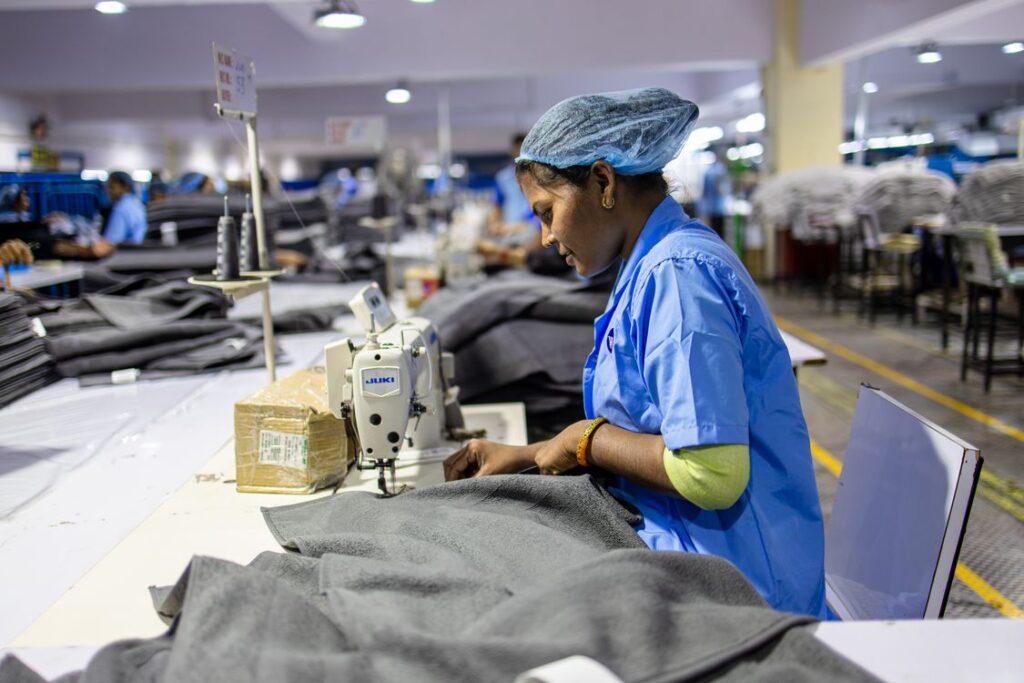
Characteristics of textile, garment and footwear factory floors
Textile, garment and footwear factories have a high density of workers, with sewing machines and looms arranged in long rows, and fabric trolleys, rolls of raw material and cartons of finished goods moving continuously across the floor. Fibre dust is the most prominent problem: lint, cotton dust and loose fibres float in the air, then settle on the floor, cling to rough surfaces and accumulate at machine feet, under tables and along wall edges. In dyeing and washing stages, the floor may come into contact with water, dye chemicals and detergents at a light, scattered level, rather than being immersed continuously as in a chemical plant.
The footwear industry adds adhesives, cleaning solvents and leather dust. Glue that falls on the floor and is not wiped up in time dries hard and sticks firmly, creating raised marks that cause tripping and are hard to clean. The floor therefore needs to be flat, seamless, easy to clean, able to bear medium trolley loads and non-slip when scattered water is present.
Requirements for an epoxy floor in textile, garment and footwear factories
At the level of the material in general, a seamless epoxy floor coating prevents fibre dust from getting into tile joints, so sweeping and vacuuming at the end of a shift are faster. An epoxy surface is also easier to wipe clean of glue marks and stains than bare concrete, provided stains are dealt with early before they dry and harden completely. However, resistance to each specific dye chemical, detergent or solvent depends on the product and the concentration of exposure; this article does not claim resistance of any Kadier coating system to any specific chemical, because no official TDS has been published yet. Where a factory uses a specific chemical, the chemical resistance table in the official TDS must be checked.
Another requirement is walking safety. Floors in washing, dyeing and frequently cleaned areas are locally wet, so a suitable anti-slip solution should be considered, for example a lightly textured surface, rather than using a fully glossy floor for every area.
Choosing a system by area
- Sewing workshops, weaving workshops, fabric warehouses and packing areas: a roller-applied system such as RollCoat is often considered for large areas, where the main requirements are a clean surface, easy cleaning and clear zoning. The official TDS must be checked before final selection.
- Areas with frequent trolley traffic, main aisles and dispatch areas: consider a self-levelling system such as LevelFlow for a flat surface with few bumps, reducing vibration for trolleys. Specific thickness and load-bearing capacity must follow the official TDS.
- Washing, dyeing and frequently wet cleaning areas: consider a water-based, low-VOC system such as AquaBase combined with an anti-slip solution; damp substrates must also be treated correctly before coating, because substrate moisture is a common cause of blistering.
The anti-static system StatGuard is needed only when a factory has a separate static-control requirement; for ordinary textile, garment and footwear workshops, this requirement is not a default, but fibre dust accumulated by static should still be controlled through cleaning and air humidity following the facility’s own procedures.
Application and acceptance: points most likely to fail in textile, garment and footwear factories
Before coating, the substrate must be ground, cracks repaired and moisture measured, and fibre dust in the work area vacuumed immediately before the primer is applied, because fibre dust returns very quickly in a weaving workshop. Dyeing and washing areas need a careful check of substrate moisture and the drainage system, to avoid standing water on the new coating.
Line marking is very valuable in this type of factory: trolley routes, emergency exits, machine areas and raw-material staging areas should be clearly separated, helping to reduce collisions and helping workers move safely during a busy shift. At acceptance, adhesion and surface condition should be checked in the wet areas and in the areas with the heaviest trolley traffic.
Cleaning and maintenance
Daily cleaning includes sweeping and vacuuming fibre dust, wiping glue marks and stains early, and not leaving dye chemicals standing on the floor for long. Trolleys should use suitable wheels and cartons should not be dragged across the floor. When local delamination or cracks appear, repairs should be made early so that water and chemicals do not penetrate to the substrate.
See also the general guidance on epoxy floor maintenance and cleaning done right, the article on epoxy coating on damp floors and how to go about choosing an epoxy floor system by industry and use.
Note on specifications
The characteristics described in this article are general characteristics of epoxy floor coating material. Official technical data (TDS) for each Kadier product is published on the Products page; this article sets out a general framework and does not replace the TDS of a specific product. All figures for thickness, chemical resistance or load-bearing capacity of a specific product must be checked against the official TDS when available.
Photo: EqualStock IN, Pexels source (Pexels photo 31251574).
