

 Tiếng Việt
 中文 (中国)
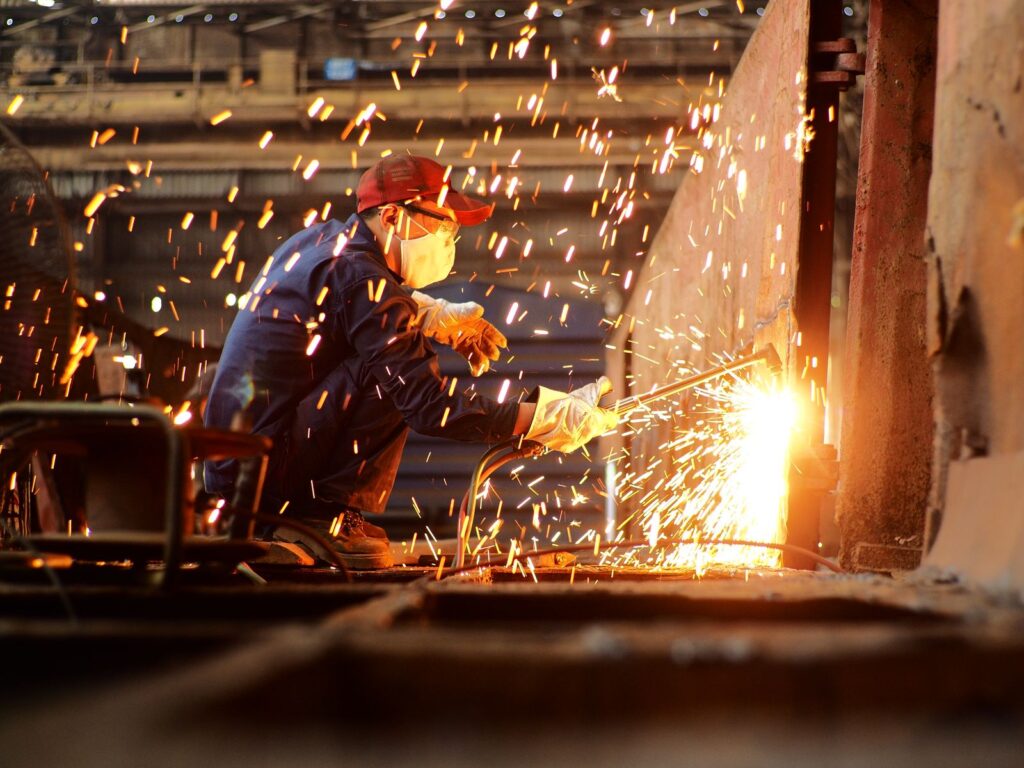
“How high a temperature can high-temperature epoxy flooring withstand?” is a question any investor with an area near a furnace, an area washed with hot water, or an area where sparks occur will ask before choosing a floor. The short answer is: there is no single number for all epoxy floors. Heat resistance depends on the type of epoxy, the coating build-up, the quality of the concrete substrate and — most importantly — how heat acts: continuously or only for a short time, dry heat or heat accompanied by steam, and whether it is accompanied by load, impact or chemicals. This article explains the general framework for reading and assessing the heat resistance of epoxy flooring, and pinpoints when a dedicated heat-resistant system is needed instead of ordinary epoxy.
Why is there no single number?
Two floors both called “epoxy” can withstand heat very differently. Epoxy is a family of materials, not a single formula: the base resin, hardener, additives and mixing ratio all affect the heat resistance of the cured film. In addition, a heat-resistance figure only has meaning when accompanied by its measurement conditions. A coating may remain intact on brief contact with a hot object, but soften, change colour or lose adhesion when exposed to the same temperature continuously for many hours or many days. When comparing products, therefore, do not only ask “how many degrees can it withstand”, but also ask: for how long, in what form of heat, and after heat exposure, what properties does the coating still retain?
Factors determining the heat resistance of epoxy flooring
1. Epoxy type and hardener
The type of epoxy resin and hardener determines the polymer network structure after curing, and thus determines heat resistance. Solvent-based, water-based and solvent-free epoxy systems have different characteristics, and even within the same group, each manufacturer’s formula differs. This is why the specification of one product cannot be used to infer that of another product, even when the names look the same on the surface.
2. Coating build-up: primer, intermediate coat and topcoat
An epoxy floor system usually consists of a primer that bonds to the substrate, an intermediate coat that builds thickness, and a topcoat (top coat) that resists abrasion and the surface environment. When exposed to heat, this whole “layer stack” works together: the topcoat may still be sound, but if the primer loses adhesion the floor still fails. Coating thickness also plays a role — see Epoxy Coating Thickness 0.2–3 mm: How to Choose? to understand why thickness is not simply a case of thicker being better in every situation. For a heat-exposed area, the whole system must be considered, not a single layer on its own.
3. The concrete substrate below
Concrete expands with heat differently from the epoxy layer. When temperature changes repeatedly, the difference in expansion between the two layers creates stress at the interface, which over time can cause cracking or delamination. A weak substrate, a substrate that is still damp, a substrate already cracked, or a substrate whose surface has not been prepared correctly all reduce the actual heat resistance of the floor, even if the coating itself has good heat resistance. Substrate preparation is therefore not a secondary step but part of the heat-resistance solution.
4. How heat acts in actual use
- Continuous heat or short-term peak heat: heat maintained for many hours is very different from heat lasting only a few minutes. Always distinguish these two cases when reading specifications.
- Dry heat or heat accompanied by steam or hot water: steam and hot water are often more damaging than dry heat at the same temperature, because water can penetrate and soften the coating film.
- Heat accompanied by load and impact: a floor that is both hot and subjected to forklifts, heavy pallets or falling objects will degrade faster than a floor that is only exposed to heat without load.
- Heat accompanied by chemicals: high temperature often makes chemical reactions proceed faster, so an area that is both hot and in contact with chemicals must be assessed in combination, not by separating each factor. See also Acid-Resistant Epoxy Coating for Chemical Plants.
- Thermal shock: a sudden change in temperature (for example washing cold water onto a hot floor) causes much greater stress than a stable temperature.
How to read heat-resistance figures on a TDS
The TDS (technical data sheet) of the specific product is the only document to check against. When reading a TDS, find and check all of the following items rather than looking at a single figure:
- Continuous service temperature: the temperature at which the coating maintains its properties over a long period. This is the most important figure for an area that is hot on a regular basis.
- Short-term peak temperature: the maximum temperature for a short period, together with the permitted duration (for example a few minutes or a few hours). A peak temperature must not be used as a substitute for the continuous temperature.
- Test method and test conditions: on what sample the temperature was measured, at what thickness, on what substrate, after how long, and what the “pass” criterion is (no softening, no cracking, still adhering, or only no visible deformation). The same temperature level with different criteria will lead to different conclusions.
- Heat deflection temperature (HDT), if given: this index describes the ability to retain shape under load at high temperature, but it is a laboratory test result, not equivalent to actual service life in use.
- Accompanying limits: many TDS documents state limits clearly, such as “not for surfaces in direct contact with a heat source” or “cannot withstand continuous hot steam”. Read this limits section carefully before deciding.
An example of how to read: if a TDS states two levels — one for continuous use and a higher one for short-term contact — then an area that is hot for a whole production shift must be checked against the continuous level, not using the short-term level as the basis. Conversely, for an area where a hot object only occasionally falls onto the floor, the short-term level is the appropriate basis, but it must still be accompanied by an assessment of thermal shock and load. This way of reading applies to all products, not to any one product in particular.
When is a dedicated heat-resistant system needed?
Ordinary epoxy is suitable for factories, warehouses and production areas at normal working temperatures. Consider a dedicated heat-resistant system — or a material other than ordinary epoxy — when the area of use shows one of the following signs:
- Near a furnace, drying oven, boiler, hot steam pipe or equipment giving off heat continuously.
- Regularly washed with hot water or hot steam.
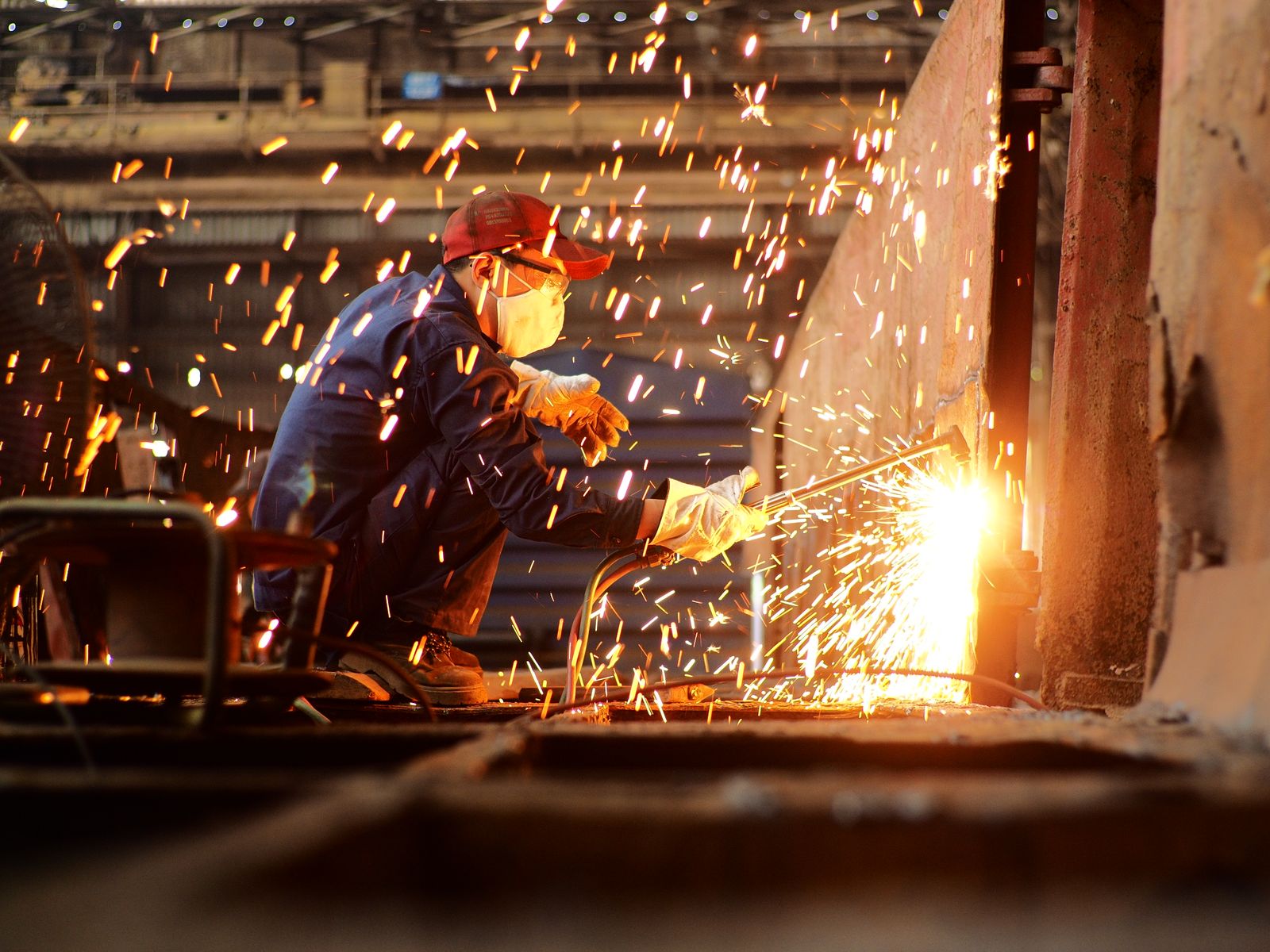
- With molten metal, hot slag or welding sparks falling directly onto the floor.
- Floor temperature changing suddenly and repeatedly many times a day.
- An outdoor area exposed to harsh sun combined with heavy loads — see also Epoxy Coatings Outdoors: Can They Be Used?
In the opposite direction, cold areas also need a system designed specifically for low temperatures — that is a different problem, presented in Epoxy flooring for cold and frozen storage: withstanding low temperatures. Do not use the same choice for both ends of the temperature range.
Common misconceptions about heat-resistant epoxy flooring
- “All epoxies withstand heat the same”: wrong. With the same epoxy name but different formulas, heat resistance differs.
- “If it withstands peak heat, continuous use is fine too”: wrong. Short-term peak heat does not guarantee continuous use.
- “The thicker the coating, the better it withstands heat”: not necessarily. Thickness affects thermal stress and heat dissipation; a heat-resistant system must be designed as a whole, not by only increasing thickness.
- “A floor that does not crack immediately has passed”: not enough. Heat damage can appear late in the form of discolouration, reduced hardness, reduced adhesion and only then delamination.
Checklist before choosing a floor for a hot area
- Identify the heat source, the highest temperature and the duration: continuous for a whole shift or only momentary?
- Identify the form of heat: dry heat, hot water, steam or direct contact with a hot object?
- List the loads and chemicals accompanying that hot area.
- Request the TDS of the exact product to be applied and check all the items in the section “How to read heat-resistance figures on a TDS”.
- Confirm whether the scope of application in the TDS includes your exact conditions, including the limits section.
- Survey the actual substrate: moisture, flatness, cracks and repair history of the substrate.
- If any condition falls outside the scope of the TDS, discuss with a consultant about a dedicated heat-resistant system or another material before deciding.
Choosing a coating system — from the roller-applied system RollCoat, the self-levelling system LevelFlow, the anti-static system StatGuard to the water-based system AquaBase — must always be tied to the function and specific conditions of use of each area; see the overall guide in How to Choose an Epoxy Floor System by Industry and Use. The heat resistance of each individual system must be checked against the official TDS of the specific product, not inferred from the system name or from this article.
Note on specifications
Official technical data (TDS) for each Kadier product is published on the Products page; this article sets out a general framework and does not replace the TDS of a specific product. Therefore, all temperature thresholds, heat-resistance levels and reference conditions mentioned in this article are only at the level of a general framework for understanding and assessment, and are not specifications of any specific Kadier product. Before choosing a product for a heat-exposed area, check the official TDS of the exact product to be applied and confirm that its scope of application matches the actual conditions of the project. If the conditions of use fall outside the scope of the TDS, discuss with a consultant about considering a dedicated heat-resistant system or another material.
If your area has a special heat source — a furnace, hot steam, frequent hot water or hot objects falling directly onto the floor — describe the heat source, temperature level and duration clearly when contacting us, so that advice is based on the actual conditions of use rather than a general figure. Request a consultation
