

 Tiếng Việt
 中文 (中国)
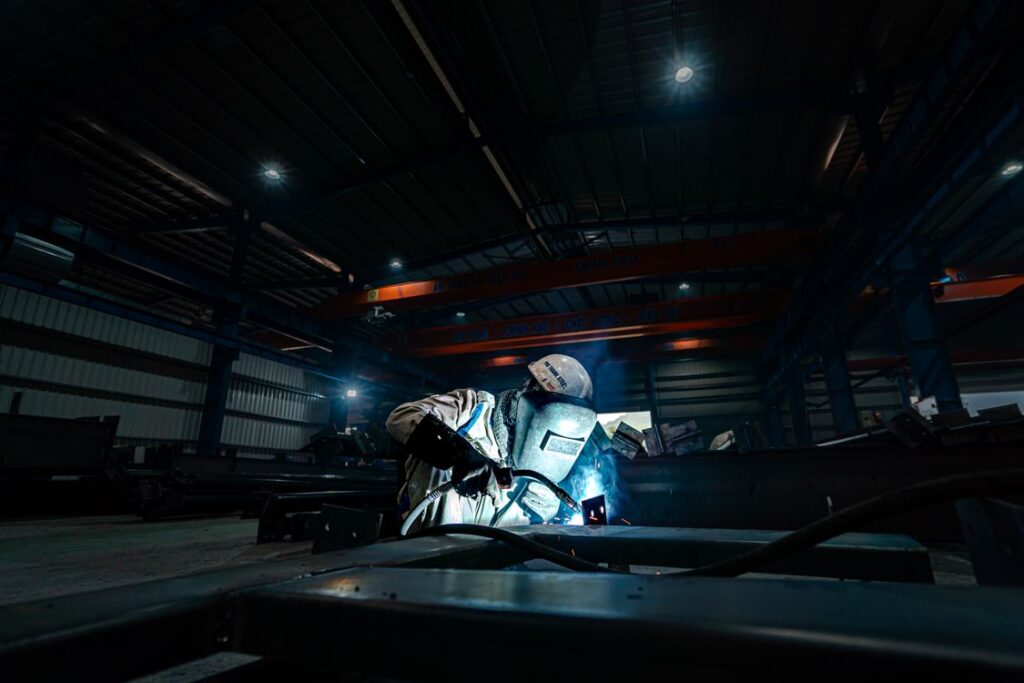
Large-scale steel and metalworking factories vs. general machine shops
This article is about large-scale steel and metalworking factories: steel smelting and rolling, cutting and machining heavy metal parts, and stores of metal blanks and finished metal products, with heavy forklifts, overhead cranes and heavy equipment moving frequently. It differs from the topic of general machine shops, which covers small and medium workshops with varied machinery and lower loads. The difference lies in the scale of loads, the density of metal swarf and the amount of industrial oil and grease, so the choice of floor system and coating thickness also differs and requires a separate survey for each factory.
What makes floors in steel and metalworking factories distinctive
Metal swarf is the most prominent problem. Sharp swarf, metal chips and grinding dust fall onto the floor, can embed in a soft surface, cause scratches and, if not cleared promptly, become a slip hazard and damage wheels. Industrial oil and grease, cutting oil and coolant leaking from machines form slippery streaks on the floor, which are both a hazard for pedestrians and reduce coating adhesion if they soak into the substrate for a long time before painting.
Load is the second factor. Steel blanks, moulds and heavy finished metal products are placed directly on the floor or moved by heavy forklifts; concentrated loads at rack feet, machine feet and forklift routes are very high. The floor should therefore be surveyed for its actual loads before a coating system is chosen, rather than choosing by overall area alone.
What is required of an epoxy floor in a steel and metalworking factory
At the level of the material in general, a seamless epoxy floor coating makes sweeping swarf and wiping oil and grease easier than bare concrete, and a flat surface helps forklifts move more steadily. However, no epoxy floor is immune to sharp swarf and heavy loads: actual abrasion resistance, load resistance and oil and grease resistance depend on the individual coating system, the coating thickness and the quality of the substrate. This article gives no figures specific to Kadier, because no official TDS has yet been published; when choosing a system, check the official TDS and the factory’s actual loads.
One important note is that oil and grease soaked into an old concrete substrate before painting can reduce adhesion. For a renovation project, therefore, degreasing and grinding the substrate must be done thoroughly, and substrate moisture must be measured before painting. A heavily oil-contaminated substrate that is simply coated over is a common cause of later peeling.
Choosing a system by area
- Machining areas, steel blank stores and heavy forklift routes: consider a self-levelling system such as LevelFlow with a thicker coating, giving a flatter surface that stands up better to loads and wheels. The specific thickness and permissible load must follow the official TDS.
- General production areas, walkways and auxiliary stores: a roller-applied system such as RollCoat is often considered for large areas, where the main requirements are a seamless surface, easy cleaning and clear zoning. Check the official TDS before finalising the choice.
- Areas frequently exposed to oil and grease and needing heavy cleaning: check the oil and grease resistance in the official TDS before choosing; do not assume that every system withstands every type of industrial oil.
- Renovation areas with a low-odour requirement: a water-based, low-VOC system such as AquaBase is a direction to consider when working with limited ventilation.
The antistatic system StatGuard is only needed when the factory has a separate electrostatic control requirement; for an ordinary steel and metalworking factory, it is not a default requirement.
Application and handover: the points most likely to fail in a steel factory
Before painting, the substrate must be ground, degreased, cracks repaired and moisture measured. Metal swarf and oil and grease on the substrate must be cleaned thoroughly immediately before the primer is rolled. Heavy-load areas need a separate survey of loads and traffic volumes, and line marking should clearly separate heavy forklift routes, pedestrian walkways and blank storage areas to reduce collisions.
At handover, adhesion and surface condition should be checked in the highest-load area and in areas previously contaminated with oil, rather than only in the best-looking area. Scratches from swarf are difficult to avoid completely; what needs to be assessed is whether the coating is peeling in patches, cracking and spreading, or exposing the substrate.
Cleaning and maintenance
Daily cleaning consists of sweeping and vacuuming metal swarf, wiping oil and grease marks early with a suitable solution, and not leaving oil standing on the floor for long. Heavy forklift wheels need periodic inspection, and when the floor peels locally or cracks, it should be repaired early to prevent damage spreading under heavy loads.
See also the general guide to epoxy floor maintenance and cleaning done right, the article on localized epoxy floor repair and how to choose an epoxy floor system by industry and use.
A note on specifications
The characteristics described in this article are the general characteristics of epoxy floor coating material. Official technical data (TDS) for each Kadier product is published on the Products page; this article sets out a general framework and does not replace the TDS of a specific product. Any figures for the thickness, load resistance or oil and grease resistance of a specific product must be checked against the official TDS when available.
Photo: Hoang NC, source Pexels (Pexels photo 32200451).
